Search Results for: media

Seven in ten Brits claim online world affects their mental health

Seven in ten Brits claim online world affects their mental health

A new, nationwide study released today, has revealed over a quarter (28 percent) of Britons feel their phone or social media addiction is actively stopping them living life to the full, with as many as 83 percent saying they are desperate to spend more time in the real world, according to the report commissioned by the photographic tech company Popsa. (more…)

Channel 4 chooses Bristol’s Finzels Reach for its new Creative Hub

Channel 4 chooses Bristol’s Finzels Reach for its new Creative Hub

Channel 4 Bristol new creative hubChannel 4 is in advanced negotiations with developer Cubex to locate its new Creative Hub at Finzels Reach, Bristol’s new waterfront quarter. Channel 4 will lease 3,200 sq ft of space on the second floor of the Fermentation Buildings at Finzels Reach. Channel 4 announced in October 2018 that it had confirmed that Leeds would be the new National HQ alongside Glasgow and Bristol as its Creative Hubs.

(more…)

Against metrics: how measuring performance by numbers backfires

Against metrics: how measuring performance by numbers backfires

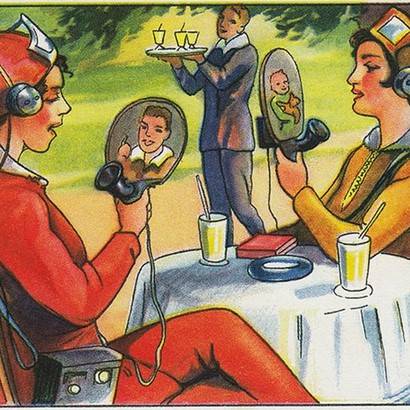
A still from Jacques Tati's film playtime as the protagonist looks out over cubicles in an officeMore and more companies, government agencies, educational institutions and philanthropic organisations are today in the grip of a new phenomenon. I’ve termed it ‘metric fixation’. The key components of metric fixation are the belief that it is possible – and desirable – to replace professional judgment (acquired through personal experience and talent) with numerical indicators of comparative performance based upon standardised data (metrics); and that the best way to motivate people within these organisations is by attaching rewards and penalties to their measured performance. (more…)

Co-design is an old idea, but it belongs to the 21st Century like never before

Co-design is an old idea, but it belongs to the 21st Century like never before

A group of people share ideas around a tableAs with so many apparently new ideas that resonate in a contemporary context, co-design has a long history. Originally referred to as cooperative or participatory design, it was first applied in Scandinavia in the 1960s and 70s, especially as a way of engaging stakeholders in the public sector in the design and development of IT projects, healthcare and workplaces. Arguably, our modern understanding of the idea was first set out by C.K. Prahalad and Venkatram Ramaswamy in a 2000 Harvard Business Review article called Co-opting Customer Competence and a subsequent book by the authors on the subject. They argue that there is a growing trend for firms to actively seek the insight and competence of customers to offer them better solutions, tailored to their own needs. (more…)

Smartphone addiction is driven by need to connect, but means we make bad choices

Smartphone addiction is driven by need to connect, but means we make bad choices

Two new studies published in the Journal Frontiers in Psychology explore our complex relationships with smartphones. The first study from Canadian researchers, concludes that our addiction to smartphones is a real phenomenon but one that is rooted in a primal desire to connect with other people, suggesting that smartphone addiction is best described as hyper-social, rather than anti-social. However, the second study led by academics in Brazil claims that a pronounced preoccupation with smartphones can lead to poorer decision making.

(more…)

Managers frustrated by email from colleagues in the same building

Managers frustrated by email from colleagues in the same building

email iconOver a third of managers find it frustrating when colleagues email them when they are based in the same building, according to a new survey from 247meeting. The study of 2,000 managers with varying degrees of seniority claims that 36 percent find it frustrating when colleagues email them when they are based in the same building, proving that face-to-face interaction is still the preferred communication at work. Other irritants described in the report include lack of communication from senior management and lunchtime meetings (cited by 41 percent). Overall the two most preferred forms of communication are face to face meetings and phone calls. (more…)

Feeling appreciated and the quality of workplace both key to employee happiness

Feeling appreciated and the quality of workplace both key to employee happiness

The quality of the workplace has a powerful effect on the levels of happiness of staff, with nearly half of respondents (49 percent) to a recent survey stating that having a great office environment is important to their happiness at work, but according to the figures, only a quarter (25 percent) say a good workplace environment is a current positive about their work. The survey from Peldon Rose also found that less than half (45 percent) of employees actually feel appreciated at work and only two-thirds (67 percent) report feeling happy. Yet the majority of workers (80 percent) who took part, believe that feeling appreciated is most important to their happiness at work – ahead of salary (58 percent) and feeling trusted (55 percent).

(more…)

Pressing self-destruct, a final solution to workplace noise, a broken psychological contract and some other stuff

Pressing self-destruct, a final solution to workplace noise, a broken psychological contract and some other stuff

I’ve never really wanted to go to MIPIM. I’m suspicious of it all for a number of reasons I won’t go into although you might reasonably guess what they are. So, I enjoyed this piece from Polly Plunket-Checkemian about her own misgivings. I understand that the testosterone level has been dialled down recently, but like Polly I’d like to see a re-examination of its format and intent, especially given that the real estate sector is having to rethink where it fits into the new era of work and meets the challenge of coworking.

(more…)

Government report shows increase in number of workers balancing care commitments

Government report shows increase in number of workers balancing care commitments

A new official report has highlighted the increasing number of people who are having to balance caring for family members with their own working commitments. Catherine Foot, the Director of Evidence for the Centre for Ageing Better, responded to these statistics by calling for legislation to promote flexible working among older workers. Published by the Office for National Statistics, the report has found that one in four older female workers, and one in eight older male workers, have care responsibilities.

(more…)

When exactly did busyness become a sign of status?

When exactly did busyness become a sign of status?

When exactly did “busyness” become a status? At work, in our personal lives and online, the competition to “live our best lives” and “hustle harder” is being taken to the extreme. Neuroscientists refer to busyness as a state of “cognitive overload.” This state can hinder our productivity, as well as our abilities to think clearly, plan and control our emotions. In the early 1990s, John Maynard Keynes predicted that, by 2028, living conditions would improve so much that the working day would shrink to three or four hours. However, it is now 2019 and we are busier than ever.

(more…)

The negative entropy of workplace design and management

The negative entropy of workplace design and management

Immediately after the Workplace Trends Summit in London last October, Ian Ellison of 3edges and I retired to a side room to record an interview for a podcast over a glass of red wine. The main objective was to try to piece together a coherent summary of what we’d seen that day. Ian assures me the podcast (his are invariably excellent) will appear very soon, but I thought it would be worth exploring a theory I formed and rambled on about in our conversation ahead of the next Summit set to take place next week.

(more…)

Mobile working is a recipe for business success

Mobile working is a recipe for business success

Today, the Fourth Industrial Revolution is changing the face of work as we know it: introducing AI and automation to the workplace and creating a drastic shift in the skills required by organisations today. As automation increasingly frees employees up from the repetitive, process work that can so often dominate their day-to-day, organisations are instead looking to employees to showcase their critical thinking and creativity. Indeed, McKinsey’s Skill Shift confirms that by 2030 the demand for higher cognitive skills, such as creativity, critical thinking and decision making will grow by 14 percent in Europe.

(more…)