Search Results for: pay ratio

How different European countries tax working from home

How different European countries tax working from home

A man working from homeWhen it comes to the tax implications of working from home, Belgium seems to be the most attractive European country. Those regularly working from home in Belgium can claim over €1,700. No other of the eleven nations examined by The Mobile Bank N26 manages to match the Belgians in this regard. In addition to Germany’s neighbour, Spain, Italy, Ireland, the Netherlands, Germany, Austria, Portugal, Greece, Poland and France were also analysed. As the data suggests, regulations and tax relief opportunities differ between nations, sometimes significantly. (more…)



People in the West continue to express ambivalence about the metaverse

People in the West continue to express ambivalence about the metaverse

An illustration of a suited man using a headset to access the metaverseA new poll from law firm Gowling WLG claims to reveal a stark difference in attitudes in Western and Eastern nations when it comes to the metaverse. It claims that the technology is set to change how we work and socialise forever, and that early adopters like China and the United Arab Emirates are already reaping the economic benefits. The firm’s Immaterial World report compared attitudes towards the metaverse in six international markets. The research found that four-in-five (83 percent) Chinese consumers would consider taking part in virtual experiences, more than twice as many as in the UK (37 percent). (more…)

The failures of work give us hope for the future

The failures of work give us hope for the future

Workplace engagement is approaching an all-time low, and typical employer reaction has been characteristically resigned. Actually, that last statement was inaccurately soft. Let me rephrase: most employees either don’t care about or actually hate their jobs, and employers couldn’t care less. (more…)

Women far more likely to have disadvantageous flexible working arrangements

Women far more likely to have disadvantageous flexible working arrangements

An illustration of a women slumped at a table with a laptop, to illustrate the specific challenges of flexible working for womenWomen are much more likely than men to be in flexible working arrangements that mean they lose hours, and therefore pay, according to new TUC analysis of official statistics.  The findings have been published, a year after the government closed its consultation on flexible work, and ahead of the next committee stage of Yasmin Qureshi MP’s private members bill on flexible work. (more…)

The unspoken privilege of wellbeing

The unspoken privilege of wellbeing

Two women talking in a pleasant and well designed office, one on a bench the other a swing, to illustrate the importance of wellbeingI sat in the main hall at a recent conference, listening to the keynote presentation. A Head of HR at a large manufacturing company described the implementation of their wellbeing strategy over the last year. So far, so important. There is no doubt that the conversation around wellbeing has been rightly amplified, as employees are seeking to gain and maintain more life in their work-life balance. However, as I sat there listening, I became uncomfortable. Seriously uncomfortable. Then I became cross. (more…)

Workplaces are plagued by classism, report claims

Workplaces are plagued by classism, report claims

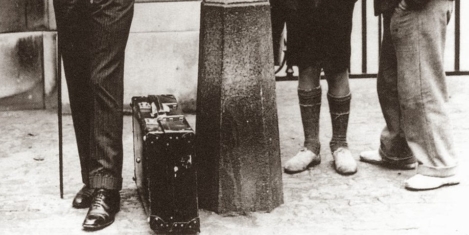
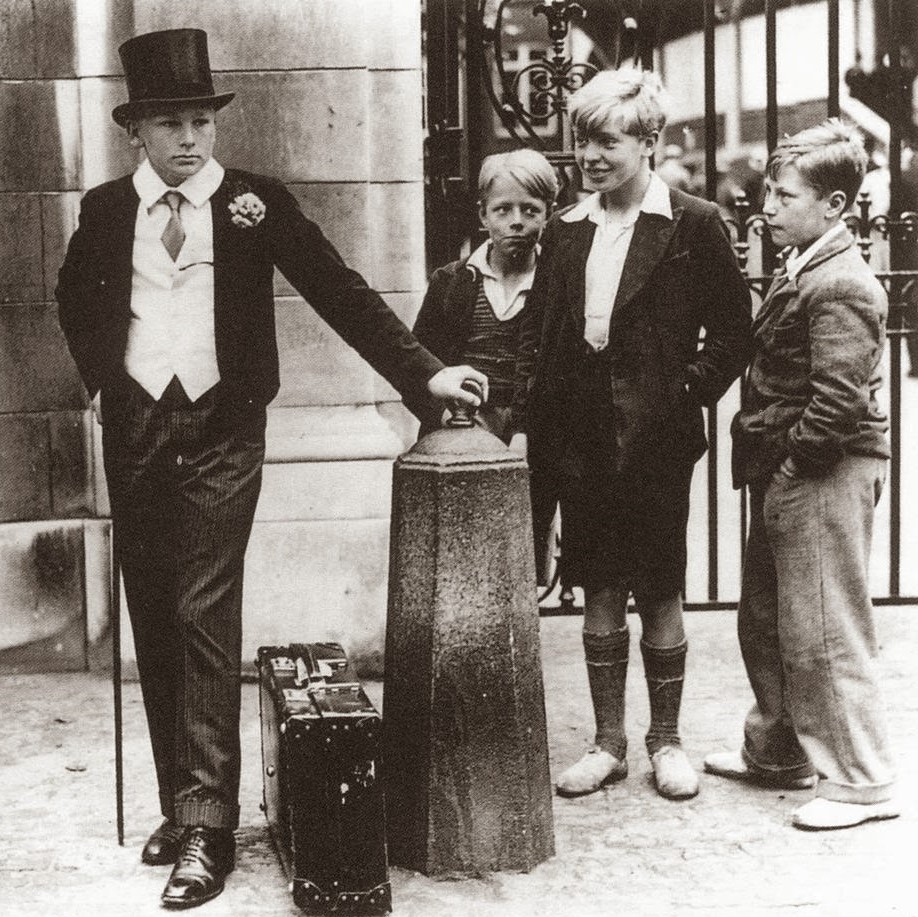
Toffs and Toughs famous photo that illustrate class divide and classismA new poll claims to highlight the need to tackle classism at work, with 57 percent of employees witnessing discrimination or a lack of inclusivity in the last year alone. A third of UK employees say classism is active in their workplace, according to the 2022 Diversity & Inclusion in the Workplace Report from Wildgoose. The report is based on a survey of employees from 133 UK workplaces. It asked if their workplace is an inclusive environment, what areas of diversity their organisation could improve upon, and whether they have experienced discrimination or inequality in the workplace. (more…)

Major new report offers snapshot of hybrid and remote work debate in the US

Major new report offers snapshot of hybrid and remote work debate in the US

Two colleagues in a coworking space to illustrate how hybrid and remote work is changingOwl Labs and Global Workplace Analytics have just released their sixth annual State of Remote Work report. Based on a survey of over 2,300 full-time workers across the United States, the report reveals the latest trends and perspectives on a range of issues from remote work and hybrid work, trust, intent to move, training offered, workplace redesign, intent and reasons for quitting, technology needs, employee surveillance, the 4-day workweek, and more.

(more…)

Plans for largest datacentre in Europe approved by London council

Plans for largest datacentre in Europe approved by London council

A rendering of the plans for the datacentre in HaveringHavering Council has agreed to move forward with the £5.3bn East Havering project, which will bring Europe’s largest datacentre to the borough in Greater London, delivering a major piece of national infrastructure. The Cabinet agreed for the council and its prospective partner, Digital Reef, to continue to develop the proposals to bring forward the site. This decision means the Council in its capacity as Local Planning Authority can begin to take a view on the appropriate planning route for this project. (more…)

Working habits are changing in response to cost of living increases

Working habits are changing in response to cost of living increases

commuters in London to illustrate changing working habitsThe so-called cost of living crisis is having a fundamental impact on people’s working habits, according to Beamery’s latest Talent Index – Sixth Edition. Almost a third (29 percent) of workers polled for the report are now avoiding the office because of the increasing cost of travel whilst another third cited (31 percent) they were considering leaving their jobs completely due to lack of salary increases. (more…)

People going back to basics in terms of what they want from work

People going back to basics in terms of what they want from work

A new poll claims that growing economic uncertainty has forced employees to reprioritise what they want from their employers. People are increasingly interested in basics such as job security, a safe and comfortable workplace, salary and benefits, and a better workplace culture. The BCW Expectations at Work study [registration], which surveyed more than 13,000 people across five industries and 15 countries around the world, claims that one in two workers say they value the basics of job security (52 percent), workplace safety and comfort (50 percent), salary and benefits (49 percent) and workplace culture (48 percent) most out of 62 components across five dimensions of the employee experience.  (more…)

Third of firms expect the four-day week to become a reality ‘for most’ in the next ten years

Third of firms expect the four-day week to become a reality ‘for most’ in the next ten years

A man walking a dog to illustrate the four day week giving people more controlA third of respondent organisations (34 percent) to a CIPD poll think the four-day week will become a reality in the UK for most workers within the next ten years. However, only a small minority of firms have moved towards the four-day week to date by reducing hours without reducing pay for their employees, or plan to do this over the next three years. One in ten (10 percent) organisations report they have reduced working hours without reducing pay for the whole or a significant part of their workforce over the last five years, although of these, under half of employers (42 percent) did so as a result of the furlough scheme. (more…)

Three quarters of people admit to turning off webcam to hide what they’re doing

Three quarters of people admit to turning off webcam to hide what they’re doing

An owl camouflaged against a tree as a metaphor for hiding on webcam meetingsA new poll from Showpad, claims that three quarters of ‘office workers’ in the UK (76 percent) admit to turning off their webcam on video calls to hide what they are doing. The figure for workers under 24 rises to 85 percent. According to the State of Selling study, concentration on video calls when working from home appears to be one of the main issues with 80 percent saying they are more easily distracted in virtual meetings compared to real-world ones, with over half (52 percent) saying they have an attention span of less than half an hour in virtual meetings. (more…)