






November 10, 2014
New report urges firms to protect against BYOD security breaches
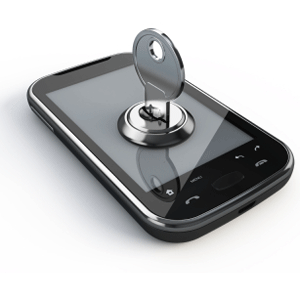 According to a new report from BT, security breaches related to the practice of Bring Your Own Device (BYOD) and related forms of mobile working have affected 41 percent of UK organisations over the last year. Despite this, the report claims organisations are still not taking sufficient measures to protect themselves against threats such as lost or stolen devices and malware infections. The report reveals that at least one fifth of respondents’ organisations that suffered a mobile security breach, experienced more than four incidents in the last year. The research is based on a total of 640 interviews with IT decision makers from large sized organisations (1000 or more employees) across 11 regions: Australia, Brazil, France, Germany, Hong Kong, Middle East, Singapore, Spain, South Africa, UK and USA. Respondents’ organisations were from the financial, retail and public sectors. It shows that uptake of BYOD (Bring Your Own Device) and COPE (Corporately Owned Personally-Enabled) devices is very high, with 95 percent of UK organisations allowing employees to use these devices for work purposes.




 Given the track record of people when it comes to making predictions about the future, it’s easy to grow cynical, especially when it involves a profession as subject to the vagaries of technological and cultural change as facilities management. But while we should be wary of more fanciful and long term thinking, any natural scepticism shouldn’t blind us to those predictions that we know will largely come true, especially those based on what we know is happening already. For example, recent research carried out by Cass Business School and Henley Business School and presented in the book
  The world of work and the workplace is always changing. We know it. You know it. In fact, there are a whole host of people that know it, but depending on what side of the professional fence you sit on, you might approach it in different ways, looking through a different lens or with a specific focus. Or are you already bridging the professional gap? Workplace change and the numerous ramifications of it are well documented. In a world that is changing, at frightening pace, it is strange to think that many of the ways in which we work are so entrenched in 20th century thinking. We need to break away from this and outline what the future is going to look like and how we should adapt. Or do we already have the answers? This ground is well trodden. However, it could be time to reassess our thinking and the way we approach this challenge, ensuring it becomes the norm for organisations around the world.








October 21, 2014
Orgatec preview: the next generation workplace is all about settings
by Justin Miller • Comment, Events, Products, Workplace design
There is a well travelled international circuit for those interested in what office design tells us about the way we work that has, for a number of years, taken in London, Milan, Chicago, Stockholm and Cologne as its main stopping off points. This week sees the launch of Orgatec, the longstanding biennial workplace festival in Cologne. One of the interesting features of Orgatec is that, because it takes place every two years, it offers snapshots of key developments in the market. It throws a spotlight on whatever workplace professionals are talking about and whatever product designers are doing in response to the changing world of work. And it does it on a big scale. This year over 600 companies from 40 countries will be presenting across an exhibition area of 105,000 sq. m. This seems big, and is, but is down markedly on the size of the show from 20 years ago when Orgatec was the launch pad for seminal products such as Herman Miller’s Aeron Chair and the Ad Hoc furniture system from Vitra.
(more…)