Search Results for: recruitment

Flexible working now an almost universal employee benefit, claims study

Flexible working now an almost universal employee benefit, claims study 0

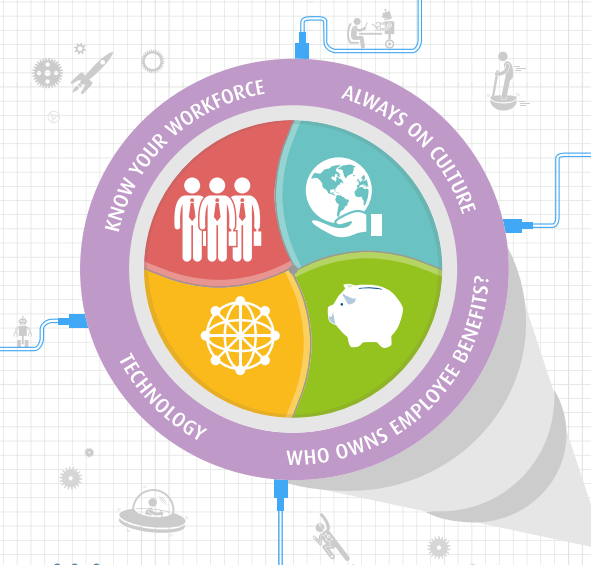
flexible workingA new report from employee benefits provider Unum claims to set out the future trends and challenges affecting the benefits packages firms should offer staff. One of the headline claims from the report is that four out of five employers (79 percent) already offer flexible working. ‘The Future of Employee Benefits’ report surveyed 13 organisations and incorporated the results with those of a series of interviews and roundtable discussions with employers and specialists including representatives from the Chartered Institute of Personnel and Development. The report identifies a series of macro trends affecting workplace wellbeing and the recruitment and retention of employees over the next 15 years, which were categorised into four distinct working environments: The Ageless Workplace; The Mindful Workplace; The Intuitive Workplace; and The Collaborative Workplace.

(more…)

London is leading the way in the global coworking revolution

London is leading the way in the global coworking revolution 0

WeWork MoorgateChanging attitudes amongst occupiers towards office space and the explosion in the numbers of freelance workers and microbusinesses are driving an upsurge in coworking and other flexible working environments worldwide. That is the key conclusion of a new report from DTZ which claims that the number of dedicated flexible working locations worldwide is likely to hit 50,000 over the next three years, with parts of London leading the way. We reported recently how coworking pioneer WeWork has already announced its plans to dominate London’s commercial property scene in the same way it already does Manhattan’s. Now, the How You Work report from DTZ suggests that this is the shape of things to come for many cities, with London leading the way alongside a tranche of global tech and creative centres such as New York, Berlin and Shanghai.

(more…)

Female bosses enhance workforce engagement and motivation

Female bosses enhance workforce engagement and motivation

Female bossesAs businesses begin to ease out of recession they are starting to feel more confident in the economy and look at how they can increase spend. But while companies adjust to their new found growth they must ensure that their employees are reassured that they have a voice and, more importantly, are listened to. At Pure, we’ve recently taken a look at the wider impact which employee engagement can have on businesses big and small using an analysis of some key research. This included some illuminating data on gender roles, which included the fact that employees who work for a female manager are 6 percent more engaged, on average, than those who work for a male manager; female employees who work for a female manager are the most engaged, at 35 percent and male employees who work for a male manager are the least engaged, at 25 percent.

(more…)

City firms adopt more flexible working, but it starts from the top

City firms adopt more flexible working, but it starts from the top

Flexible workingEmployers in the City of London are increasingly open to the idea of flexible working, claims a study of 1,000 workers by recruitment firm Astbury Marsden. According to the study, a third of men working in the City (34 percent) say they now have some flexibility over the hours they work, whether through flexi-time, working a certain number of hours annually or compressed hours. This is up from 28 percent last year. Meanwhile a smaller proportion of female City workers (30 percent) claim they now have the option of flexible working, up from 23 percent in 2014. The research indicates that although women in the City are more likely than men to work part-time or term-time hours or job-share, with over a quarter being able to do so (26 percent), almost one in five men (18 percent) say they also have this option available to them.

(more…)

Beyond branding – how workplace design can express a firm’s culture

Beyond branding – how workplace design can express a firm’s culture

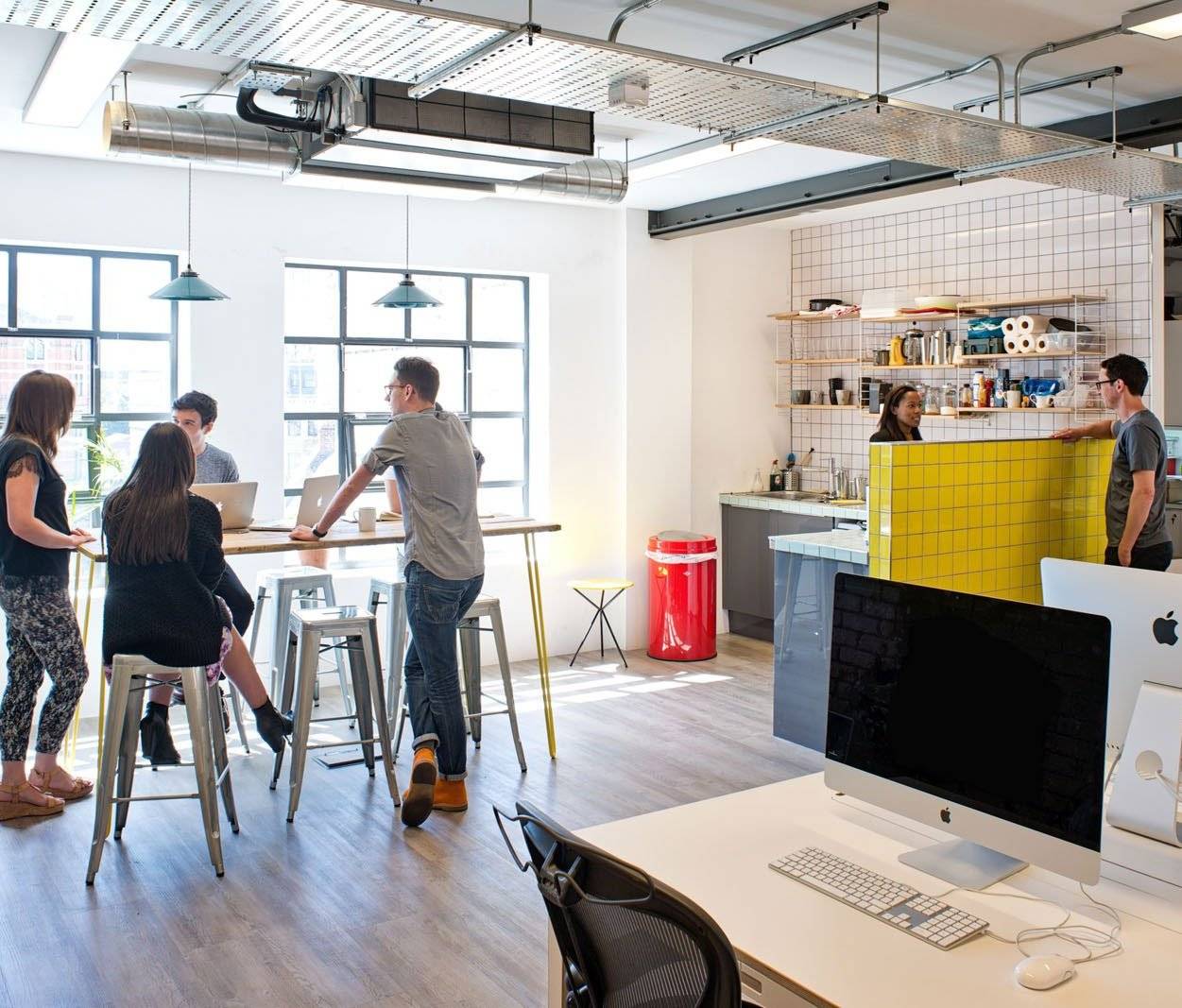
ODD-05-highres-sRGBWhen it comes to the incorporation of branding and identity into a workplace, there is a simple option, which is to produce a design that faithfully incorporates the firm’s logos, colours and straplines in the interior. There’s nothing wrong with this, except for the fact that it is literally superficial and so may miss the opportunity to create an office design that scratches beneath the surface to reveal what lies beneath. When you get past the layers of branding and identity, you uncover something that we call culture. This can take things to a whole new level because the challenge becomes how to create a workplace design that communicates and fosters both the identity and the culture of the organisation. The benefits to the organisation can be enormous, not least because this approach bridges a number of disciplines such as human resources and office design and so drives a number of strategic objectives.

(more…)

Millennial ‘job hopping’ is the new normal according to US research

Millennial ‘job hopping’ is the new normal according to US research

Millennial 'job hopping'Following a recent survey claiming that Millennials comprise more than one-in-three US workers, comes new evidence on the impact this could have on recruitment and retention. Over 1,000 US full-time Millennials who were questioned on their careers by RecruitiFi confirmed that ‘job hopping’ had become the norm. During the course of their careers, 53 percent have held three or more jobs. And while many have plans to stay in their current jobs for 3-5 years (33 percent), many respondents plan to leave after 1-2 years (20 percent). 34 percent acknowledged falling levels of employee morale in the office and 22 percent explained that their clients/customers have taken notice. While 83 percent of millennials acknowledge that job hopping on their CV could be negatively perceived by employers, 86 percent say that it would not prevent them from pursuing their professional or personal passions.

(more…)

One in five Americans would change jobs for better work-life balance

One in five Americans would change jobs for better work-life balance

One in five Americans would change jobs for better work-life balance More than half of US and Canadian employees report feeling overworked and burnt out (53 percent), yet the overwhelming majority (86 percent) say they are still happy at work. According to the inaugural Staples Advantage Workplace Index employees are working longer days, with about a quarter of them regularly working after the standard workday is done. A key motivator is to advance in the organization, with nearly two-thirds of respondents seeing themselves as managers in the next five years. Though employees are largely conditioned to working longer hours, about one in five do expect to change jobs in the next twelve months. Steps employers can take to improve happiness levels include; adding more office perks, improving office technology and providing a better office design. Alongside this, with employees working longer days and on weekends, the biggest request is for employers to provide more flexibility. (more…)

Value older workers or sleep-walk towards a skills shortage, employers warned

Value older workers or sleep-walk towards a skills shortage, employers warned

Hiring older workersA demographic time bomb means employers must act to avoid a cliff-edge loss of skills and talents by 2035, a new study by the CIPD has revealed. There are currently 9.4 million workers in the UK today who are over the age of 50 and while the employment rate of older workers has increased significantly in recent years, there is still a 64 percent drop in the employment rate between the ages of 53 and 67. New research from the CIPD and the International Longevity Centre-UK (ILC-UK), the independent think tank on longevity, ageing, and population change, warns the UK could face serious skills shortages over the next 20 years. Unless organisations start improving how they recruit, develop and retain older workers it is estimated that the UK economy will struggle to fill one million jobs by 2035, even taking into account the mitigating effect of migrant workers.

(more…)

Gen Z workers will be far more conventional than commonly assumed

Gen Z workers will be far more conventional than commonly assumed

Glued to the deskDespite being the first generation of workers to boast ‘native’ digital skills, so-called ‘Gen Z’ is far more conventional than previously assumed. The coming generation of 16-19 years-olds who are fast approaching the jobs market will care far more about their workplace and their employer’s ethics than Gen Y, new research from recruiter Adecco claims. The research shows that long-term security is more appealing to Gen Z than short term perks; with gym memberships (12%), free technology (16%) and time off to travel (26%) rejected in favour of qualifications and job security; at 43 percent and 41 percent, respectively. However, the research does show they have strong personal ambition and high expectations from employers, with half of those surveyed expecting a promotion within their first year of employment and the same number expecting to move on from an employer within two years.

(more…)

IT firms hold TechNorth digital hub in higher regard than TechCity

IT firms hold TechNorth digital hub in higher regard than TechCity

Tech NorthTechNorth, the Manchester based technology hothouse devised as a regional counterbalance to London, is held in higher regard than the capital’s flagship TechCity development, according to research from recruitment firm Robert Half. The study of IT decision makers across the UK claims that the vast majority would prioritise working with Northern firms over their London counterparts, with 87 percent either ‘highly likely’ or ‘somewhat likely’ to place work with IT businesses in the TechNorth hub rather than those in TechCity London given the choice. The figure is 100 percent for IT leaders based in the North and to 95 percent for those in Scotland. More surprisingly, 80 percent of those based London and the South East said they would prioritise TechNorth, as did 75 percent in the South West and Wales.

(more…)

A relaxed office environment and rapid career progress are key for Millennials

A relaxed office environment and rapid career progress are key for Millennials

Climbing the career ladderThe latest research on the aspirations of so-called Millennial workers (born 1980 – 1999) reveals a cohort that wants to rise up the career ladder as quickly as possible, but do so in a less traditional workplace than previous generations. According to a whitepaper – ‘Attracting and Retaining Millennial Professionals’ from recruitment firm Robert Walters, 91 percent of Millennials say the opportunity for rapid career progression is one of the most important things about their job, with 68 percent citing a clear path to grow in a role is the most important factor in keeping them engaged. While Millennials are not that different from their older colleagues – they favour a more relaxed working environment where technology is seamlessly integrated into their working practices. They also place a higher value on personality, communication skills and fit within a team than they do on hard technical skills.

(more…)

Trade bodies seek to boost inclusivity and diversity with new initiatives

Trade bodies seek to boost inclusivity and diversity with new initiatives

DiversityThree major trade associations in the built environment sector have announced initiatives to increase the inclusivity and diversity of their respective professions. The Royal Institution of Chartered Surveyors has launched its new Inclusive Employer Quality Mark, which is designed to help firms ‘gain a competitive advantage and a diverse workforce’. Meanwhile, the Royal Institute of British Architects (RIBA) claims it has strengthened its chartered practice criteria to incorporate requirements related to equality, diversity and inclusion. From 2016, chartered practices are required to have an equality, diversity and inclusion policy. In the US, delegates at the American Institute of Architects (AIA) agreed at congress to introduce a resolution known as Equity in Architecture, that calls for measures to increase representation of what are deemed underrepresented groups ‘to move the profession forward’.

(more…)