







Search Results for: skills

Employers in industries reliant on overseas workers will be hardest hit by Brexit

Employers in industries reliant on overseas workers will be hardest hit by Brexit 0

Brexit MigrationAccommodation and food services, manufacturing, and transport industries will be hardest hit by limits on movement of EU and non-EU workers following Brexit, a new report has claimed. The latest edition of Mercer’s Workforce Monitor has highlighted how reliant certain sectors of the UK economy have become on EU-born and non-EU born workers, as respectively, 33 percent, 23 percent and 20 percent of accommodation and food services, manufacturing, and transport are made up of non-UK-born nationals, meaning companies in those sectors, and those reliant on them, are especially at risk from the changes in the UK’s migration policy. According to Gary Simmons, Partner at Mercer, “Since 2013, the UK-born workforce has been declining as people retire and we can see how reliant certain industries are on overseas workers filling the gaps. The UK is likely to impose more stringent migration controls in the future and this will reduce the number of overseas workers available.”


(more…)

HR needs to help employers better prepare for the digitised workplace

HR needs to help employers better prepare for the digitised workplace 0

HR needs to help employers better prepare for the digitised workplace

HR leaders must take responsibility for bridging the gap between leadership and employees to help ensure organisations deal with the challenge of an increasingly digitised workplace and create a shared sense of direction, values and collaboration, a new piece of research suggests. According to the report, ‘Leadership Connections: HR’s role in business transformation’ from Ipsos LEAD and Cirrus, HR leaders are the crucial drivers of transformation in UK businesses through their roles of promoting devolved decision making, employee engagement and collaboration. Figures have shown that while half of CEOs expect their industries to be substantially or unrecognisably changed by digital, as of late 2016 10 percent of employees claim to have seen no significant change in their organisations at all – according to MORI’s Representative Employee Data (RED). This presents a significant difference between what we are being told by senior leadership and what employees believe to be the case.

(more…)

People’s wellbeing never fully bounces back from unemployment, claims study

People’s wellbeing never fully bounces back from unemployment, claims study 0

unemployment and wellbeingLosing a job creates a ‘new normal’ for personal wellbeing that never goes back to previous levels, a new international study claims. Unemployment is damaging to people’s wellbeing regardless of their age, gender, level of education, ethnicity or region. The new study, co-authored by the What Works Centre for Wellbeing and the University of East Anglia, looked at the impact of unemployment across a number of countries and found that joblessness tops even divorce or widowhood in its impact on our life satisfaction. The evidence also suggests people never adapt fully to unemployment. The longitudinal study of 24,000 people found on average that individuals had lower life satisfaction following unemployment and this never recovered to the pre-unemployment levels. These results applied to men and women, but the effects were found to be stronger for men. Men also were found to be happier than women once in a new job. The type of work is also important with temporary jobs proving worse than permanent work.

(more…)

White paper sets out challenges of Brexit for UK’s built environment sector

White paper sets out challenges of Brexit for UK’s built environment sector 0

BSRIA has published a new white paper to explore how issues related to Brexit will impact the UK’s built environment sector. The report highlights the ways in which the industry that supports the built environment has a major impact on the overall UK economy and plays a positive role in supporting the government’s climate change and emissions reduction objectives. According to the white paper, the sector is particularly sensitive to the uncertainties surrounding Brexit because it is technology intensive, requires a highly-skilled workforce, and is very dependent on international trade.

(more…)

New guide to creating an accessible and inclusive built environment

New guide to creating an accessible and inclusive built environment 0

The Construction Industry Council has published a new guide to creating an accessible and inclusive environment.  The guide sets out six principles as suggested by the Office for Disability Issues to ‘guide, support and motivate’ industry professionals. The guide is an initiative that emerged from the Built Environment Professional Education Project – a government project that has been championed by CIC. The aim is to build on the legacy of the London 2012 Olympic and Paralympic Games by helping to generate a change in the way skills related to inclusive design are taught in the UK. The aim is that all built environment professionals will receive mandatory, quality teaching about inclusive design so that they can help create inclusive building, places and spaces for future generations.

(more…)

RSA report sets out nationwide strategy for inclusive growth

RSA report sets out nationwide strategy for inclusive growth 0

The Royal Society for the encouragement of Arts, Manufactures and Commerce (RSA) has published the final report from its Inclusive Growth Commission. The report sets out a series of recommendations which it claims will address the lack of an inclusive approach to the economy. In the context of Brexit, this is one of the underlying drivers of dissatisfaction with the way the UK is run by central and local government, the report claims, and hence a factor in the Brexit vote. Its forward looking proposals include a greater commitment to lifelong learning, a greater focus on place to ensure the UK’s cities and regions get a greater stake in the national economy. As well as the main report, its conclusions and proposals are discussed in a podcast.

(more…)

Age remains the biggest obstacle to career progression in Europe

Age remains the biggest obstacle to career progression in Europe 0

European employees feel that age is the biggest factor preventing them from progressing in their career, according to research of nearly 10,000 European working adults by ADP. A fifth of employees name age as their biggest obstacle, followed by favouritism (7 percent), lack of opportunities with current employer (7 percent), qualifications (5 percent), and family needs (5 percent). Age is a particularly cited obstacle in the Netherlands (24 percent), Switzerland (21 percent) and the UK (20 percent). This issue increases as workers get older, with 46 percent of over 55s and 27 percent of those aged 45-54 feeling this way. This situation may reflect the increasing generational diversity of the workforce, as five generations of employees will soon be working side by side. Advancing technologies and more significant age differences in the workforce are likely to be isolating older workers, who may feel outdated by a younger, tech-ready generation.

(more…)

What the budget meant for the workplace; experts have their say

What the budget meant for the workplace; experts have their say 0

BudgetAs has been the case with recent UK Government Budget announcements, Chancellor Philip Hammond’s first Budget addressed a number of issues related to the workplace, technology and infrastructure. It was the first Budget delivered in the post Brexit era and this clearly informed many of the announcements made. While most of the headlines over the past 24 hours have related to the changes to the tax status of the self-employed as a way of raising around £2 billion, the announcements also covered a broad range of topics related to the workplace, HR, technology and property sectors and have drawn an immediate response from key figures in the sector. These include nearly half a billion pounds relief on the vexed question of business rates reforms, a new focus on technical qualifications and a greater investment in 5G and other forms of digital infrastructure. We’ll be having our own say about the implications of the Budget in the near future, but in the meantime, here’s a rundown of the key announcements and the reaction of industry experts.

(more…)

Use of mobile technology is key for European businesses in attracting best talent pool

Use of mobile technology is key for European businesses in attracting best talent pool 0

Use of mobile technology is key for European businesses in attracting best talent pool

If European employers want to attract the best job candidates, they need to utilise the latest mobile technologies to attract the right talent pool, a new report commissioned by the Futurestep division of Korn Ferry, has claimed. In a digital and mobile-first world, where candidates browse potential jobs and apply via mobile devices, just 20 percent of respondents in EMEA use mobile technology tools for recruitment – the lowest usage rates in the global study. In addition, just 45 percent say they use video interviewing, while only 46 percent use online assessment tools. According to Talent Forecast, the second part of a major global survey into recruitment and engagement which polled more than 1,100 hiring professionals  this represents a missed opportunity as these can help make the talent acquisition process streamlined and more efficient.

(more…)

In a crowd of truths, we can discern and reclaim what it means to be human

In a crowd of truths, we can discern and reclaim what it means to be human 0

This is the second of two responses to an excellent article by Antony Slumbers, the first being this perspective from my mirrored room, in this instance offering that his views offer a far too presumptive picture of how technology will shape our work future. The paragraph headlines are from Antony’s original article. One person’s optimism is another’s pessimism. A decade ago the dream of liberated commute-free teleworking was, to many, the nightmare of enforced seclusion to the soundtrack of the dishwasher. The deployment of robots for the performance of menial tasks creating time and wealth for leisure is another’s horror at the loss of employment and resultant anomic fragmentation and decay. The fatally pointless optimism of Candide’s Dr Pangloss was agnostic in regard to every such outcome. It was positive only because there could be no alternative, and therefore no better alternative.

(more…)

Global migration plays an important role in London’s ongoing success, says report

Global migration plays an important role in London’s ongoing success, says report 0

Global migration plays an important role in London’s ongoing success, says reportDemand for construction workers in London looks set to grow due to the completion of Crossrail and the extension of the Northern Line alongside other infrastructure projects. But a new analysis reveals the Capital is struggling to attract and train the workforce needed; with London and the South East having a shortfall of 60,000 people in the construction industry. This is according to a first of its kind analysis of the role of migration on London’s economy by London First and PwC. ‘Facing Facts: the impact of migrants on London, its workforce and economy’ argues that London’s growing workforce is significantly contributing to economic growth and helping to create more jobs in the capital. The report, which draws on a comprehensive range of information, including detailed ONS Labour Force Survey data shows how London’s total workforce has grown from 4.3 million people in 2005 to just under 5.2 million, made up of people from around the UK, the EU and the rest of the world.

(more…)

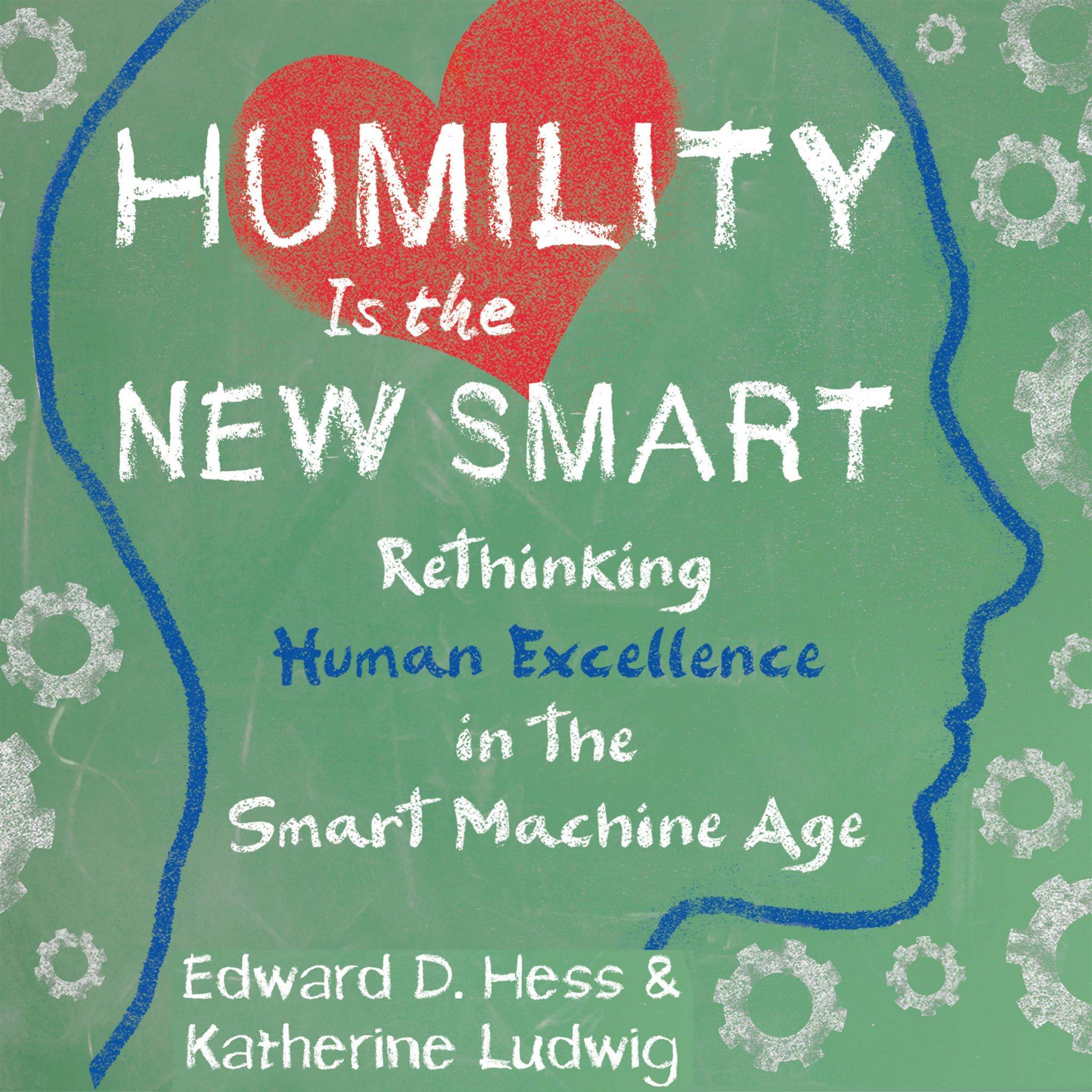
New book offers a roadmap for workers in the age of smart machines

New book offers a roadmap for workers in the age of smart machines 0

University of Virginia Darden School of Business Professor Ed Hess and Katherine Ludwig have released a new book, Humility Is the New Smart: Rethinking Human Excellence in the Smart Machine Age (Berrett-Koehler, January 2017), where they wrestle with the defining workplace question of our era and offer workable solutions for employees to stay relevant. In the book, Hess and Ludwig argue that workers of the world stand at the brink of an unprecedented transformation, as a coming age of smart machines promises to eliminate tens of millions of jobs across the socioeconomic spectrum. The transition to an era of widespread automation will be tumultuous for both companies and employees, and its effects on the fabric of society have not yet been fully considered by workers, government entities or global corporations.

(more…)