




Search Results for: working lives

The office is increasingly able to recognise you, but will you recognise it?

The office is increasingly able to recognise you, but will you recognise it?

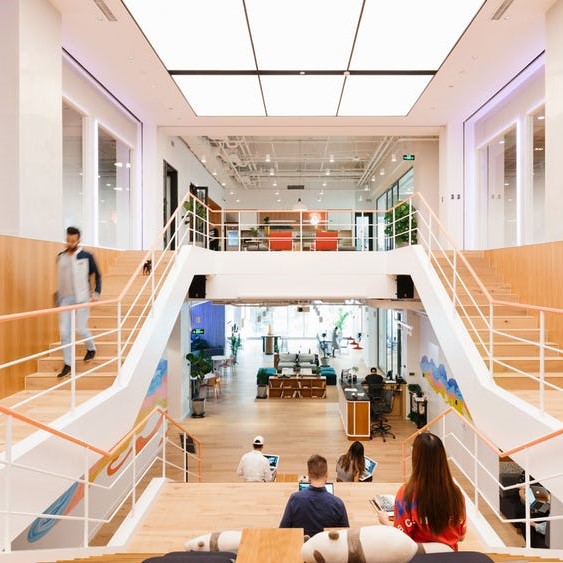
The office is changing in new waysOur lives at work are about to change—again. Just as the addition of PC’s and Wi-Fi re-drew the office blueprint, emerging technologies like robots, virtual agents, artificial intelligence (AI), and the Internet of Things (IoT) promise to radically revise the form and the function of work and the workplace. In the near future, your office will know who you are (if it doesn’t yet) and will be ready to greet you with your preferred lighting and the array of digital tools you need to do your job.

(more…)

Firms need to place more value on older workers

Firms need to place more value on older workers

Older workers are now a key part of the workforceAs we live longer lives, it’s inevitable that more of us want to work for longer. It makes good business sense too: with fewer younger people starting work to replace those set to retire in future years, coupled with uncertainty over Brexit and labour shortages, employers can’t afford to lose older workers.

(more…)

Helsinki tops global rankings for work-life balance

Helsinki tops global rankings for work-life balance

Work-life balanceHelsinki is the world’s best city for work-life balance according to a new study from technology business Kisi which compares data on a range of factors such as “livability”, work intensity, institutional support, equality and legislation to rank cities. Helsinki, Munich, and Oslo are the three best ranked cities while the cities deemed as having the worst work-life balance were Tokyo, Singapore, and Washington DC. Using data relating to work intensity, social wellbeing, and livability to analyse the interplay between work and life, the index claims to assess how successful residents are at achieving a healthy work-life balance in 40 cities around the world. (more…)

Stress most prevalent among health and social workers

Stress most prevalent among health and social workers

A woman stares out of the window, illustrating the issue of stressHealth and social care are the most stressful industries to work in, according to an analysis by The Office Group (TOG), which claims that health and social workers tend to work longer hours and report more cases of work-related stress, depression and anxiety than staff in other sectors. TOG calculated an overall stress score for 12 industries across the UK, using public data on the number of self-reported cases; average full-time hours; number of days lost to self-reported cases; and the likelihood of future automation. A recent report from the CIPD also highlighted how stress is now a fact of life for most workers. (more…)

Remote workers engage in harmful behaviour to signal commitment to employers

Remote workers engage in harmful behaviour to signal commitment to employers

Remote workers engage in harmful activities to signal commitment to employersA new study, published in the journal Organizational Science and authored by researchers from the University of California-Santa Barbara (UCSB) suggests that employees who are physically present in the office are seen as more committed, more productive, and harder working than colleagues who work away from the office. According to the study of two major blue chip organisations, perceptions of hard work and commitment translate to greater career opportunities including promotions that are not as readily available for remote workers. (more…)

A new generation of smart cities is with us

A new generation of smart cities is with us

Siemenstadt smart city in BerlinAn abandoned mine shaft beneath the town of Mansfield, England is an unlikely place to shape the future of smart cities. But here, researchers from the nearby University of Nottingham are planning to launch a “deep farm” that could produce ten times as much food as farms above ground. Deep farms are an example of what the latest wave of smart cities look like: putting people first by focusing on solving urban problems and improving existing infrastructure, rather than opening shiny new buildings. (more…)

Sleeping on the job is now acceptable behaviour

Sleeping on the job is now acceptable behaviour

sleeping under a convertible deskRecently, Cornerstone OnDemand tested which learning and training courses are of most interest and truly matter to employees to help them navigate the world of work. Among the top five most popular courses, there was a resounding demand for those that centred around wellbeing. And the training that claimed the top spot was ‘The Science of Sleep: Sleep hygiene’. (more…)

The Age of Blorp, a dead tulip, no muggles allowed and some other stuff

First the good news. Mayor of London Sadiq Khan has rejected the proposals for Foster+Partners’ godawful 300 metre tall ‘Tulip’ viewing tower in London. The reasons given for the refusal from the Mayor’s office include the fact that the thing didn’t represent the sort of “world class architecture that would be required to justify its prominence”. A nicely dressed up way of saying it’s a terrible idea, a terrible piece of architecture and has absolutely no place in London. (more…)

Outdated technology remains a massive waste of time

Outdated technology remains a massive waste of time

Workers struggle with outdated technologyTwo new studies suggest that the failure to keep workers equipped with the latest technology is having a huge impact on their productivity and causing them to waste large amounts of time. According to the first piece of research from tech provider Insight,  UK office workers waste 1.8 billion working hours every year because the outdated technology they’re given isn’t good enough to meet their needs. (more…)

Poor office design continues to hamper productivity

Poor office design continues to hamper productivity

Research published by Dell claims to highlight the issues related to office design holding back workers’ productivity and the impact this has on UK businesses. While classic gripes like office temperature and loud colleagues take the top spots, poorly designed or implemented technology is having a negative impact on employees – with out of date technology (29 percent), poor Wi-Fi (22 percent) and poorly integrated technology (19 percent) featuring in the top ten factors UK workers feel impact their office lives. (more…)

More people than ever plan to work past 65 but health fears remain

More people than ever plan to work past 65 but health fears remain

According to ONS statistics, nearly three quarters (71 percent), or 23 million UK based employees, plan to work beyond the age of 65, but two in five of these (41 percent) – equivalent to 9.5 million workers – are concerned their health will make it difficult to do so, according to new research from Canada Life Group Insurance. Over a quarter (27 percent) of UK employees think their boss views older workers as a ‘hassle’ because of these possible health struggles. This highlights the potential for poor health to act as a barrier to employment and retention of older workers. Employees also believe their boss perceives older workers as stuck in their ways (30 percent) and technologically inept (30 percent). Among the biggest concerns of those intending to work beyond the age of 65 is that they will be treated differently because their boss or colleagues perceive them as being ‘old’. (more…)

We are running out of time to find the meaning of work

We are running out of time to find the meaning of work

Last week’s report from the IFS detailing the ongoing rise in the numbers of working poor in the UK highlights just how dysfunctional work can be in the modern era. While depictions of work in the media tend to consist of diverse Millennials clustering around a single laptop in the sun-dappled offices of tech firms, or chilling on the Chesterfield in a coworking space, the reality for many people is somewhat different. (more…)