






June 20, 2017
Hong Kong and London’s West End again top global commercial property costs, according to CBRE 0
 Hong Kong (Central) and London’s West End topped the list of prime commercial property occupancy costs again, according to CBRE Research’s latest annual Global Prime Office Occupancy Costs report. Hong Kong’s (Central) overall prime occupancy costs of US$303 per sq. ft. per year topped the “most expensive” list, followed by London’s West End (US$214 per sq. ft.), New York (Midtown) (US$203 per sq. ft.), Hong Kong (West Kowloon) (US$190 per sq. ft.) and Beijing (Central Business District (CBD)) (US$183 per sq. ft.). Global prime office occupancy costs—which reflect rent, plus local taxes and service charges for the highest-quality, “prime” office properties—rose 1.9 percent year-over-year, with the Americas up 3.6 percent, EMEA up 0.8 percent and Asia Pacific up 1.2 percent. Durban (South Africa) had the highest increase in occupancy cost overall, though Stockholm (Sweden) registered some of the fastest growth in Europe, along with Palma de Mallorca (Spain), Belfast (U.K.) and Amsterdam (Netherlands). In Asia Pacific, Shanghai (Puxi) in China had the highest growth in occupancy cost, followed by Guangzhou, Bangalore and Shanghai (Pudong). Buenos Aires showed the biggest increase in the Americas overall, while suburban Denver, suburban Houston and New York Midtown South saw the largest occupancy-cost increases in the U.S.


 An exodus of staff is expected at the end of June, claims a new study which predicts that 36 percent of employees will have left their jobs by the end of this month. Research from Robert Half UK entitled: ‘It’s time we all work happy: The secrets of the happiest companies and employees’ finds employees in London and the East of England are most likely to have left their roles by the end of June with nearly half of Londoners (49 percent) and 42 percent of those in cities like Cambridge, Norwich and Peterborough admitting they anticipate quitting their jobs in the first six months of the year. This trend is being driven by the millennial generation (aged 18–34), who despite experiencing above average levels of happiness (71.7) and interest (71.3) in their roles, are more likely to have left their jobs (49 percent) compared to a third of 35–54 year old’s and a fifth (21 percent) of those aged over 55.















June 14, 2017
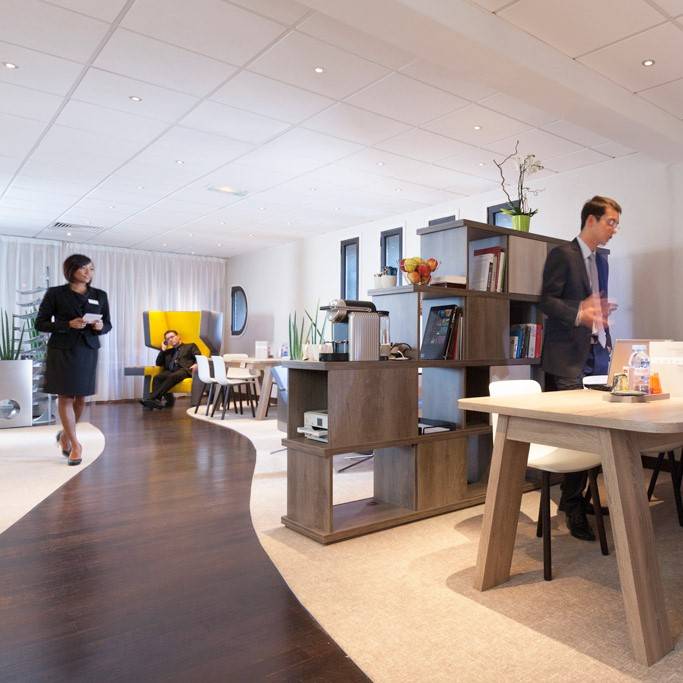
Workplace wellbeing is now embedded in the very bricks and mortar of the building 0
by Sion Davies • Comment, Wellbeing, Workplace design
(more…)