Search Results for: benefits

Surface Design Show 2020 to focus on sustainability and regional differences

Surface Design Show 2020 to focus on sustainability and regional differences

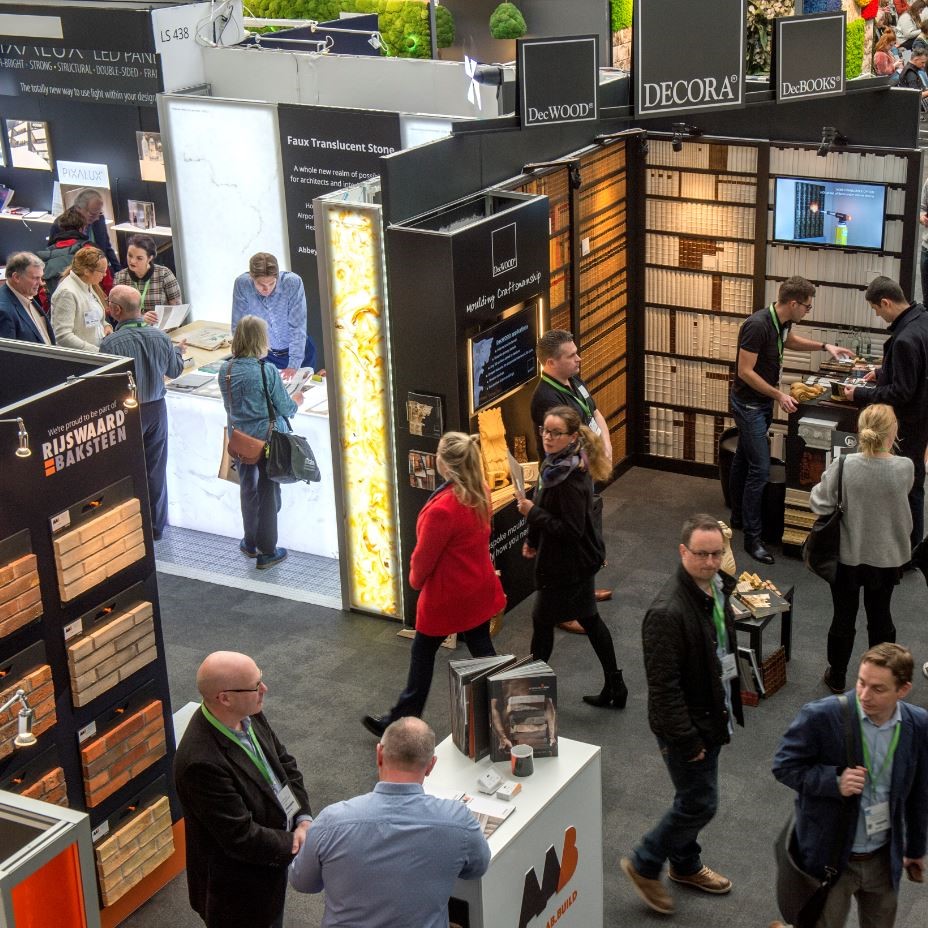
Surface Design ShowThe Surface Design Show, which runs from 11-13 February, has announced its theme for 2020: Close to Home. Held at the Business Design Centre in Islington and celebrating its fifteenth edition, the show’s theme addresses the current climate emergency debate in the context of the surface and materials sector, for both the UK and international markets.

Close to Home will look at a wholly sustainable approach to design. Innovative and thought- provoking products will be highlighted at Surface Spotlight Live, a section of the show curated by trend expert Sally Angharad and forecasters Colour Hive. The theme will look beyond aesthetics and into manufacturers’ impact on the environment, from the processes used in mining or manufacture, through to the carbon footprint sustained during sales and distribution. Designing with a conscience will also be examined, from reusing waste materials to looking at what happens at the end of a product’s life cycle.

There will be a number of home-grown products on display including textiles from the North of England from exhibitors such as New Talent’s The Monkey Puzzle Tree and porcelain in the Midlands from H+E Smith. Several areas worldwide which are renowned for specific materials, will also be represented, from Italian marble to Spanish tiles from Tile of Spain and ceramics from Portugal’s Viúva Lamego. Other issues examined through the theme include why these areas have become market-leaders in their respective material markets, what benefits a project brings to the local area in terms of employment, preserving skills and sustaining the local community, and what challenges there are in continuing to serve the global marketplace.

Further questions to consider include can we ever return to buying locally, with particular reference to the UK post-Brexit, given the fact that we’re so used to being global consumers? Should manufacturers use local designers, as opposed to those based hundreds or even thousands of miles away?

Over the 2½ days, Surface Design Show will host approximately 30 presentations from 50 speakers, including panel discussions and talks centred around this highly topical theme, including Jo Roan, associate strategy director at PriestmanGoode talking sustainability through ‘Get Onboard: Reduce. Reuse. Rethink’ on the Main Stage on from 1:45pm – 2:30pm on Thursday 13 February. Also featured on the Main Stage on Wednesday 12 February is ‘Close to Home: Consciously Creating Spaces from Concept to Completion’ with Nicola Keenan from Boxx Creative ( 3:15pm – 3:45pm) and Hotel

Designs’ editor Hamish Kilburn who highlights the importance of close to home in his presentation entitled ‘Biophilic Materials in Surface Design’ from 12:30pm – 1:00pm on Thursday 13 February.

Tickets are free to professional and trade visitors. Register at https://www.surfacedesignshow.com/register

Two thirds of bosses say workers don’t like change. Workers disagree.

Two thirds of bosses say workers don’t like change. Workers disagree.

changeNew research by HR solutions provider People First, part of MHR International, claims that nearly three-quarters of bosses think that their employees do not like change. However, the same research suggests that 1 in 4 employees say that it is in fact their bosses who do not like change and who are holding the business back. Surveying the attitudes of 250 bosses and 250 employees from firms across the UK, the research highlights an interesting disconnect between bosses and their staff when asked about the other’s shortcomings. (more…)

Commuting and outdated tech are biggest work gripes

Commuting and outdated tech are biggest work gripes

London commutingCommuting, difficult colleagues and archaic tech are among the UK’s biggest office gripes, according to new research from Village Hotel Club. The study, which explores what makes UK workers tick and what ticks them off, also uncovered what benefits workers want to see most, with flexible working topping the list. (more…)

Office design can be a vehicle for equality and change

Office design can be a vehicle for equality and change

workplace design for inclusionThe way companies design physical environments is a direct reflection of their values and beliefs. Inequality is hardwired into the “standard” office layout, with perimeter offices and fixed desks offering limited settings for unstructured collaboration and recreation, further perpetuating the issue. Modern office design often favours extroversion and emphasises a hierarchy with values that benefit only a small portion of the overall workforce, contributing to organisation-wide imbalance. So how do we create more inclusive workplaces that can be leveraged as vehicles for change? (more…)

Merging workplace cultures and breaking habits

Merging workplace cultures and breaking habits

Ricoh London workplaceHuman beings are hardwired to be creatures of habit. From birth, we learn behaviours and develop routines that are reinforced over time through repetition. Researchers at MIT claim the neurons in our brains are responsible for this process. When someone begins a new activity a certain part of the brain kicks into gear, helping them to learn the exercise quickly. But once the action is repeated successfully, the scientists found, those same neurons only really come to life at the beginning and end of the activity. This is the reason that mundane tasks, like getting dressed or driving a car often feel like they’re performed on ‘autopilot’ and why breaking bad habits is so difficult, including those we develop in the workplace. (more…)

A side hustle the only way for many young people to make ends meet

A side hustle the only way for many young people to make ends meet

the growing art of the side hustleBritain’s graduate debt crisis means that nearly half of current students and recent graduates (42 percent) have taken up a so-called side hustle or joined the gig economy, in order to combat debt, afford rent and the rising cost of living. One in five (22 percent) also cited having two additional jobs, with the next generation of workers concerned about the overwhelming cost of living. (more…)

World Green Building council launches case study library of best practice

World Green Building council launches case study library of best practice

Green Building

The World Green Building Council has launched a new digital case study library showcasing what it claims is excellence in sustainable development globally, featuring buildings that are net zero carbon and/or enhance human health. According to the WGBC, claims are verified by established certification schemes, rating tools or other third-party systems. Buildings and construction together account for 36 percent of global final energy use and 39 percent of energy-related carbon dioxide emissions when upstream power generation is included. Additionally, people spend 90 percent of their time in buildings, and there is a consistent association between unhealthy indoor environments and negative human health impacts. (more…)

Workplaces still do not support collaborative work as well as they should

Workplaces still do not support collaborative work as well as they should

collaborative workA near universal 91 percent of UK workers believe collaborative work with colleagues is essential for their productivity and creativity, yet nearly three-quarters of them work in traditional, enclosed spaces non-conducive to active participation and spontaneity according to new research from Steelcase. The report claims that team-based work is fundamental to modern businesses with 55 percent of the UK spending their time working with others but workspaces are actually unable to support collaborative work. (more…)

Is IoT the answer to occupancy level issues?

Is IoT the answer to occupancy level issues?

A frequently heard claim from manufacturers is that all Internet of Things (IoT) technology is the panacea to occupancy level issues for owners and managers of commercial buildings. The obvious retort is “Well, they would say that wouldn’t they?” since the equipment they have on offer is produced with the sole purpose of putting a degree of intelligence into smart buildings. The benefits of making your commercial premises ‘smart’ have been aired many times – including the ability to manage in real-time systems for air quality, temperature, noise levels, fire detection, equipment failure, and lift management. While having this kind of information at your fingertips is undoubtedly useful, the management of occupancy is an area where building managers are starting to see real dividends because they are able to make major savings in running costs. (more…)

UK industries leading global charge for AI investment, study claims

UK industries leading global charge for AI investment, study claims

AI eyeA new study claims that the UK is at the forefront of a global drive for Artificial Intelligence investment, with a near universal 99 percent of UK respondents planning to invest in AI, versus 80 percent in North America, and 83 percent in mainland Europe. The report from IFS (registration) sets out to explore the perception and adoption of AI  within core industries worldwide. It polled the views of 600 decision makers working with technology and suggests that AI  will predominantly be used to make existing workers more productive (60 percent) and add value to products and services (48 percent).

(more…)

Remote working has mixed effect on wellbeing, stress and productivity

Remote working has mixed effect on wellbeing, stress and productivity

remote working and wellbeingNuffield Health has released a review of remote working and its impact it on companies and their staff. According to The effects of remote working on stress, wellbeing and productivity (registration), while remote and flexible work help people deal with the conflicting demands of their lives, the evidence is unclear on how they affect productivity, stress and wellbeing. (more…)

Flexible working does not reduce levels of overwork

Flexible working does not reduce levels of overwork

UK employees are having to work harder to pay the bills, with the vast majority (91 percent) working beyond their contracted hours on a weekly basis and almost half (43 percent) not leaving the office or taking a break at lunchtime according to an analysis of Morgan McKinley’s Working Hours and Flexibility reports. And the growing practice of flexible working appears to be having no impact on the overworking culture.

(more…)