







January 23, 2018
Flexible and coworking offices to account for ten percent of UK property market by 2027
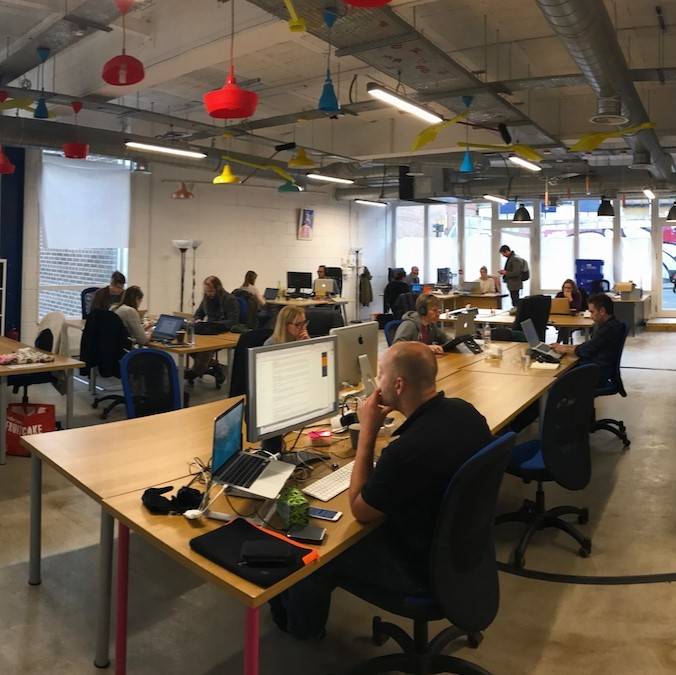
 Demand for flexible workspace including coworking space soared across the UK during 2017, according to a report from Cushman & Wakefield. The study of the rapidly growing market also claims that WeWork is already the largest single corporate occupier of office space in London, with only the public sector exceeding its scale. In addition, the report also claims that WeWork has taken up more space in London’s key commercial property districts than any other occupier since 2012. According to the report, WeWork has taken up more than twice as much space as Google, which leased 1.3m sq ft over the five-year period, while Amazon and Deutsche Bank leased just over 1 m sq ft and 0.9 m sq ft.

 The UK has been ranked as the eighth best country in the world for the ability to attract, retain, train and educate skilled workers, but while its ability to leverage diversity for talent competitiveness is boosted by its global knowledge skills – the UK is undermined by its weaker performance on tolerance and gender equality. According to the Global Talent Competitiveness Index GTCI) produced by the Adecco Group, with international business school INSEAD and Tata Communications, the UK has a particularly strong pool of global knowledge skills, a variable for which it is ranked third in the index boosted further by its strong regulatory, market and business landscape. But this is undermined by its internal openness, where it still lags behind, especially when it comes to gender equality. The report also suggests that although Article 50 was triggered in 2017, the ongoing negotiations and continuing lack of clarity over the UK’s position once it leaves the European Union in 2019, means the impact of Brexit is not yet clear.















December 6, 2017
Gig economy workers should not be criticised for defending their rights
by Michael Farrelly • Comment, Flexible working
The gig economy and workers’ rights are among the most prominent themes of our age. In the future of employment – in particular, what it means to be employed or self-employed – they are critical. Catapulted to the heart of this debate is Uber, which has deployed its ride-hailing platform app in nearly 500 cities around the world since its San Francisco launch seven years ago. But in the UK and elsewhere, it has run into myriad legal problems. Most recent among them, Uber lost a hearing at an Employment Appeals Tribunal (EAT) in London in a case brought by co-claimants, James Farrar and Yaseen Aslam. The verdict in favour of the two Uber drivers poses a threat to the fundamental premise that has fuelled the meteoric rise of the gig economy: that workers work for themselves and not for the apps which rely on them.
(more…)