






Search Results for: climate

UK Green Building Council announces launch of first Innovation Lab

UK Green Building Council announces launch of first Innovation Lab 0

The UK Green Building Council (UK-GBC) has announced the launch of its first Innovation Lab, which it claims offers ‘a radical new approach to innovation in the built environment’. The Lead Partners for the programme are: Canary Wharf Group, Land Securities and Marks & Spencer. The Innovation Lab aims to identify and address what it calls the systemic challenges facing businesses within the sector, and co-create innovative and highly sustainable solutions.

Head of Leadership and Innovation at UK-GBC, Cat Hirst, said: “Research and Development levels across our industry are painfully low; the UK currently only spends £43m on construction R&D. The risks to a single company of investing in developing a solution for such a high-cost industry is often seen as prohibitive. But we desperately need to find ways of working together to achieve radical change if we are to challenge business as usual and transition to a sustainable way of working.

“At UK-GBC we’re seeking to catalyse this change by using our unique position to convene our member organisations to work together to address the issues our industry faces. We want to ensure there is the time, space, and structure for open innovation to occur for the built environment.

“The Innovation Lab is not just about finding one solution to one problem, it’s about fostering a more open and collaborative approach to problem solving as an industry. We need to build the capacity of our industry to innovate and find the right approach to being creative and collaborative within a commercial setting.”

The Innovation Lab began last month with a workshop to identify the ‘breakthrough challenge’ which will form the focus of a 9-month programme of work. In order to arrive at the challenge, the UK Green Building Council is working with the Lead Partners and thought leaders from the wider UK-GBC membership to explore future trends for the built environment as well as key environmental and social challenges, and pain points for business. The initial workshop highlighted key industry challenges around climate change resilience, resource use, shifting demographics, technological advancement and health and wellbeing.

Over the coming weeks, the breakthrough challenge will be refined in consultation with the Lead Partners. The next workshop will be on 1 February, where Innovation Lab participants will begin to respond to this challenge by mapping existing innovations and, where a gap is identified, generating new innovative solutions to solve the challenge.


Money worries undermine performance of one in four workers says CIPD

Money worries undermine performance of one in four workers says CIPD 0

Money worries undermine performance of one in four workers says CIPD

A quarter of people are suffering with money problems so substantial that it is affecting their ability to do their job, claims a new survey published by the CIPD and Close Brothers Asset Management. Physical fatigue caused by lost sleep when worrying about money, is the most common explanation for how financial concerns have impacted people’s productivity, effecting one in five employees (19 percent). The number reporting problems rises to a nearly a third (31 percent) among 18-24 year olds, and those living in London (32 percent). The problem is not limited to low earners either, with one in five (20 percent) of employees earning £45,000 to £59,999 saying that financial anxiety has affected their ability to do their job. Meanwhile, women are more likely than men to report that money worries are affecting their work, with nearly three in ten (28 percent) women reporting the problem, compared with less than one in four (23 percent) of men.

(more…)

Britain must future proof itself ahead of a decade of disruption, claims report 0

Brexit negotiations will ‘fire the starting gun’ on a decade of change for the UK, claims a new report from think tank the Institute for Public Policy Research (IPPR). The study, Future Proof: Britain in the 2020s, sets out the key challenges it claims will shape the UK in the period up to 2030 and the ‘choices that must be made now if these changes are to lead to a fairer and more equal society’. Among the issues covered in the report are the challenges directly related to Brexit, alongside factors such as an ageing population, other demographic changes, the risk to jobs posed by automation, the shift of the globalised economy towards Asia and the enduring problems associated with wage inequalities and the environment.

(more…)

The Work Foundation launches Commission on Good Work

The Work Foundation launches Commission on Good Work 0

reward-gateway-offices-by-area-sq-london-ukThe Work Foundation, part of Lancaster University, has launched a new Commission on Good Work. The commission will seek answers to key questions such as ‘why is a focus on good work so important now?’,  ‘what does good work mean in a modern economy?’ and ‘how do we achieve good work?’ The initiative was launched by Work Foundation Director Lesley Giles who invited stakeholders from businesses, trade unions, professional bodies, and the public and voluntary sectors to be part of a ‘Good Work Taskforce.’ Supporting the launch were Sir Charlie Mayfield (John Lewis Partnership), Dame Fiona Kendrick (Nestle),Douglas McCormick (Sweett Group), Mark Keese (OECD), Gail Cartmail (Unite), Peter Cheese CIPD, Scott Johnson (a small business owner) and Professor Paul Sparrow (Lancaster University Management School).

(more…)

Reducing paper-weight is the key to maintaining a healthy business in the digital age

Reducing paper-weight is the key to maintaining a healthy business in the digital age 0

cameraThe idea of creating a paperless office has been circulating for at least 40 years. Business Week famously forecast its arrival in 1975, predicting that paper would be on its way out by 1980 and dead by 1990. However, it’s almost 2017 and even with new and innovative digital technologies that enable us to operate in a highly connected world, the paper-light office is still far from our reality. Yet institutions from a variety of different sectors are leading the way when it comes to driving initiatives forward to going paperless and paper-light. For example, to address the need of approximately 12 million people in the UK that annually fill in a self-assessment tax form, plans have been put in place by the government to give individual digital accounts, aiming to allow more than 50 million individuals and small businesses to manage their tax affairs online. As a result, costs will be significantly cut by erasing expensive and laborious bureaucratic processes in the long-term, whilst fundamentally streamlining and simplifying intricate business services and applications.

(more…)

The UK’s infrastructure is improving but too slowly for most organisations

The UK’s infrastructure is improving but too slowly for most organisations 0

technological-infrastructureAlmost half of firms (44 percent) believe the UK’s infrastructure has improved over the past five years, but only a quarter (27 percent) think it will pick up in the next five years, and two thirds (64 percent) suspect it will hamper the country’s international competitiveness in the coming decades, according to the 2016 CBI/AECOM Infrastructure Survey. Delivery of key projects already in the pipeline emerged as the top priority among the 728 firms surveyed. Delivery of £38 billion of investment in the rail network through Control Period 5 (99 percent of respondents), and £15 billion of investment in the UK’s motorways and A-roads through the Road Investment Strategy (97 percent of respondents) rank highly, as does delivery of a new runway in the South East (85 percent) & HS2 (80 percent). Many firms have specific concerns about teh country’s digital infrastructure including the ability tow work on teh go on trains and elsewhere.

(more…)

Ten countries including Australia, Canada, Germany, India and US announce plans to recognise zero carbon emissions buildings

Ten countries including Australia, Canada, Germany, India and US announce plans to recognise zero carbon emissions buildings 0

green-building-logoThe World Green Building Council’s goal to ensure that every building produces zero carbon emissions by 2050 took a major step forward this week as Green Building Councils in 10 countries (Australia, Brazil, Canada, France, Germany, India, the Netherlands, South Africa, Sweden, and the US) made progress on their plans to introduce net zero certification or designation schemes within their own countries, at COP22. Specifically, the Green Building Council of Australia, Canada Green Building Council, the German Sustainable Building Council (DGNB), India Green Building Council and the US Green Building Council all announced their intention to introduce schemes that recognise and reward net zero carbon buildings, with some announcing target dates by which they will introduce them. These schemes could be either stand alone net zero certification schemes, or a net zero designation within existing certification schemes.

(more…)

Corporate real estate sector continues to make progress in energy consumption, carbon emissions and water use

Corporate real estate sector continues to make progress in energy consumption, carbon emissions and water use 0

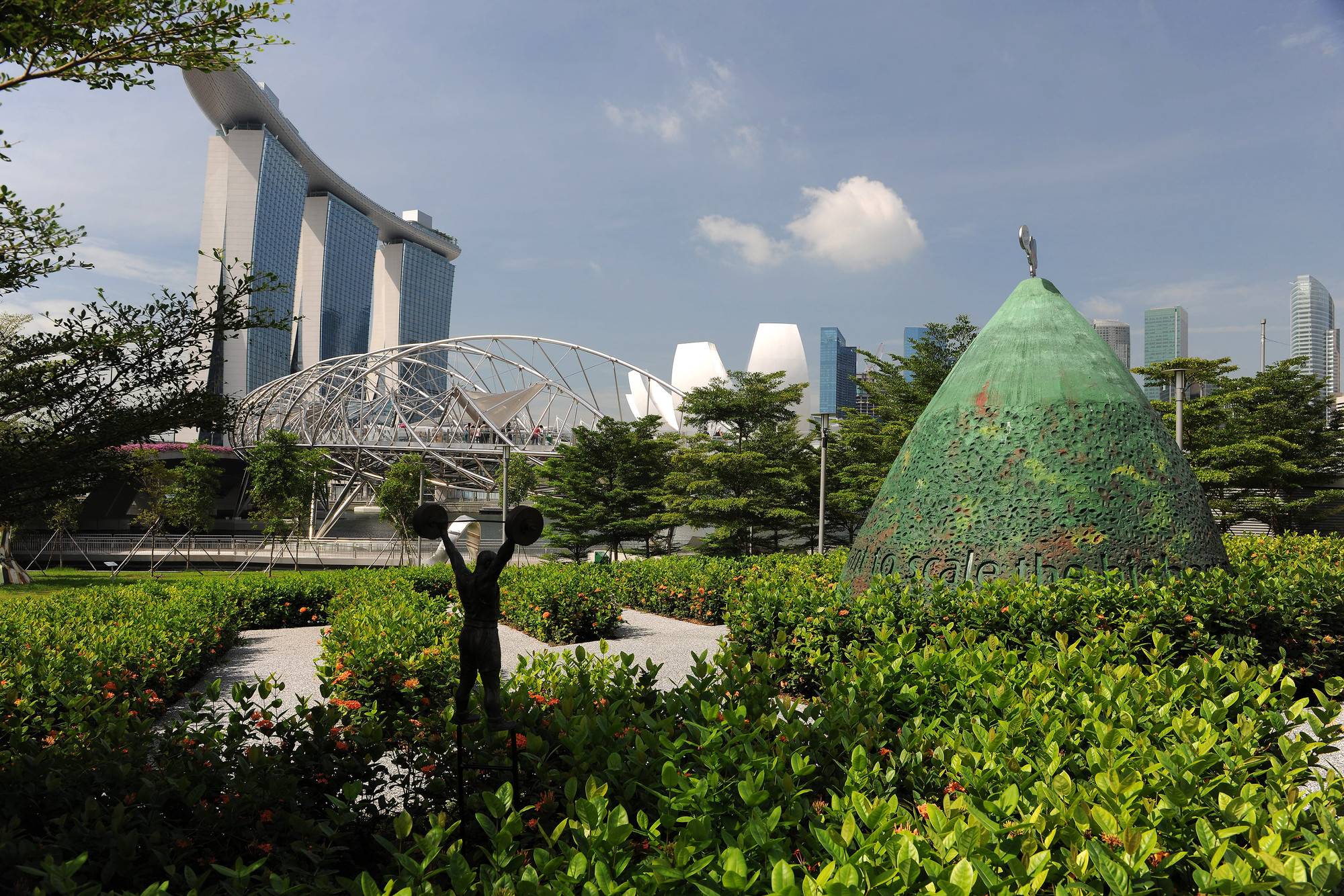
marina_bayThe world’s leading corporate real estate owners and managers are making significant progress in reducing energy consumption, carbon emissions and water usage in their buildings, according to a new report from the Urban Land Institute’s (ULI) Greenprint Center for Building Performance. The Greenprint Performance Report, which measures and tracks the performance of more than 5,400 properties owned by Greenprint’s members, demonstrates a 3.4 percent reduction in energy consumption, a 3.9 percent reduction in carbon emissions and a 4.8 percent reduction in water use between 2014 and 2015. According to the study, since Greenprint started recording building performance in 2009, the energy consumed by members’ properties tracked by Greenprint has dropped 13.7 percent. Carbon emissions from those properties have decreased 16.5 percent; and water usage has dropped by 10.6 percent. The reductions occurred even as building occupancy rose, suggesting that greater space usage does not necessarily cause a decline in building performance.

(more…)

Worldwide progress in creating sustainable building regulations is slow

Worldwide progress in creating sustainable building regulations is slow 0

green-transparency-sustainable-regulationsThe level of transparency in the reporting of the environmental performance of commercial real estate is growing across the world, but the pace of new sustainable building regulations remains slow. That is the key finding of JLL’s Real Estate Environmental Sustainability Index, which measures the availability of a range of environmental transparency tools in 37 countries. Whilst 17 countries have improved their overall scores since the last survey two years ago, 13 have remained static and three have declined. Half of all country index improvements have been driven by the introduction of voluntary minimum energy efficiency standards for existing buildings. This year France topped the Index for the first time, thanks to the consistent roll-out of mandates to transition to a low carbon economy. Japan has moved up from the transparent group to join France, Australia and the UK in the highly transparent group.

(more…)

Study shows how a green city in the desert still has much to teach the world

Study shows how a green city in the desert still has much to teach the world 0

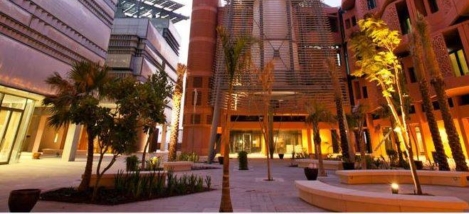
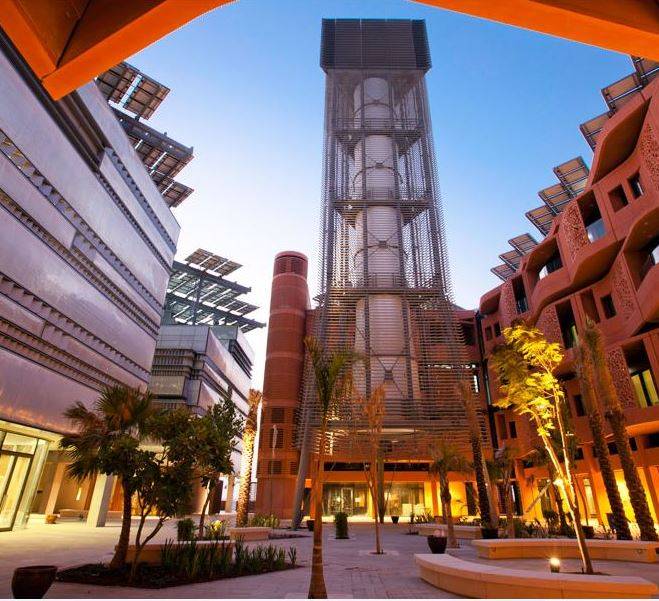
masdar-green-cityA much publicised but occasionally troubled green city in the United Arab Emirates without light switches or water taps has much to teach people around the world about saving energy and precious resources, claims a new study from researchers at Birmingham University. With its low-rise and energy efficient buildings, smart metering, excellent public transport and extensive use of renewable energy, the 2,000 citizens of Masdar City in Abu Dhabi, are living in a place which is a ‘green’ example to city planners around the globe, claims the report. There are no light switches or water taps in Masdar City. Movement sensors control lighting and water in order to cut electricity and water consumption by 51 percent and 55 percent respectively. Masdar is a mixed use development that is the world’s first city designed to be ‘zero carbon’ and ‘zero waste’. Masdar City is a large-scale mixed use development which lies 17 kilometres south-east of the city of Abu Dhabi.

(more…)

Office property sector leads global real estate market in sustainability

Office property sector leads global real estate market in sustainability 0

global-sustainabilityThe global real estate market is showing signs of improvement across all areas of environmental, social and governance performance (ESG) including a 1.2 percent reduction in energy consumption, 2 percent reduction in GHG emissions and close to 1 percent reduction in water use. It is also placing greater focus on occupant health and well-being. This is according to the latest data compiled by GRESB, a benchmarking organisation for real estate companies and funds which evaluates sustainability practices in the global real estate sector. In the results for the 2016 GRESB Real Estate, Developer and Debt assessments, which analyses the sustainability performance of more than 1,100 real estate portfolios of both private equity and listed companies, Australian entities outperformed all other regions with an average score of 74, which is 14 points above the global average; and office companies and funds outperformed other property types with an average score of 66.

(more…)

Do people really matter when we design workplaces?

Do people really matter when we design workplaces? 0

HumanSome may think this is a daft question. They’ll argue that of course people matter when we design workplaces. Granted, there are those for whom the human experience of the built environment is really important.  They demonstrate this it in their attitudes and actions. However, based on some of the attitudes and actions I have observed over the years, I would suggest that the belief that people really matter when some designers design workplaces for them is quite frankly all too often skin deep. How do we know this? And if we accept that it is true, it then begs the secondary question of why this should be the case. Is it entirely our fault? What might we do to address the issues? In part, we know that people haven’t really mattered enough in design because of mistakes of the past. Meanwhile, society is facing many pressing challenges, ranging from health to housing, work to economy and climate change to resource depletion.



(more…)