To provide the best experiences, we use technologies like cookies to store and/or access device information. Consenting to these technologies will allow us to process data such as browsing behaviour or unique IDs on this site. Not consenting or withdrawing consent, may adversely affect certain features and functions.
The technical storage or access is strictly necessary for the legitimate purpose of enabling the use of a specific service explicitly requested by the subscriber or user, or for the sole purpose of carrying out the transmission of a communication over an electronic communications network.
The technical storage or access is necessary for the legitimate purpose of storing preferences that are not requested by the subscriber or user.
The technical storage or access that is used exclusively for statistical purposes.
The technical storage or access that is used exclusively for anonymous statistical purposes. Without a subpoena, voluntary compliance on the part of your Internet Service Provider, or additional records from a third party, information stored or retrieved for this purpose alone cannot usually be used to identify you.
The technical storage or access is required to create user profiles to send advertising, or to track the user on a website or across several websites for similar marketing purposes.









 More than six in ten UK managers have experienced burnout at work because of the COVID-19 pandemic, with a fifth considering quitting their job as a result, according to new research from Benenden Health. (more…)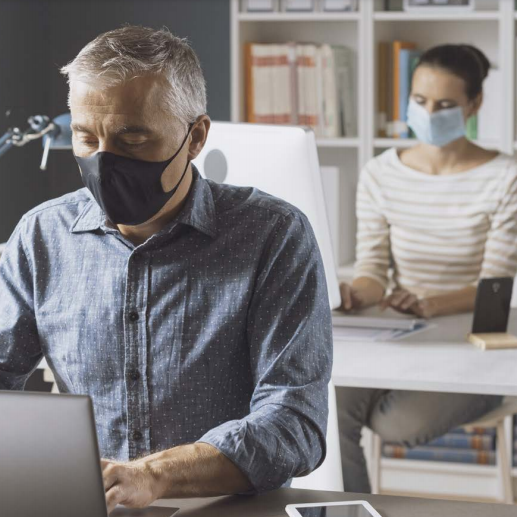
 Corporate wellbeing could add £61bn to the English economy by 2025 through added productivity, if UK companies can create new wellbeing strategies and improve underperforming ones, according to a new study by
 A new report from KPMG suggests that half of major corporations do not expect to see a return to any sort of ‘normality’ until 2022 when half of the general population has been vaccinated. The report also claims that there has been a steep decline in the appetite of the global executives who took part in the survey for office downsizing as the firms reconsider the need for in-person business to resume when countries emerge from the pandemic.
 The Covid-19 pandemic had a serious impact on the home office furniture market in 2020, according to a new


 Around a half (51 percent) of employees believe job security and flexibility (40 percent) are more important than salary (32 percent) when considering whether to remain at their current employer, according to a new report by UK law firm,
 A
A 

 Temporary moves boost creativity according to new research from
 During the pandemic, 1 in 4 (25 percent) employees say they’ve had no wellbeing check-ins from their workplace. The research from
 The cost of poor company culture is a staggering £20.2 billion per year, according to research from HR software provider








March 17, 2021
No jab, no job? Can employers enforce a vaccination programme?
by Karen Holden • Comment, Legal news, Wellbeing