







August 19, 2017
KI launches new Ruckus seating collection for active learning spaces
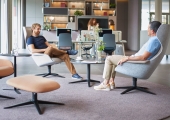
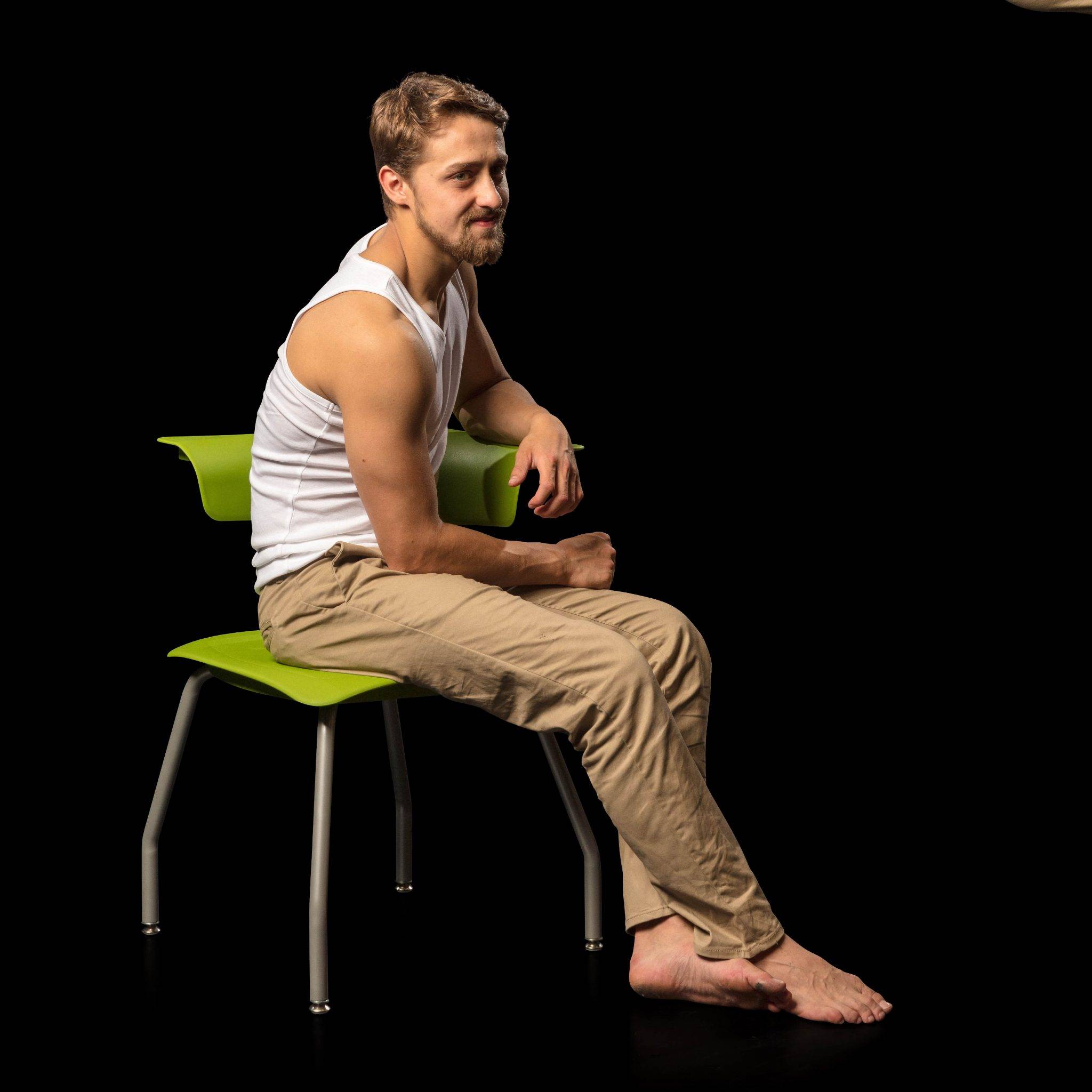 KI’s new Ruckus seating collection disrupts and redefines the boundaries of learning spaces. It’s not so much an evolution as a revolution. It looks like nothing else, it can be used like nothing else. This game-changing chair optimises student engagement, facilitates a wide range of teaching styles, and adapts to a variety of users and uses. Today’s educational environments are required to support ‘active learning’. Maker-centred and project based learning models are replacing linear, more traditional instructor-based lessons. Innovative curricula and pedagogies can only succeed if students are able to move freely and engage with their teachers, their materials and each other. Ruckus is a unique approach to facilitating this essential movement – it allows the user to rotate 360 degrees within the chair, rather than having to move the chair itself. Regardless of starting position, the user can quickly pivot and reorient themselves to where they need to direct their attention. This has been proven to enhance concentration, retention and engagement with materials, tools, instructors and fellow students.







 An increase in the number of UK-born employees leaving the UK’s workforce, either through retirement or emigration is coinciding with a shrinking pool of younger workers, which a fall in immigration can no longer fill, a new report warns. An analysis of the UK’s workforce showed that the UK’s workforce grew in 2016-2017 only because of an increase in EU and non-EU workers.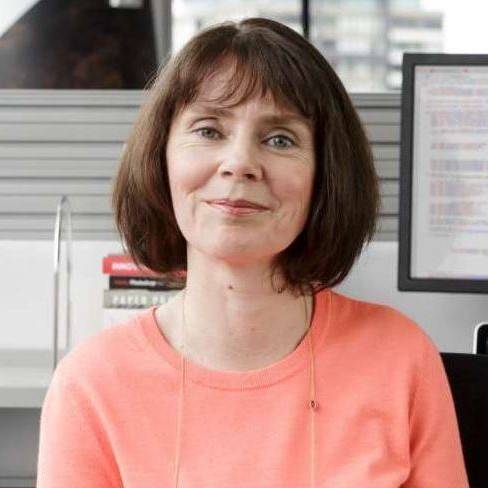










August 2, 2017
Whatever you might be told, this is not the Office of the Future
by Mark Eltringham • Comment, Facilities management, Technology, Workplace design
(more…)