


Search Results for: interaction

Uberification of work + Future of coworking + Quest for productivity

Uberification of work + Future of coworking + Quest for productivity 0

Tower 535 CoworkingIn this week’s Newsletter; Anthony Brown argues Uber’s success lends a name for a process that is reshaping the commercial property sector; Mike James wonders where the gig economy and zero hours contracts are taking us; and Mark Eltringham discusses the interaction of people and technology. Two new reports highlight the growth of the freelance workforce in the UK and US; researchers analyse the impact of coworking from a corporate real estate (CRE) perspective; Barclays presents its vision of the workforce of the future; and Herman Miller unveils a new Aeron chair.  The latest stage of the UK’s BIM Task Group programme is officially launched; responses to a government enquiry reveal the barriers the built environment still presents to disabled people; and a combination of financial, mental and physical health problems affect many workers. Download our new Briefing, produced in partnership with Boss Design on the link between culture and workplace strategy and design; visit our new events page, follow us on Twitter and join our LinkedIn Group to discuss these and other stories.

Design is the top factor when it comes to workplace happiness, claims study

Design is the top factor when it comes to workplace happiness, claims study 0


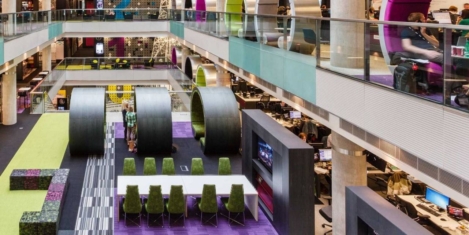
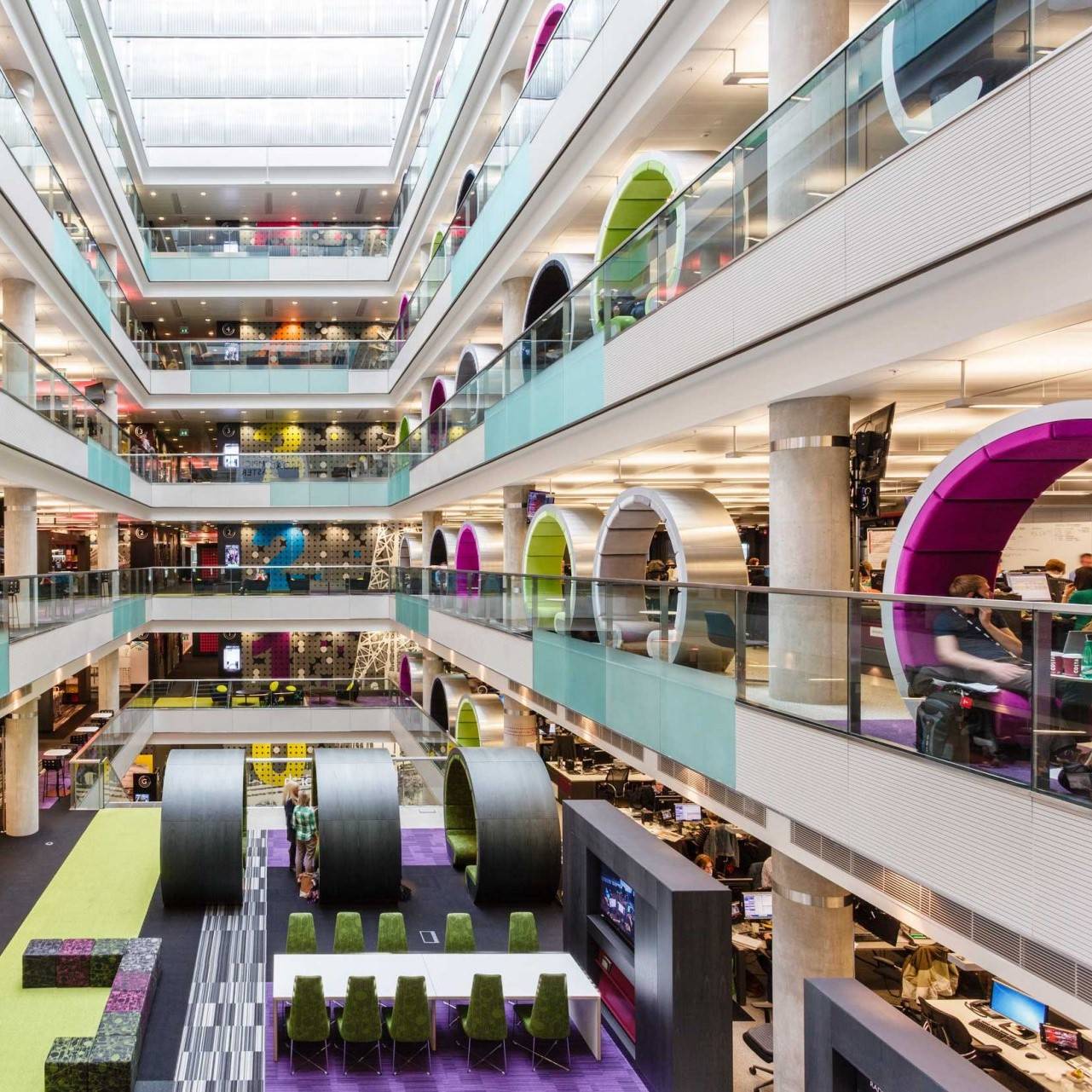
3692_bbc-media-city_01New research from Office Genie claims that office design makes the most significant difference to employee happiness levels. According to the survey of 2,000 British workers, when someone felt comfortable with the design of their workplace, it boosted their happiness by 33 percent compared to those who felt uncomfortable. Workplace design was found to have a larger impact than office temperature levels, light levels, noise levels, and social interaction levels: temperature made an average difference of (5 percent), light (6 percent), noise (8 percent), and social interaction (8 percent). It also came in ahead of the ability to work flexibly, specifically the ability to work from home which made a 12 percent difference to happiness levels. This is particularly remarkable when flexible working is often cited as one of the biggest factors affecting employee happiness, according to the study.

(more…)

Workers now spend around half of their working hours on email

Workers now spend around half of their working hours on email 0

emailIf you feel like you are checking your email more than ever before, the chances are that you are. Email continues to be the number one communication channel for people around the world, and that includes Millennials, although their use of text and instant messaging is changing the way email is used. According to the new study of 4,000 people in the US, UK, France and Germany from Adobe, the amount of time we spend checking messages increased by an average of 17 percent last year. British workers in the UK spend on average 90 days a year reading email, compared to 62 days for the Germans, 99 days for the French and 88 hours for Americans. This means that the average British worker spends slightly over 4 hours each day checking their messages, including in the bathroom, in front of the television and even while with other people.

(more…)

Tech laggards risk losing employees, claims Future Workforce Study

Tech laggards risk losing employees, claims Future Workforce Study 0

digital infrastructureDell has unveiled the European and South African findings from the Dell and Intel Future Workforce Study, which identifies the global technology trends shaping the modern workplace. The results show that almost half of employees in these regions believe their current employer is not effectively making use of the latest technology advances. The 2016 Future Workforce Study, conducted by research firm PSB, polled nearly 4,000 full-time employees from small, medium and large businesses in 10 countries. Of those polled in the UK, Germany, France and South Africa, many do not believe that they will be working in a smart office within the next five years and perceived their current workplace technology as lagging behind personal devices on innovation. With the research showing that the influx of new technology is having a significant impact on what workers expect from their employer, workplaces which don’t enact these new advances may be left behind.

(more…)

North America leading the way in adopting healthier buildings

North America leading the way in adopting healthier buildings 0

Wells Fargo SAN FRANCISCO, CA, USAWhile building owners, developers, managers and investors in North America are showing increasing interest in practices that prioritise the physical, mental and social well-being of tenants and occupants, European buildings have fewer spaces created with wellness in mind. The Drive Toward Healthier Buildings 2016, by Dodge Data & Analytics and the World Green Building Council, produced in partnership with the Canada Green Building Council and Delos, says the top five healthier building features currently in use include better lighting, products that enhance thermal comfort, spaces that enhance social interaction, enhanced air quality and products that enhance acoustical comfort. However, in an analysis of global trends in health and wellbeing, European respondents reported less frequent use of spaces that enhance tenant mood, spaces that enhance social interaction or spaces that create opportunities for physical activity than their North American or Asian counterparts.

(more…)

Research suggests individual responses to stress at work vary widely

Research suggests individual responses to stress at work vary widely 0

Stress is relativeNo matter how compelling the evidence on the impact of stress at work there are always individuals who dismiss the very idea as self-indulgence. New research suggests this isn’t down to lack of empathy but simply because some people just don’t experience stress the same as others. The survey by the Deloitte Greenhouse Experience team found statistically significant variation in how respondents react to stressors which indicates that workplace stress is relative and not everyone experiences stress in the same way or to the same degree. The majority of respondents reported modest levels of stress. Fourteen percent reported being stressed only rarely and 57 percent reported being stressed sometimes, while 26 percent reported being stressed often, and 3 percent reported being always stressed. Different scenarios were also mooted to identify stress triggers. Making mistakes topped the list of stressors, with 82 percent of respondents indicating errors caused stress.

(more…)

Intelligent lighting can enhance workplace wellbeing and productivity

Intelligent lighting can enhance workplace wellbeing and productivity 0

Good lighting can enhance a workplaceThe main driver of the growing interest in wellbeing in recent years has undoubtedly been absenteeism. But workers don’t have to be ‘absent’ from the workplace to hamper productivity. Presenteeism, where employees are present but not productive can also influence the long-term success of an organisation. The interaction between the worker and their work environment has a huge influence on an individual’s wellbeing and overall productivity, with employees’ performance more likely to be enhanced when they are immersed in a comfortable and stimulating environment. This can include all the usual stipulations, such as a well-designed workstation, a comfortable office temperature and carefully considered and appropriate lighting. In fact, improved lighting is an essential element in the overall mix, not only because of the cost savings that their energy efficiency brings but also in the way lighting contributes to workplace wellbeing and people’s performance.

(more…)

Working with people and on complex tasks slows cognitive decline

Working with people and on complex tasks slows cognitive decline 0

hands-heroWorking on complex tasks and work that is based on interactions with other people rather than data or things appear to protect against cognitive decline, according to research presented at the Alzheimer’s Association’s International Conference in Toronto. Researchers in two separate studies claim that people whose work requires complex thinking and activities are better able to withstand the wider causes of cognitive decline. The results suggest that working with people, rather than data or physical things, contributed the most to the protective effect and could offset the widely reported effects of a Western diet on cognitive ability. Researchers found that people with increased white matter hyperintensities (WMHs) – white spots that appear on brain scans and are commonly associated with Alzheimer’s and cognitive decline – could better tolerate WMH-related damage if they worked primarily with other people rather than with things or data.

(more…)

Increase in workplace technology spend will help make offices ‘more human’

Increase in workplace technology spend will help make offices ‘more human’ 0

Agile workingSpending on workplace technology has doubled in the past five years as artificial intelligence is used to redefine how we connect in the workplace. That is the central claim of a new report from design firm Unispace based on interviews with CEOs and Heads of Real Estate at some 100 blue chip firms worldwide including KPMG, Cisco, Adidas, GE, Accenture, Boston Consulting Group, Regus, Deloitte, UBS, Chevron, CitiGroup, and Ashurst, Respondents were asked to assess how they expect to use office space in 2020. According to the report, respondents indicated that they will continue increasing technology spend, irrevocably changing the traditional office space as we know it. Over the last five years, the average company spent 10 percent of its workplace budgets on technology with 30 percent going on services, partitioning and furniture. The trend has now reversed with technology spend outstripping other spend as companies strive to improve efficiency, collaboration, creativity, engagement and recruitment.

(more…)

Winning over employees during the great Summer of sport

Winning over employees during the great Summer of sport 0

p1467074470-3The summer brings about many challenges for both employers and employees. The longer days, warmer weather, and reduced staff numbers are an annual occurrence that managers need to factor in; 2016 also brings a particularly exciting season of sport. High profile events such as Wimbledon, Euro 2016 and the Olympics are already upon us, with many of the events taking place during working hours. Research from Sodexo Benefits and Rewards Services suggests that 1 in 5 people say they typically feel the least motivated during summer or when there is a sporting event taking place. Managers need to combat this in order to maintain productivity levels throughout the summer – but how can this be achieved? And how can they use the opportunity presented by the Summer of sport to build closer relationships with employees that will have longer term benefits for the business than the immediate challenges they present?

(more…)

UK faces digital skills gap … but simply hiring Millennials won’t close it

UK faces digital skills gap … but simply hiring Millennials won’t close it 0

Digital skillsAlthough the UK remains a global tech leader, the country remains in the grip of a digital skills crisis which is holding back productivity and costs around £63 billion each year, according to a report published today by the Commons Science and Technology Committee. The report claims that 12.6 million UK adults lack even basic digital skills, and nearly half of these people (5.8 million) have never even used the internet. Meanwhile, a coincidental report published by Cisco claims that those organisations who apparently assume they can close the gap by merely employing so-called Millennials, will be disappointed because there’s no great correlation between age and confidence in using digital technology. The Digital Culture Clash report found the only meaningful correlations were between the type of work an individual does, their level of employment and their competence and confidence in using technology.

(more…)

Coworking continuing to drive workplace change around the world

Coworking continuing to drive workplace change around the world 0

Coworking weworkCoworking continues to be one of the main drivers of workplace change globally and is now becoming mainstream, according to new research from serviced office provider The Instant Group. According to the firm’s Flexible Workspace Review – US 2016 report, coworking grew more than 10 percent across the US over the last year and ‘combination centres’ which offer both executive suites and coworking spaces expanded by 12.9 percent as existing operators sought to take advantage of the growing demand for collaborative and agile workspace. The study claims that the occupation of flexible workspace by corporations has significantly expanded the US flexible office market over the past year, largely driven by the rise of the contingent workforce and changing workplace demands of Millennials. The total market grew by 4.3 percent and now includes 3,596 centres, the largest markets of its kind in the world with the UK following at 3,290 centres.

(more…)