








May 18, 2018
UK technology sectors continues to outpace rest of the economy, and not just in London
 The UK’s digital technology sector continues to grow faster than the rest of the economy, according to the latest Tech Nation Report for 2018. Turnover of digital tech companies grew by 4.5 percent between 2016-17 compared to UK GDP which grew by 1.7 percent over the same period. This means that the tech sector grew at 2.6 times faster than the rest of the economy. At the same time the number of jobs in digital tech rose five times the rate of the rest of the economy, demonstrating how the digital tech sector is one of the best performing sectors in the UK economy. 2017 proved to be an amazing year for the UK digital tech sector with some of the biggest fundraisings and exits seen in years, as international investors flocked to fund UK-based firms, according to the report. British digital tech companies raised £4.5bn in venture capital investment during the year, almost double the previous year.

 Central London commercial offices under offers are at the highest point in the last 12 months and take-up is ahead of 2017 levels compared with this point last year, new data from CBRE has shown. Central London office take-up for April 2018 stood at 547,900 sq ft, largely driven by pre-letting activity. Office take-up for the year to the end April 2018 was 4 percent higher than the corresponding period in 2017, standing at 3.4m sq ft. Take-up was boosted by 139,600 sq ft of pre-letting activity. Over the last 12 months, the business services sector has represented the largest proportion of take-up at 32 percent, driven by a large number of deals to flexible office providers. Take-up in April was dominated by the creative industries sector, accounting for 44 percent of take-up. The banking and finance sector (26 percent) and the business services sector (21 percent) also represented notable proportions of take-up in April.



 There have already been warnings from workplace experts that the legal profession isn’t one to choose for those starting out on their careers as it’s ripe for automation, and a new survey claims these changes are happening fast. According to a survey of over a 100 law firms by CBRE, nearly half (48 percent) are already utilising Artificial Intelligence (AI) and a further 41 percent have imminent plans to do so. Of the firms already employing AI, 63 percent of firms are using it for legal document generation and review, and the same proportion for e-discovery. Due diligence (47 percent) and research (42 percent) were also common applications, along with compliance and administrative legal support (each 32 percent). The use of AI will affect employment levels, with the greatest impact predicted at the junior and support levels, where nearly half (45 percent) of firms believing that there will be a reduction in headcount. In contrast, only 7 percent of firms believe that senior headcount levels will be reduced.



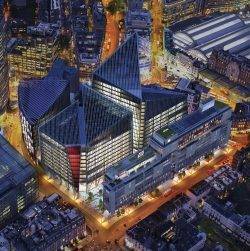 Take up of commercial office leases in London’s West End had its strongest start to the year since 2012, with the banking and finance sector continuing to actively seek space, new figures from CBRE have revealed. The amount of office space under offer on in Central London at the end of Q1 2018 stood at 3.2m sq ft, representing an increase of 6 percent on the previous quarter and showing a 3 percent increase on the same point last year. Take-up in Central London reached 2.8m sq ft in Q1 2018, with its largest deal boasting a 65,900 sq ft letting to WS Atkins at Nova North in Victoria. Availability in Central London increased by 7 percent to 14.3m sq ft but that is still below the total 12 months ago. A total of 1.1m sq ft of development and refurbishment space completed in Q1. A further 2.3m sq ft is expected to complete before the end of the year, of which 54 percent has already been committed to be leased. By the end of the quarter, 9.1m sq ft was being actively sought by occupiers, primarily from the banking and finance sector (26 percent) and creative industries sector (24 percent).







 There have been 18 months of faltering net effective rents within the commercial office market in the Capital since the Brexit referendum, with ten of the 18 Central London office submarkets monitored in Cluttons’ latest London Office Market Outlook report registering rent falls in the final quarter of 2017, buoyed by additional incentives such as contributions to fit out costs and even delayed completions becoming commonplace in many locations. The report also raises concerns about the potential for an oversupply of serviced offices within the Capital. However, despite this and a perception that Central London offices are currently fully prices or possibly over-priced, by both occupiers and domestic investors, London remains a resilient city, continuing to attract high volumes of overseas capital. Employment growth is of course expected to be influenced by both the levels of GDP growth during 2018 and the Brexit divorce proceedings, which in turn will affect rental values. But says the report, aside from concerns over Brexit, there is no evidence from recruitment agencies to suggest a current, or planned exodus of finance and banking professionals from the City.