





Search Results for: pay ratio

Report sets out building blocks of a successful digital workplace strategy

Digital workplace developments often lose their way, or fail, due to a fragmented approach that prioritises a few technology ‘fixes’ over business strategy, according to analysts at Gartner. To combat this, ‘digital workplace leaders’ in public sector organisations need to employ a framework to ensure their digital workplace initiatives address eight critical components required for a successful implementation, according to Gartner. The report (paywall) sets out what it claims are the eight critical components — “building blocks” — that application leaders need when planning, directing and evolving digital workplace programs:


(more…)

People claim to be more productive outside the traditional office, claims report

People claim to be more productive outside the traditional office, claims report

According to FlexJobs’ 6th annual survey of more than 5,000 respondents interested in flexible working, 66 percent of workers think they would be more productive telecommuting than working in a traditional office environment. Fewer interruptions from colleagues (76 percent), fewer distractions (76 percent), reduced stress from commuting (70 percent), and minimal office politics (69 percent) are the top reasons people prefer their home office. Only 7 percent of workers say they are most productive in the office during regular hours. The study claims that respondents think they would not only become more productive if allowed to work remotely, but also that they would be more loyal to their employers and would have stronger working relationships.

(more…)

New analysis reveals shrinking pool of younger workers in the UK workforce

New analysis reveals shrinking pool of younger workers in the UK workforce

New analysis reveals shrinking pool of younger workers in the UK workforceAn increase in the number of UK-born employees leaving the UK’s workforce, either through retirement or emigration is coinciding with a shrinking pool of younger workers, which a fall in immigration can no longer fill, a new report warns. An analysis of the UK’s workforce showed that the UK’s workforce grew in 2016-2017 only because of an increase in EU and non-EU workers. Mercer’s Workforce Monitor showed that retirement, opting out (i.e. due to caring responsibilities) or emigration saw around 143,000 UK-born employees leave the UK workforce with the loss of workers only being offset by the entry of around 147,000 EU-born workers and around 232,000 Non-EU workers.  In sum, the UK’s workforce grew by an estimated 234,000 over 2016-2017. From Q1 2016 to Q1 2017, the number of workers over 50 in the UK economy grew by 230,000, the under 35’s grew by 50,000 while the number of workers aged 35-49 shrunk by 48,000. According to the analysis, if net migration into the UK levels off at 100,000 per year from 2020, the number of under 50s in the workforce will fall by 200,000 by 2025; the over 50s would increase by over 1 million while the number of under-25s in the population would fall by 100,000. This means apprentices and graduates numbers will be less.

(more…)

Being on a temporary or zero-hours contract is bad for your wellbeing, especially if you’re young

Being on a temporary or zero-hours contract is bad for your wellbeing, especially if you’re young

Two major new studies claim to show the impact of temporary or insecure work on the wellbeing of people, especially younger workers. Research into the lives of 7,700 people from the UCL Institute of Education (IOE) suggests that young adults who are employed on zero-hours contracts are less likely to be in good health, and are at higher risk of poor mental health than workers with stable jobs. Meanwhile, an analysis from the Institute for Public Policy Research (IPPR) and Business in the Community suggests that younger workers (born since 1982) in part-time and temporary work – or who are underemployed and/or overqualified – are more likely to experience poorer mental health and wellbeing, compared to younger workers in more permanent and secure work.

(more…)

Japan introduces new teleworking laws to change work culture in run up to Olympics

Japan introduces new teleworking laws to change work culture in run up to Olympics

It’s not just the UK that took time yesterday to reconsider its relationship with work. Japan launched a scheme to promote teleworking in an effort to address the country’s notoriously poor working culture and ease congestion in the build up to the Tokyo Olympics of 2020. Over 900 companies are claimed to have participated in Telework Day, which will be held on July 24 each year from now until the Olympics opening ceremony on July 24, 2020. Prime Minister Shinzo Abe’s government has already introduced laws to address Japan’s notorious problems with overwork, raise contract workers’ pay, and curb a general abuse of labour laws. Earlier this year, the Japanese government announced plans to impose a cap on overtime of 100 hours a month to reduce the number of cases of “karoshi”, or death from overwork, among its people. The idea is to restrict overtime to an average of 60 hours a month, with a 100-hour limit in busy periods.

(more…)

The world has its say on the Taylor Review into modern working practices

The world has its say on the Taylor Review into modern working practices 0

Yesterday, the much-awaited Taylor Review into modern working practices was finally published. And by modern working practices, the report focussed primarily on what has become known as the gig economy. People have been speculating about the contents of the report for months and things ramped up last week after a partial leak to the media. So, things were already bubbling under nicely before the actual publication of the document brought things to a boil yesterday. Assuming the government do more than kick the whole thing into the long grass, always a possibility, debate will continue for a while. We’ll let politicians do their thing with it, but here are a few of the initial reactions from interested parties and the experts. (more…)

Majority of employers fear lack of sufficiently skilled people to meet tech challenges

Majority of employers fear lack of sufficiently skilled people to meet tech challenges 0

Majority of employers fear a lack of skilled staff to meet increased need for talentThree quarters (75 percent) of businesses expect to increase the number of high-skilled roles over the coming years, but 61 percent fear that there will be a lack of sufficiently skilled people to fill them. This is according to the 2017 CBI/Pearson Education and Skills Survey which highlighted that 62 percent see strong competition for candidates with appropriate qualifications as the most widespread cause of skills shortage, followed by a lack of candidates with appropriate qualifications (55 percent). According to the report, while the Brexit debate generates plenty of heat, ‘it’s the white heat of technological change that will mean huge change to the jobs of 2030’. Add that to the obvious question about what skills we’ll need to ‘home grow’ in the absence of free labour movement, and the skills gap is brought into sharper relief argues the report.



(more…)

Minimum wage should be extended to the self employed and gig economy

Minimum wage should be extended to the self employed and gig economy 0

The government should extend minimum wage legislation to protect some of the UK’s 4.8 million self employed workforce as part of its drive to tackle low pay and insecurity in the modern workforce, according to a new report published by the Resolution Foundation. The Minimum Required? – which forms part of the Resolution Foundation’s submission to the Taylor Review on modern employment practices – sets out a number of proposals to tackle endemic levels of low pay among the self-employed. Its new analysis claims that that while around in one in five employees are low-paid (earning less than two-thirds of typical weekly earnings), last year around half of the full-time self-employed workforce (49 percent) fell below this threshold, earning less than £310 a week.

(more…)

Skills gap costs British employers over £2 billion a year

Skills gap costs British employers over £2 billion a year 0

A shortage of people with the right skills has cost companies more than £2 billion over the past year, despite employment being at a record high, according to the latest findings of The Open University Business Barometer. The study of hundreds of employers found that the majority of businesses have had to pay as much as £527 million above the market rate to recruit skilled workers. At small and medium-sized companies, the average salary increase amounted to £4,150 per recruit. At larger groups, it stood at £5,575. Companies said that they also had faced increased recruitment costs, including paying temporary staff to fill the gap while suitable candidates were found. Nine out of ten said that they had struggled to recruit people with the right skills.

(more…)

Neuroscience: the next great source of competitive advantage

Neuroscience: the next great source of competitive advantage 0

The average worker is interrupted or distracted every three minutes and it takes them fully twenty-three minutes to return to a task after being interrupted. Office workers are overwhelmed by distractions, due mainly to a lack of understanding of how to manage attention. Distractions and the inability to focus negatively affects productivity, engagement, wellbeing and overall performance in organisations. We long to be more effective, but the harder we try, the more tired our brains become. Attention meltdowns are epidemic because workers do not understand what attention is, how to manage it or have access to the best places to support their tasks. In workplaces throughout the world scenarios of near constant distraction have become the norm, to such an extent that often people do not even feel compelled to comment on them and their consequences.

(more…)

Many business owners are baffled by workplace law jargon

Many business owners are baffled by workplace law jargon 0

A survey of 250 business owners by Attest market research for HR and employment law advisors Peninsula found that 54 percent of business owners were baffled by workplace law jargon with many thinking the human resource management method – Bradford factor – stood for the best singer in Bradford instead of a means of measuring worker absenteeism. 44 percent thought TUPE meant total under taxation of parliament expenses not transfer of undertaking regulation, 30 percent thought EAT meant employment advice team not employment appeal tribunal. Meanwhile the Conservatives’ election slogan ‘strong and stable’ clearly left a huge mark on people’s thoughts as a number of business owners thought that ‘SSP’ stood for ‘strong and stable professionalism’ instead of the correct meaning of ‘statutory sick pay.’

(more…)

Shared desks are less hygienic than dedicated workstations, claims study

Shared desks are less hygienic than dedicated workstations, claims study 0

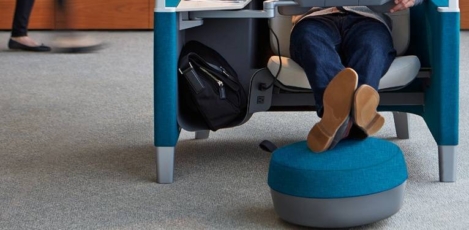
A study by Initial Washroom Hygiene claims that microbiological activity is 18 percent higher in ‘hot desking’ environment. The firm claims that these findings suggest that having germs from different people on the surface of shared desks, computer mice and other equipment, means these workstations are typically home to more bacteria. The swabbing study was conducted using one company of over 100 employees with a fixed-desk environment. The same company then moved to a hot-desking environment, and the study was repeated in the same manner four months later. Experts from used an ATP bioluminescence reader to measure the microbiological concentration of various items on 40 different workstations, to determine what levels of bacteria these surfaces were harbouring. On average, the readings in the hot-desking office were 18 percent higher than those in the fixed-desk office. The use of communal computer mice in the hot-desk scenario was a key contributor to the difference in hygiene levels. Shared mice in the hot-desking environment had a 41 percent higher microbiological reading compared to readings taken from the computer mice on the fixed-desks.

(more…)