







October 4, 2017
VodafoneZiggo workplace in Rotterdam sets out to redefine call centre design
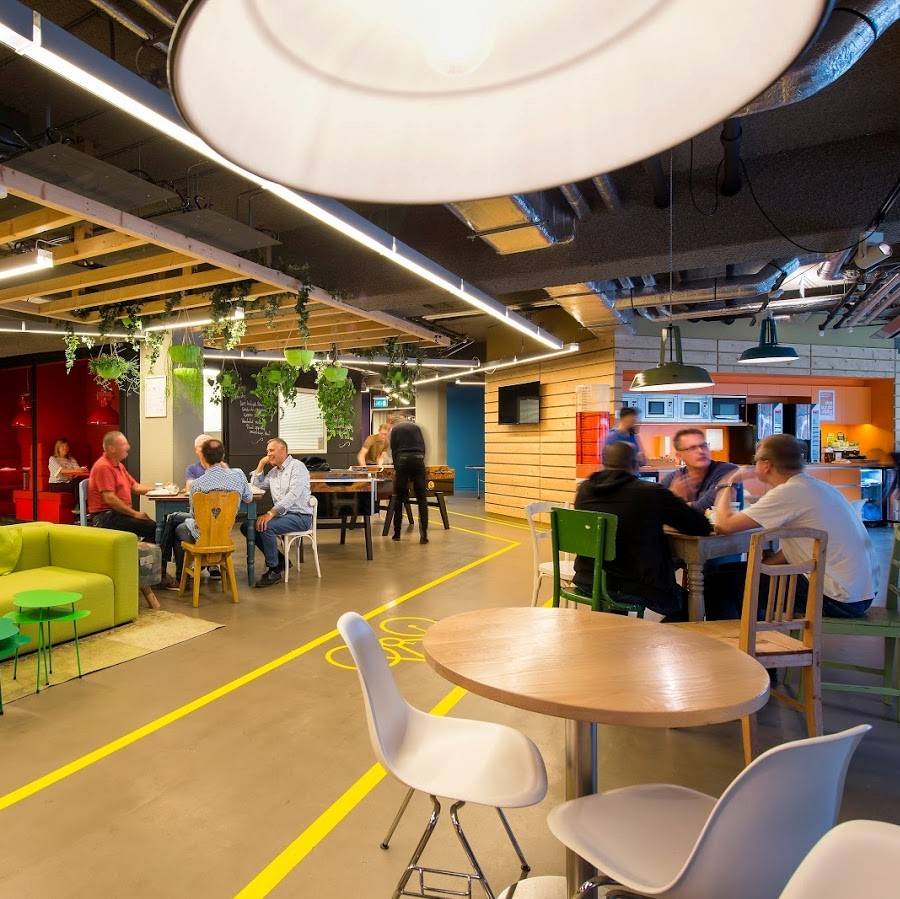 When you think of a call centre you probably picture a line of people seated in row upon row of desks in a featureless room. But call centre design is changing. As companies recognise their growing importance, the boiler room approach is disappearing and call centres are beginning to morph into a corporate centrepiece. Dutch telecoms company Ziggo is a case in point. The company merged with Vodafone in 2017 and today offers broadband and mobile services to both residential and commercial customers across the Netherlands. It has a large call centre and like many companies invests significant resources in training call centre employees in both technology and interpersonal skills. VodafoneZiggo’s call centre in Rotterdam, designed by Evolution Design is spread over several large open plan areas, which were converted into series of smaller work spaces, using low cost solutions such as simple wooden frames, acoustic panelling or a change of flooring to demarcate different zones. Staff can now choose to work in areas as diverse as a plant covered ‘greenhouse’, open plan spaces with bright yellow accents and colourful floor tiles or in a more urban-style zone that uses reclaimed wooden pallets to divide and decorate. Throughout the centre, desks are height adjustable so employees can choose whether to sit or stand. There is also a central reception area with meeting and training rooms and a colourful break out space with comfortable sofas, a café and a games zone complete with table football and video games.












October 4, 2017
Convergence of work and life defines September London workplace design shows
by Paul Goodchild • Comment, Events, Flexible working, Furniture, Workplace design
(more…)