To provide the best experiences, we use technologies like cookies to store and/or access device information. Consenting to these technologies will allow us to process data such as browsing behaviour or unique IDs on this site. Not consenting or withdrawing consent, may adversely affect certain features and functions.
The technical storage or access is strictly necessary for the legitimate purpose of enabling the use of a specific service explicitly requested by the subscriber or user, or for the sole purpose of carrying out the transmission of a communication over an electronic communications network.
The technical storage or access is necessary for the legitimate purpose of storing preferences that are not requested by the subscriber or user.
The technical storage or access that is used exclusively for statistical purposes.
The technical storage or access that is used exclusively for anonymous statistical purposes. Without a subpoena, voluntary compliance on the part of your Internet Service Provider, or additional records from a third party, information stored or retrieved for this purpose alone cannot usually be used to identify you.
The technical storage or access is required to create user profiles to send advertising, or to track the user on a website or across several websites for similar marketing purposes.









 I’m a Luddite. This is not a hesitant confession, but a proud proclamation. I’m also a social scientist who studies how new technologies affect politics, economics and society. For me, Luddism is not a naïve feeling, but a considered position. And once you know what Luddism actually stands for, I’m willing to bet you will be one too — or at least much more sympathetic to the Luddite cause than you think. (more…)
 We’ve all learnt a great deal about working from home over the past eighteen months. We’ve seen how for some, it can be incredibly beneficial to employees, enabling them to better balance their work and personal lives and can also benefit the company, enabling business as usual during the Covid-19 pandemic, even improving efficiency. It’s also prompted some important conversations about mental health that simply hadn’t been had, normalising the challenges that we all face, especially during lockdowns.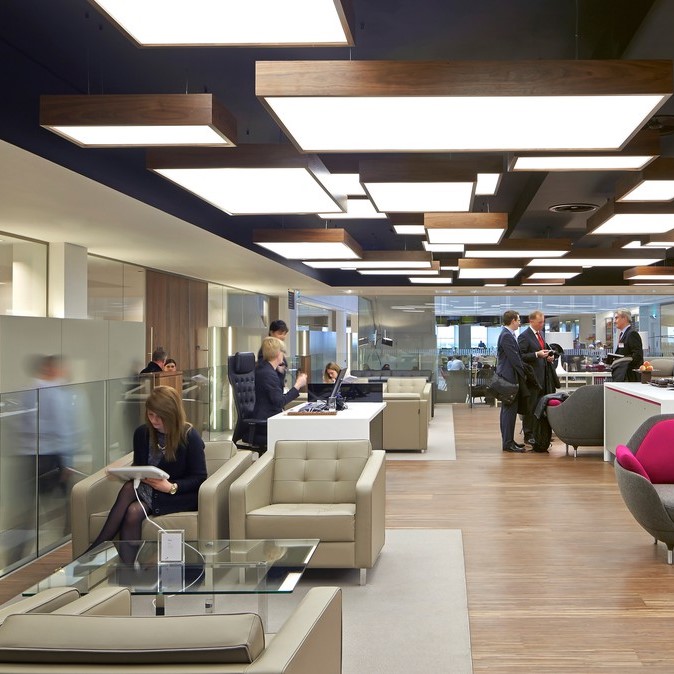
 The CFO and Finance Director role is undergoing rapid change. Not only are they required to manage the traditional priorities of the job, but they must now also juggle a wide array of operational, transactional and commercial responsibilities. With added pressure from clients because of Covid-19 and a rapidly evolving workplace, the role is increasingly hard to navigate. To gain a deeper insight into this and the evolution and future planning of a department that is central to the success of modern businesses,
 A new survey from the Economist Intelligence Unit backs up the most commonly cited form of ‘hybrid working’ by claiming that business executives on average think work should be split 70 percent / 30 percent between the office and home respectively. In
 The long-term impact of COVID-19 on the economy (and the gig economy) will not be clear for some time. But in the UK, the easing of pandemic related restrictions has coincided with significant labour shortages and the driving up of wages.
 Thinking back to the fast pace of life 18 months ago, the working day looked very different. COVID-19 forced a significant adjustment in how many workforces operate, including the enforced use of multiple workplace technology tools to collaborate. How will our use of collaboration tools change as we go through pandemic recovery? How can businesses ensure they continue to transform their workflows in a way that gives them maximum efficiency and productivity?
 There’s a scene in the 1986 horror movie The Fly in which Seth Brundle (Jeff Goldblum) persuades the reporter Veronica Quaife (Geena Davis) to try two steaks, one of which Brundle has just sent between two teleportation pods in an effort to work out why they can’t process organic matter, including the organic matter belonging to a very unfortunate baboon.
 One of the more welcome outcomes from the pandemic has been a reinvigorated and better conversation about the environment in general and workplace sustainability in particular.
 Restrictions may have been lifted but there is no major rush for everyone to head back to the office. Many
 I recently read an interesting little book called
 Most people now recognise that we are facing a climate emergency – the record breaking temperatures in the US are, perhaps, another reminder. Many would agree that economic and legislative change is the only way forward to achieve a sustainable change in behaviour. Who should pay for greater environmental responsibility? Is it time for a carbon tax to limit carbon hungry products and fund investment?









September 10, 2021
The Great Workplace Conversation gets quieter and more interesting
by Mark Eltringham • Comment, Flexible working, Wellbeing, Workplace design