To provide the best experiences, we use technologies like cookies to store and/or access device information. Consenting to these technologies will allow us to process data such as browsing behaviour or unique IDs on this site. Not consenting or withdrawing consent, may adversely affect certain features and functions.
The technical storage or access is strictly necessary for the legitimate purpose of enabling the use of a specific service explicitly requested by the subscriber or user, or for the sole purpose of carrying out the transmission of a communication over an electronic communications network.
The technical storage or access is necessary for the legitimate purpose of storing preferences that are not requested by the subscriber or user.
The technical storage or access that is used exclusively for statistical purposes.
The technical storage or access that is used exclusively for anonymous statistical purposes. Without a subpoena, voluntary compliance on the part of your Internet Service Provider, or additional records from a third party, information stored or retrieved for this purpose alone cannot usually be used to identify you.
The technical storage or access is required to create user profiles to send advertising, or to track the user on a website or across several websites for similar marketing purposes.









 If I were to suggest that organisations were designing their processes, policies and relationships with unkindness at the core, you would probably reject it as an illogical proposition, it just doesn’t make business sense. It goes against the grain and against the values that are plastered on the walls of so many organisations. But as counterintuitive as it may seem, in my opinion, many organisations have done just that, designed unkindness into the things they do, albeit inadvertently. But if they can do that, they can also design kindness in too. (more…)
 The UK COVID-19 vaccination
 We are scarcely nine months into the Covid-19 pandemic, after a long spring and harsh summer. Social distancing has led to remote working becoming widespread, leading to doubts regarding the office’s long-term relevance. However, Jones Lang LaSalle (JLL) argues in a recent
 Whether we’re always aware of it or not, body language plays a vital role in face-to-face discourse. In fact, over half of our effective communication comes via body language; that range of non-verbal cues that covers everything from facial expressions and gestures to posture and tone of voice. Meeting in person constantly draws on these signals, and we interpret them by instinct and via conscious analysis to guide the way we interact, frequently to help steer communication towards our goals. But nearly a year of lockdowns, remote working and general separation has challenged these norms, with video-based communication acting as a widespread, imperfect substitute.

 Looking back, who could possibly have predicted 2020? It’s been such a difficult pandemic year for so many individuals and companies. Yet it’s also been a transformative time, which has seen dramatic shifts in the way we work. So, with some trepidation, here’s my forecast for the near future. This year will see the office bounce back, but not as we remember it. The office of the future will have an important new role as the physical embodiment of a changing corporate culture.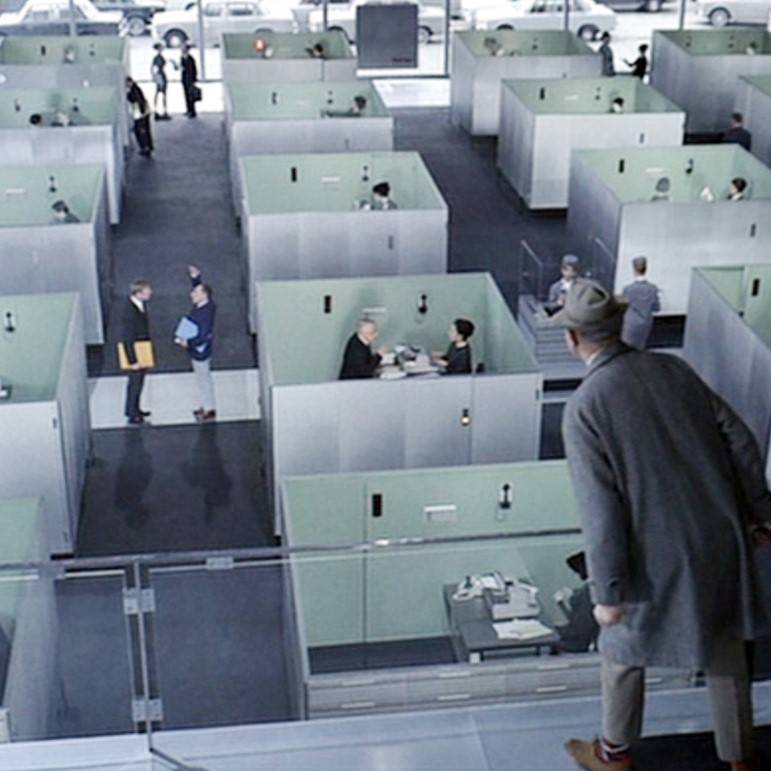
 Years of pathologising offices should have prepared us for the patholigisation of virtual spaces. It seems like months since anybody has come out with that tired old rant about open plan. Certain vociferous and obsessive
 Originally published in December 2014. Homeworking seems to have become a bit of a hot topic this year, but one sentence published on the
 Now, more than ever, both at home and at work, we need to be surrounded by people we can rely upon and trust as we ride the waves of uncertainty. Over the past year, we have learnt that priorities and targets can be shifted in the blink of an eye which has increased the importance of flexibility, support networks and relying on each other. This is just as relevant in business, including who we choose as strategic partners and how we contract with those partners.
 Someone really should have warned HR and people leaders that we needed to strap ourselves in, right? Even then, would we have ever been completely prepared for the rollercoaster ride organisations have experienced because of the pandemic? As part of Sage’s research, ‘










March 22, 2021
The era of work personalisation is upon us
by Gary Chandler • Comment, Workplace design