








June 8, 2017
Long term problems predicted for EU businesses if gender pay gap persists 0

As we reported earlier this week, more needs to be done to ensure that female representation in the boardroom increases; and now a new report paints a negative future for European businesses if the pay gap isn’t adequately addressed. Mercer has warned that a failure to address the EU’s substantial gender pension gap (40 percent), could cause long-term problems for businesses and governments alike; as through its analysis, the consultancy has found that the pension gap varies widely from one member state to another, however half have gaps of 30 percent or more. In its white paper The Gender Pension Gap – From Awareness to Action Mercer outlines the key drivers behind the pension gender gap, how it will impact companies and how they can start to address it within their workforce. Women continue to be significantly under-represented at all levels of the work force; in the EU their participation rate is 10 percent lower than men. The European Commission’s recent proposal for a directive on work-life balance for parents and carers, including the introduction of carers’ leave for dependent relatives, aims at addressing this under-representation.







 One in seven SME employees admit to feigning illness and taking at least three bogus sick days off each year in order to cope with a culture which expects them to be available all the time. Nearly half (42 percent) of staff who are pulling sickies do so because they need a rest as just under half (46 percent) of SME employees bother to use up their full holiday allowance. At the end of 2016, SMEs employed 15.7 million people and accounted for 99 percent of all private sector businesses. Due to the piling pressure on small business owners, half (51 percent) of the 1,500 British SME workers and business owners who were polled by breatheHR confessed to contacting an employee while they were on sick leave – this number jumps to 72 percent for younger business owners (18-34-year-olds) showing clear generational differences. Additionally, three-quarters (71 percent) of business owners would expect employees to work if they had a common cold. Why? Because absenteeism impacts the bottom line – 85 percent of business owners say it has an economic effect.




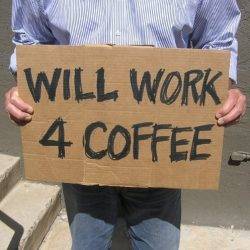 Nearly half of UK employees are effectively working an extra day per week for free, claims new research from Powwownow. On average, UK workers spend just under seven hours per week working outside of contracted hours – the equivalent of a nine-to-five working day with an hour for lunch – but nearly half of them (42 percent) receive no pay for this extra days’ worth of work. A quarter of UK workers (26 percent) receive their standard pay for any overtime, while a fifth (21 percent) are rewarded with ‘time and a half’. Only 6 per cent receive ‘double time’. Germans get a worst deal though, as employees spend an average of 7 hours and 54 minutes working extra but a huge 61 percent of workers receive no pay at all for this time. Workers in Sweden spend the least time working outside of contracted hours, with only 4 hours and 9 minutes of extra work per week.










June 2, 2017
Sprinkling a little stardust on the workplace design debate
by Mark Eltringham • Comment, Facilities management, Workplace, Workplace design
(more…)