



Search Results for: relationships

Finland is yet again the world’s happiest country. UK and Canada slide
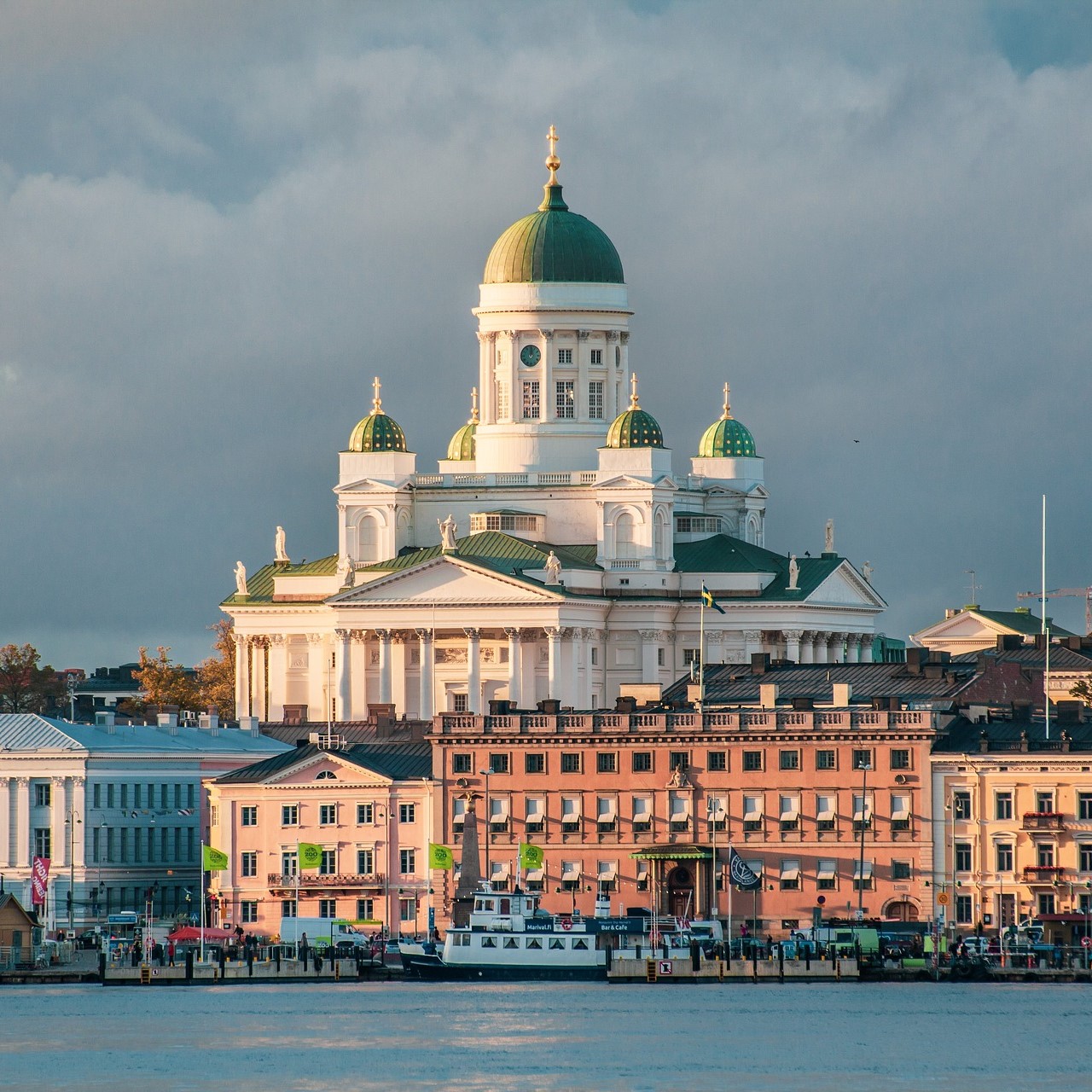
Finland is yet again the world’s happiest country. UK and Canada slide

Finland has been named the world’s happiest country for a record ninth consecutive year, according to the World Happiness Report 2026, as new findings highlight a more complex and uneven global picture of wellbeing, particularly among younger peopleFinland has been named the world’s happiest country for a record ninth consecutive year, according to the World Happiness Report 2026, as new findings highlight a more complex and uneven global picture of wellbeing, particularly among younger people. The Nordic nation retained its position at the top of the rankings with an average life evaluation score of 7.764 out of 10. Its continued dominance comes amid widening contrasts between regions, with several European countries maintaining relatively high and stable levels of wellbeing while English-speaking nations continue to slip down the table. (more…)


AI users report stronger workplace connections, according to Gensler survey

AI users report stronger workplace connections, according to Gensler survey

New research from Gensler suggests that employees who make the greatest use of artificial intelligence tools are also among the most connected to their colleagues, challenging assumptions that increased use of technology leads to more isolated ways of working.New research from Gensler suggests that employees who make the greatest use of artificial intelligence tools are also among the most connected to their colleagues, challenging assumptions that increased use of technology leads to more isolated ways of working. The firm’s 2026 Global Workplace Survey gathered responses from more than 16,400 office workers across 16 countries. Around 30 percent of respondents were identified as “AI power users”, defined as people who regularly use AI tools in both their work and personal lives. (more…)

Rebuilding belonging: how offices can overcome loneliness  

Rebuilding belonging: how offices can overcome loneliness  

In the coming weeks it will be six years since the UK entered lockdown and working life changed overnight. While much has stabilised, the impact of the pandemic still shapes how people experience work, particularly when it comes to connection and belonging. Loneliness is widely recognised as a growing societal issue and government data shows that around a quarter of adults in Great Britain report feeling lonely at least some of the time, rising significantly among younger age groups. Hybrid working has not created this challenge but it has highlighted that for many people the workplace was a consistent source of social interaction. (more…)

ULI Europe publishes new guide on asset-level collaboration to accelerate decarbonisation of occupied buildings

ULI Europe publishes new guide on asset-level collaboration to accelerate decarbonisation of occupied buildings

ULI Europe has published a new Asset Sustainability Committees Best Practice Guide through its C Change programme to support collaboration between owners, occupiers and property managers in decarbonising multi-let commercial buildingsULI Europe has published a new Asset Sustainability Committees Best Practice Guide through its C Change programme to support collaboration between owners, occupiers and property managers in the decarbonisation of multi-let commercial buildings. Across Europe, the commercial real estate sector has made significant progress in setting net zero and sustainability commitments. However, translating these ambitions into measurable action within occupied buildings remains a persistent challenge. (more…)

AI adoption exposes generational divide in management, research finds

AI adoption exposes generational divide in management, research finds

KEDGE Business School has published new research suggesting that artificial intelligence (AI) is already reshaping management practice, but that a strong generational divide is emergingKEDGE Business School has published new research suggesting that artificial intelligence is already reshaping management practice, but that a strong generational divide is emerging in how leaders use the technology. The findings come from an OpinionWay survey carried out in October 2025 among managers, and point to younger leaders adopting AI at a significantly faster pace than their older counterparts. While AI tools such as ChatGPT are now widely used across the profession, the study suggests that managers under 40 are far more likely to integrate AI into day-to-day leadership decisions, while older managers remain more cautious and selective. (more…)

New white paper offers actions for managing trauma in the workplace

New white paper offers actions for managing trauma in the workplace

A new white paper offering practical guidance for employers on how to recognise, understand and respond to trauma in the workplace has been published by Nottingham Business SchoolA new white paper offering practical guidance for employers on how to recognise, understand and respond to trauma in the workplace has been published by Nottingham Business School (NBS), part of Nottingham Trent University. Recent national figures show that more than 8.5 million adults in England and Wales are survivors of childhood abuse, underlining the scale of trauma?related experiences within the UK workforce. Managing Trauma in the Workplace: Strategies for Wellbeing and Organisational Resilience brings together research, survivor perspectives, and evidence?based recommendations to help HR professionals and managers create psychologically safe working environments. (more…)

Faking positivity at work is causing leaders to burn out

Faking positivity at work is causing leaders to burn out

Being forced to fake their emotions in the workplace is causing leaders to burn out, according to new research by emlyon business school. The researchers say that this ‘surface acting’ creates a scientifically proven exhaustion loop that drains the very resources necessary to function well in interpersonal environments. As a result, cognitive capacity declines, authenticity erodes, and team trust suffers in ways that makes engaging in leadership more difficult in the future. (more…)

Networking skills should play a key role in workplace development

Networking skills should play a key role in workplace development

Networking is a core skill for everyone, writes Henry Strickland. Embracing it in the workplace can have compelling, far-reaching benefitsIt was recently reported that the art of networking is disappearing from modern workplaces. The skill is particularly lacking among young professionals, with around 60 percent of whom avoiding in-person networking events to the detriment of their careers. I read of this with interest and concern, being a strong believer that both internal and external networking remains one of the single most powerful accelerators for career progression, and that more opportunities come through relationships than any other channel. (more…)

Are you a leader of the first workplace?

Are you a leader of the first workplace?

If you work with young people, whether you’re in the classroom, in district leadership, or pursuing an educational doctorate degree, you’re already shaping how they’ll experience work for the rest of their lives. The first real workplace they know isn’t a cubicle or a Zoom call, it’s the classroom, and when leaders get the learning culture right, students become more hopeful, more engaged and more ready for what comes next. You’re effectively running their first organisation, with norms, expectations and feedback loops that feel very similar to what they’ll encounter later in their careers. (more…)

For the first time in its history, ORGATEC has an overarching theme

For the first time in its history, ORGATEC has an overarching theme

ORGATEC, the biannual international trade fair for the workplace sector, has announced the first central theme in the event’s history as it prepares for its 2026 edition.ORGATEC, the biannual international trade fair for the workplace sector, has announced the first central theme in the event’s history as it prepares for its 2026 edition. Under the title From rooms to relationships: designing spaces in an ever-changing world, the fair will shift its focus towards the role of human experience in the design of work and contract environments. The event, which takes place in Cologne from 27 to 30 October 2026, aims to highlight how functional settings can evolve into places that support connection, collaboration and a sense of belonging.

(more…)

Stress accounts for a quarter of UK short term workplace absence

Stress accounts for a quarter of UK short term workplace absence

Stress now accounts for more than a quarter of short term workplace absence in the UK, according to new research from Simplyhealth and the CIPD.Stress now accounts for more than a quarter of short term workplace absence in the UK, according to new research from Simplyhealth and the CIPD. The latest edition of the Health and Wellbeing at Work report, one of the most extensive surveys of its kind, shows that 26 percent of short term absences are attributed to stress. The authors also suggest that almost two thirds of HR professionals reported stress related absence in their organisation during the past year. (more…)

People are now more interested in job rewards now rather than at some point in the future

People are now more interested in job rewards now rather than at some point in the future

Employees place far greater importance on being respected, fairly compensated and other job rewards now than on their future career prospectsEmployees place far greater importance on being respected, fairly compensated and other job rewards now than on their future career prospects, according to new international research. The Work Remastered 2025 report from United Culture, which surveyed 1,500 employees in the UK, US and Western Europe, found that respect topped the list of workplace priorities, cited by 36 percent of respondents. This rose to 43 percent among US workers and 45 percent among those aged 18 to 24. Job security followed at 31 percent—rising to 40 percent in the UK—while fair pay ranked third at 29 percent. (more…)