Search Results for: confidence

Manchester’s office market set to be fuelled by growth in SMEs

Manchester’s office market set to be fuelled by growth in SMEs

Manchester'sManchester’s office market could see a boost thanks to its 22,850 SME businesses says Cluttons, who have recently launched an office on King Street in the City. Recent research by distribution company Citisprint highlighted that Manchester’s SMEs are also the most confident with 33 percent saying their business is in better shape post-pandemic, and 52 percent expecting to grow in the next 12 months. (more…)
Going with the flow in the way we work

Going with the flow in the way we work

Sedus Smart Office

Throughout history we’ve been aware of the state we now refer to as flow. It describes the sensation of existing purely in the moment of some activity, effortlessly achieving what we have set out to achieve and unaware of distractions. Mystics have described it as ecstasy, artists as rapture and athletes as in the zone. This state was first described as flow by the Hungarian psychologist Mihály Csíkszentmihályi in 1975 and has been developed by him and a wide range of other researchers in a number of fields since that time.

The essential characteristic of flow is an individual’s total and enjoyable absorption in an activity to the point that they lose a sense of space and time. It is related to focus but it is not the same. Flow is a state of transcendence and it is just as important in office design as any other domain of human activity.

The idea has been widely talked about as a desirable state in which to complete work, especially creative tasks. Indeed, the idea of heightened states while engaged in tasks predates the work of Csíkszentmihályi. Perhaps the best-known organisational psychologist of all time Abraham Maslow coined the term peak experience to describe intensely joyous and exciting moments. In these moments, we feel more whole, integrated, aware of ourselves and deeply happy. Maslow described them as those “moments of highest happiness and fulfilment” in his 1964 work Religions, Values, and Peak Experiences. He linked them to the idea of self-actualisation from his famous Hierarchy of Needs.


Flow is more common at work

Such moments are more likely when we are at work than in other periods of our lives and are relatively common. According to an article by Csíkszentmihályi published in Psychology Today, in a survey of 6,469 Germans, when asked how often they entered a flow state: 23 percent said often; 40 percent said sometimes; 25 percent said rarely; and 12 percent said never or don’t know.

[perfectpullquote align=”right” bordertop=”false” cite=”” link=”” color=”” class=”” size=””]Organisations should seek to develop activities, cultures and environments that make it easier for people to enter flow states[/perfectpullquote]

His own research using more objective methods found that work was better suited to the creation of flow states than passive activities such as watching television, leading him to conclude that ‘work is much more like a game than most other things we do during the day. It usually has clear goals and rules of performance. It provides feedback either in the form of knowing that one has finished a job well done, in terms of measurable sales or through an evaluation by one’s supervisor. A job tends to encourage concentration and prevent distractions, and ideally, its difficulties match the worker’s skills.’

Csikszentmihályi argues that organisations should seek to develop activities, cultures and environments that make it easier for people to enter flow states in their work. This isn’t just about making them more productive and more likely to have good ideas, although those are two of the most important outcomes. In his 2003 book Good Business: Leadership, Flow, and the Making of Meaning, Csikszentmihályi argues that fostering flow states improves morale by creating a sense of greater happiness and accomplishment. He looks at how flow states are essential for the creation of ‘good work’ in which you enjoy the feelings of “doing your best while at the same time contributing to something beyond yourself.” He also highlights the importance of regular feedback as an essential ingredient for the fostering of flow states.

For this reason, flow is not just an important goal for the individual. Because it contributes to organisational goals such as higher productivity, better ideas and improved morale, it can improve the overall performance of the organisation and encourage greater collaboration.

Csikszentmihályi concludes that there are three conditions for the creation of flow states at work:

• One must be involved in an activity with a clear set of goals and progress. This adds direction and structure to the task.

• The task at hand must have clear and immediate feedback. This helps the person negotiate any changing demands and allows them to adjust their performance to maintain the flow state.

• One must have a good balance between the perceived challenges of the task at hand and their own perceived skills. One must have confidence in one’s ability to complete the task at hand.

Designing for flow

There are several characteristics of an office environment that can encourage flow states and meet these prerequisites. The ability to focus and work free from distraction is perhaps the most obvious, but so too are the creation of an enjoyable working culture, strong bonds with colleagues, immediate feedback on tasks, an affinity with each job and regular communication with colleagues.

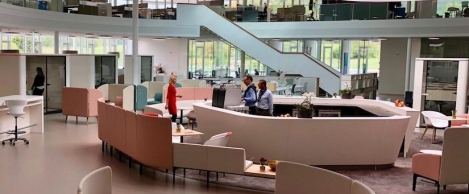
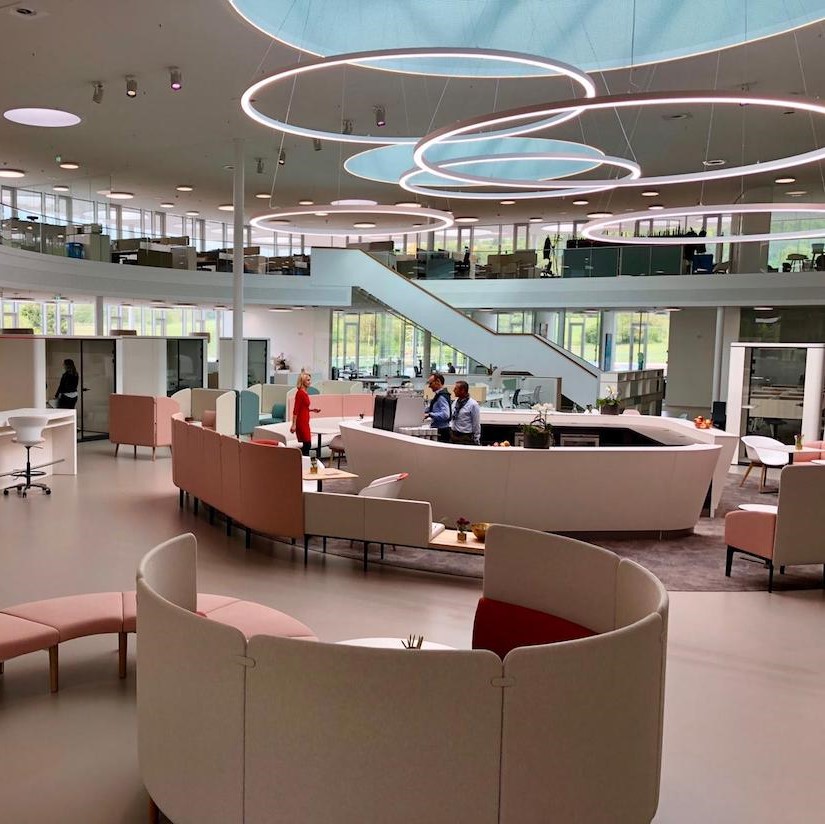
This demands a sophisticated and intelligent approach that embraces a number of features of office design. The most progressive office design concepts seem ready-made to deliver a working environment that can encourage flow states. By empowering people to work in ways that suit them best with a choice of work styles and offering the sorts of spaces in which people can enter flow states undisturbed, such offices increase the likelihood of flow. This principle of office design aligns completely with the characteristics of flow states.

In addition, the democratic structure of the space makes feedback significantly more likely, while the social spaces, collaborative space and more playful aspects of the design encourage people to be aware of ‘something greater than themselves’.

This article first appeared on the What’s Up blog of Sedus

Image: Sedus Smart Office

London office market reignites as occupiers implement hybrid working strategies

London office market reignites as occupiers implement hybrid working strategies

LondonResearch from Gerald Eve has highlighted a strong resurgence in activity in the London office market in Q3. Occupier take-up increased 30 percent to 2.8 million sq ft, driven by large commitments by major London occupiers. It was the highest level of occupier activity since before the pandemic and only 7 percent below the five-year quarterly average. (more…)

Recruitment drive sees majority of firms embed flexible working policies

Recruitment drive sees majority of firms embed flexible working policies

policiesNew research by Totum Partners, claims that the majority of firms now have hybrid working policies in place, as worker preferences and economy-wide recruitment pressures drive increased demand for flexible working. This includes 50 percent of firms which have implemented a company-wide policy, while the remaining 50 percent have published guidelines that can be interpreted by location or individual team. (more…)

Lives at risk due to lack of first aiders in the office, warns St John Ambulance

Lives at risk due to lack of first aiders in the office, warns St John Ambulance

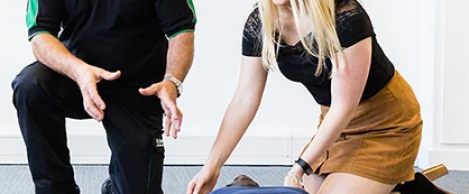
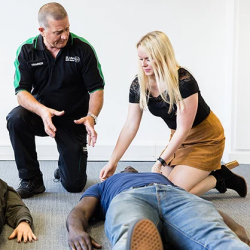
first aidersThe health charity claims that, in the last fortnight, less than half (49 percent) of the 2,000 UK workers surveyed believed there was a designated first aider in their workplace. (more…)

The power of science can help companies create better menopause policies

The power of science can help companies create better menopause policies

Mental healthAccording to research, nearly 8 out of 10 menopausal women are in work, at a time when many are likely to move into top leadership positions. Despite the challenges and difficulties faced by those experiencing menopause in the workplace, it remains largely invisible, undiscussed, and unsupported. That’s why it’s important for businesses create menopause-friendly workplaces using the principles of behavioural science and health psychology. (more…)

Toxic workplace culture impacting the mental health of almost half of UK’s workforce

Toxic workplace culture impacting the mental health of almost half of UK’s workforce

cultureTwo in five employees across the UK have experienced problematic behaviour, such as bullying, harassment or discrimination at work; with 42 percent confirming toxic workplace culture has impacted their mental health, according to recent research from Culture Shift. (more…)

Organisations prioritise technologies for the year ahead

Organisations prioritise technologies for the year ahead

technologiesA new report by Softcat, offers a snapshot of the enterprise IT landscape. It claims the technologies businesses are prioritising over the next 12 months to bounce back from COVID-19, become smarter, and realise their long-term ambitions. (more…)

Young workers most concerned remote work will impact career success

Young workers most concerned remote work will impact career success

youngYoung professionals and students have far greater concerns about the rise of remote work than their senior counterparts, according to a new report from Universum. The annual Most Attractive Employers report, which surveyed over 18,000 people in the UK, suggests in the wake of the pandemic and Brexit, a remote-working ‘leadership gap’ could contribute to future skills shortages as junior and senior professionals have vastly different views on being out of the office. (more…)

Green building council publishes new guidance for UK local authorities

Green building council publishes new guidance for UK local authorities

green buildingThe UK Green Building Council has published new guidance for local authorities on the environmental performance of their new buildings. The organisation has published its latest Commercial Playbook to “fill the gap left by national policy, which is not currently delivering change at the pace that is required to meet the UK’s environmental commitments”. (more…)

UK employers more worried about motivation than resignation

UK employers more worried about motivation than resignation

employersResearch from Omnipresent, in partnership with Remote Social, claims that four in 10 employers (40 percent) feel that COVID-19 has positively or extremely positively impacted employee retention. In contrast, less than a quarter (24 percent) feel that it has negatively or extremely negatively impacted this area. The survey considered the views of 250 HR managers and C-Suite professionals across the UK. (more…)

People leaders lack the training, knowledge and tools to effectively handle employee issues

People leaders lack the training, knowledge and tools to effectively handle employee issues

handle employee issuesHR Acuity has announced the research findings from a recent survey, People Leaders and the Gap in Managing Employee Issues. The report, which includes data from 126 enterprise employee relations leaders and from nearly 700 people leaders from a wide range of industries and company sizes, provides insight into how people leaders handle employee issues such as policy violations, performance concerns and behavioral issues. (more…)