








March 27, 2018
Greater attention must be paid to office design to attract younger talent
 Over a fifth (21 percent) of 18-24 year olds admit that they have rejected a potential employer because of the poor design of the office or lack of amenities available, while 34 percent in the same age group would be willing to commute for a maximum of one hour each way to an office that is considered perfect – compared to 22 percent of 45-54 year olds. The research, commissioned by Mindspace, found that 16 percent of 18-24 year olds have actually left a job because of how poorly designed the office was in one of their previous roles. Overall, nearly a third (31 percent), of workers are bored with their current office environment and feel uninspired at work, with 28 percent of workers describing their place of work outdated and dull. The research also found that while most workers had access to amenities such as a kitchen (72 percent), meeting rooms (66 percent) and free tea & coffee (53 percent), what UK office workers desire the most to improve morale is more natural light, air conditioning and improved interior lighting.

 Over a third of workers are adversely affected by a lack of natural light in their office, others complain that the lighting is too bright and a significant proportion say the quality of light provided is so weak they struggle to read. This is according to a new poll which quizzed employees about the difficulties associated with workplace lighting and found that headaches and dizziness were a problem for one in seven. Other employees reported finding the lighting too bright and dazzling (12.4 percent), while one in 10 said they had to strain their eyes due to a general lack of light. A similar proportion said they were bothered by the position of the lights and by the ‘stressful environment’ created by their workplace lighting (9.3 percent each). The findings come as reports of ‘sick building syndrome’ — a condition associated with office work that causes symptoms including headaches and respiratory problems — continue to hit the headlines. Such symptoms are usually attributed to unhealthy or stressful elements of the working environment, such as poor ventilation and lighting.

 The mental health of employees, especially those working within high pressured working environments are the number one concerns for UK CEOs. Nearly three quarters (73 percent) of respondents to the annual wellbeing report ‘

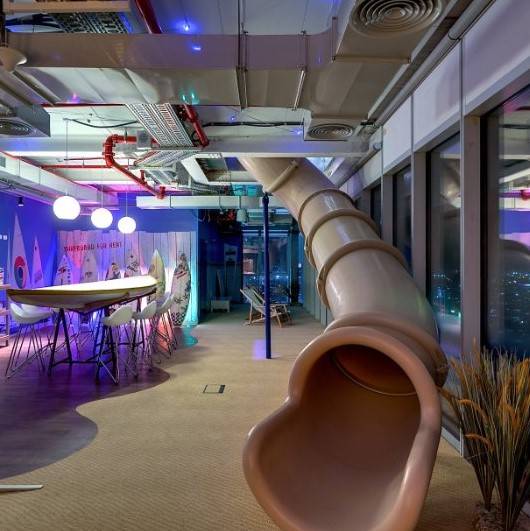
 Google has been named the Ideal Employer among tech professionals in the 2018 Dice UK Ideal Employer Report. While market leaders including Microsoft, Apple, Amazon, Facebook and IBM are placed highly, the report suggests that smaller tech brands can also attract the top talent through benefits including yoga, in-house cafeterias and more. For many technology professionals, Google is the gold standard employer, with a perfect mix of competitive salary, perks, benefits and interesting work, something smaller companies can learn from. The survey of 464 tech professionals found that simple office upgrades including yoga, colourful furniture and other positive innovative cultural perks can help smaller companies attract the best talent, even if smaller in size. Good work/life balances, open communications and manageable working hours also ranked highly.
 Corporate real estate departments need to become more effective partners in the agile transformation of their broader organizations., claims a new survey conducted by CBRE, in partnership with CoreNet Global. When describing Portfolio Agility, i.e. the ability to rapidly adapt, scale and reposition the organization’s real estate portfolio to support shifting enterprise needs, 67 percent consider portfolio agility as the most important type of agility for business success, yet only 14 percent consider themselves highly agile in this area. The most prevalent portfolio agility practices included negotiating flexible space options in the lease, seeking shorter and/or more flexible lease terms, supporting an enterprise-wide flex-work program and delivering free address work environments. The report states that new workplace guidelines for efficiency have altered the way companies plan for density and more occupiers are incorporating third-party ‘agile space’ into their overall real estate strategy.


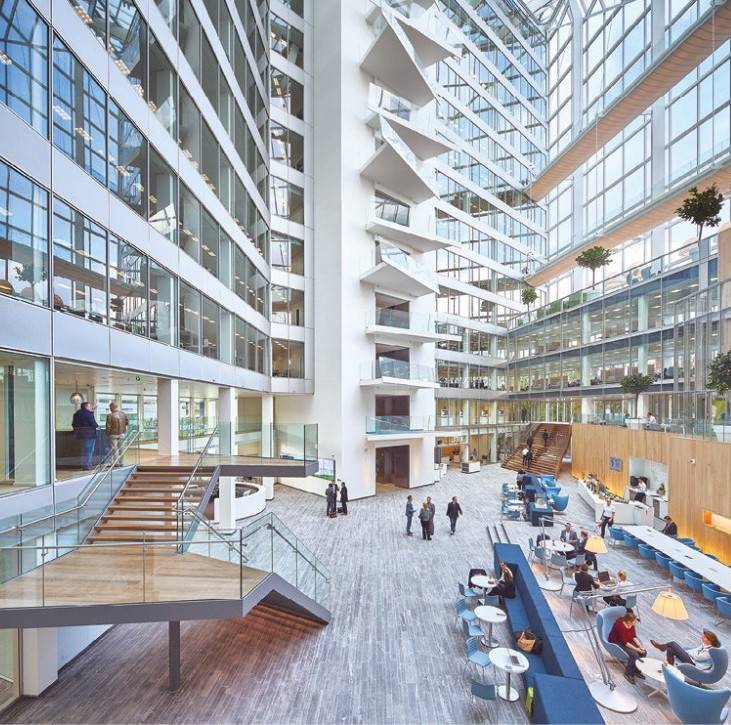
 The creative team behind the development of the world’s most sustainable building – The Edge in Amsterdam – has announced the launch of a real estate technology company. EDGE Technologies, launched by OVG Real Estate CEO Coen van Oostrom will focus on creating a new generation of buildings which feature the latest innovations in sustainability and wellbeing. Whereas parent company OVG is focussed exclusively on the development of its existing portfolio, EDGE Technologies will focus on both the development and the long-term operations of this new generation of buildings, aiming for a cohesive experience across cities. Each EDGE building will be built and operated on the same technology platform and offer consistent user-centred design, created to serve the needs of today’s fast-changing and demanding workforce. To help achieve this the new company is launching a product that will capture and aggregate data across its properties in order to optimize, measure and inform both the user experience and the building’s environmental performance.









March 5, 2018
About time we simply accepted that coworking and flexible working are the new normal
by Sarah King • Comment, Coworking, Flexible working, Workplace design
(more…)