








October 7, 2014
Workers struggling to balance home and work, according to CIPD report
 The UK’s workforce is struggling to find the right balance between their work and domestic responsibilities according to the latest Absence Management report from the Chartered Institute of Personnel and Development. The report also suggests that, although overall absence levels are falling, much of this is down to people going into work when they perhaps shouldn’t with a third of employers reporting presenteeism. Stress and mental health problems in the workplace also remain high, with more than 40 percent of employers citing an increase, despite signs of economic recovery. One area in which absenteeism is rising is workers taking time off to care for children and elderly or disabled relatives and friends. More than a third of those employers surveyed reported an increase in absence levels amongst staff who are struggling to cope with their caring responsibilities outside of work. However only a sixth of employers have policies in place to provide a better level of support.


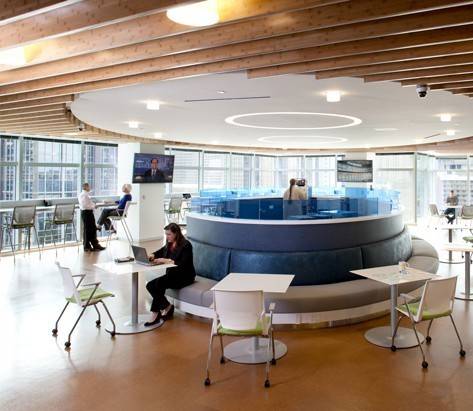

 Avanta Serviced Office Group has signed a deal to establish a new business centre in the heart of London’s Tech City at The Eagle, a 27 storey art-deco-style development on City Road, EC1, from Mount Anvil – Central London’s specialist residential-led developer. The centre is set to open on the 1st March 2015. The new centre will provide over 26,000 square feet of flexible office space over two floors, with approximately 400 desks. Set within a mixed-use development comprising retail, affordable accommodation, offices and high-end residential, it is located within TFL’s Zone 1, approximately five minutes’ walk from Old Street Rail and Underground Station, just two stops from Kings Cross.bThis is Avanta’s first site within Tech City, also known as Silicon Roundabout, which is the third largest technology start-up cluster in the world and home to over 15,000 growing businesses.

 Just a few days ago,
  Given the track record of people when it comes to making predictions about the future, it’s easy to grow cynical, especially when it involves a profession as subject to the vagaries of technological and cultural change as facilities management. But while we should be wary of more fanciful and long term thinking, any natural scepticism shouldn’t blind us to those predictions that we know will largely come true, especially those based on what we know is happening already. For example, recent research carried out by Cass Business School and Henley Business School and presented in the book








October 6, 2014
A feeling of togetherness is essential and motivating, so why would we kill off the office?
by Mark Eltringham • Comment, Facilities management, Flexible working, Knowledge, Workplace design
It is still depressingly commonplace to read proclamations of the death of the office. These are usually appended to some survey or other about the rise of flexible working or a case study of a workplace devoid of desks (or, more likely, one in which none are pictured). Of course, the actual conclusion we can draw from such things is that the office as we once knew it is now dead or mutating into something else, but that’s true for every aspect of modern life. The constant factor that ensures offices will always exist, in some form or other is the human they serve. We know that because, as Tom Allen proved at MIT in the 1980s, people communicate less well the greater the physical distance between them. Now new research from Stanford University shows how the very idea of ‘togetherness’ can have a significant impact on the way people perform. The study, by researchers Priyanka Carr and Gregory Walton was published in the Journal of Experimental Social Psychology and concluded that ‘social cues that signal an invitation to work with others can fuel intrinsic motivation’.
(more…)