To provide the best experiences, we use technologies like cookies to store and/or access device information. Consenting to these technologies will allow us to process data such as browsing behaviour or unique IDs on this site. Not consenting or withdrawing consent, may adversely affect certain features and functions.
The technical storage or access is strictly necessary for the legitimate purpose of enabling the use of a specific service explicitly requested by the subscriber or user, or for the sole purpose of carrying out the transmission of a communication over an electronic communications network.
The technical storage or access is necessary for the legitimate purpose of storing preferences that are not requested by the subscriber or user.
The technical storage or access that is used exclusively for statistical purposes.
The technical storage or access that is used exclusively for anonymous statistical purposes. Without a subpoena, voluntary compliance on the part of your Internet Service Provider, or additional records from a third party, information stored or retrieved for this purpose alone cannot usually be used to identify you.
The technical storage or access is required to create user profiles to send advertising, or to track the user on a website or across several websites for similar marketing purposes.









 Despite their best intentions, most employers are facing difficulties responding to changing employee expectations around employee experience and wellbeing during the pandemic. 69 percent of HR leaders admit that their efforts to improve employee experience are being held back by a lack of a clear strategy, and 76 percent report that they are struggling to adapt their employee experience to meet the needs of a hybrid workforce. (more…)

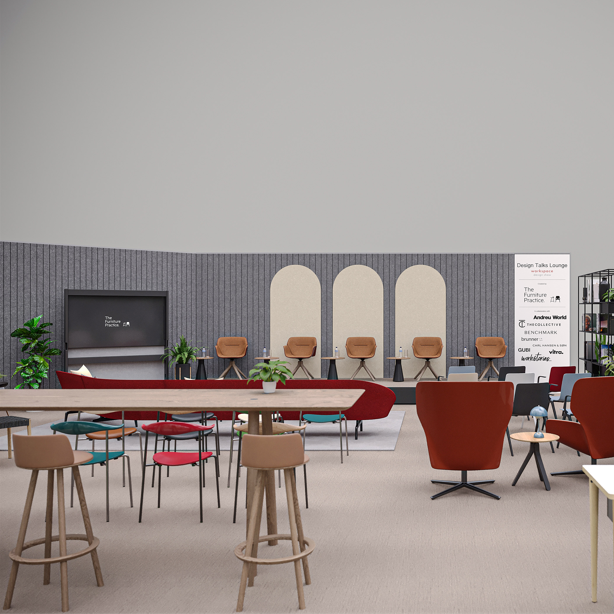
 In just two weeks, the much-anticipated
 Through analysis of mobility, technology, business and environmental data, London ranks as the number one most intelligent and future-proof city for cities with a population of over three million people, with New York and San Francisco taking second and third place respectively, according to a new index from
 A new report from property consultancy
 Young professionals and students have far greater concerns about the rise of remote work than their senior counterparts, according to a new report from
 According to new research from

 At this time of year, with events such as Happiness at Work Week and
 New research from










November 1, 2021
The modern workplace is defined as much by digital space as the physical office
by Wilco Wijnbergen • Comment, Property, Technology