



Search Results for: health

Why Jeremy Hunt is wrong about the need to work long hours

Why Jeremy Hunt is wrong about the need to work long hours 0

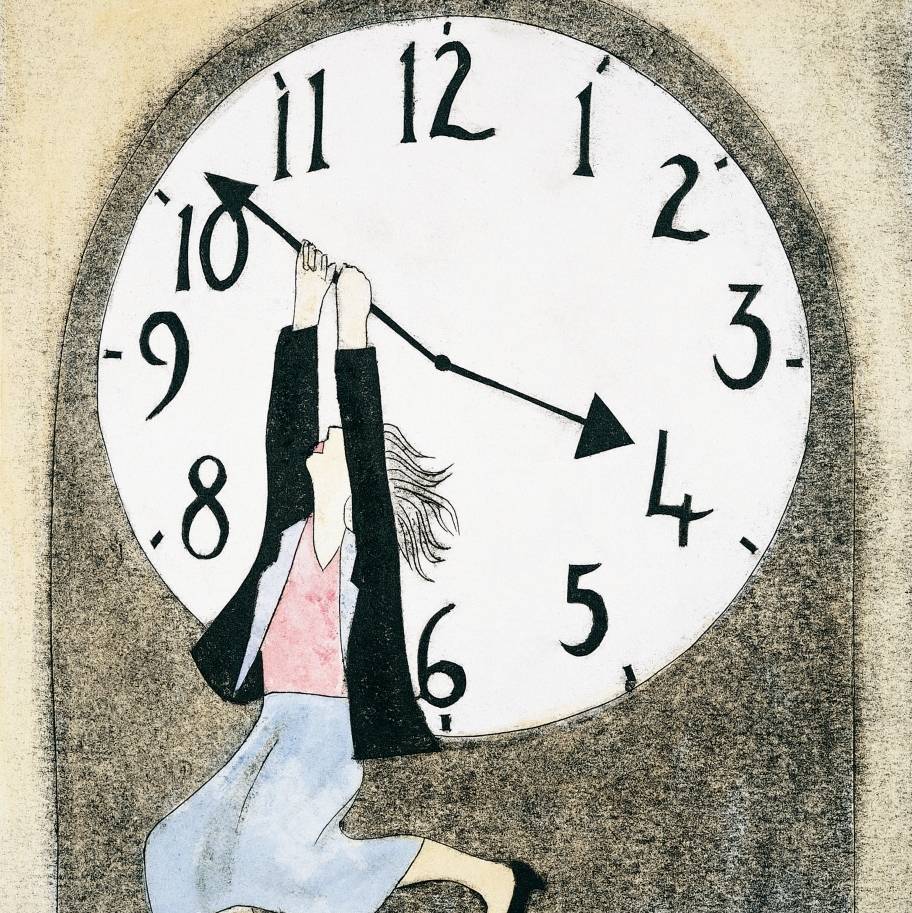
Long-hoursThis week the UK’s Health Secretary found himself at the centre of a storm because of some comments he’d made suggesting that eroding one of the UK’s welfare platforms would encourage people to work as hard as the ‘Chinese and Americans’. Most of the backlash against these comments was political, so make your own mind up on that score, but they don’t stack up from a practical point of view either. The British already work some of the longest hours in Europe so encouraging people to work more will do little or nothing to resolve the productivity puzzle, as a 2014 report from the Bank of England confirms. Of course, we should all have worked out by now that long hours and productivity are not the same thing. It’s been a longstanding issue in the UK where people manage to combine some of the longest working hours in Europe with levels of productivity that fall habitually behind those of our partners on the mainland.

(more…)

Millennial workers value variety over job security and tenure

Millennial workers value variety over job security and tenure 0

Millennial 'job hopping'Employers may continuously be looking at ways to engage staff to ensure they still loyal to the organisation, but according to new research it seems they needn’t bother. Over one third (37 percent) of US workers — regardless of their satisfaction level — are seriously considering leaving their organizations, up from 33 percent of the workforce who were considering leaving in 2011. According to Mercer’s latest Inside Employees’ Mind research, which surveyed 3,000 people representing a complete cross-section of the US workforce, nearly one out of two employees who said they are very satisfied with their organizations and their jobs (45 percent and 42 percent, respectively) are still looking to leave. And perhaps unsurprisingly, it’s the Millennial workers who seem to value accelerated career paths and diversity (in the workplace and the work itself) over job security and tenure.

(more…)

Death of the office + Gen Z at work + Transformational management

Death of the office + Gen Z at work + Transformational management 0

Insight_twitter_logo_2In this week’s issue; Mark Eltringham on why the facts don’t support the myth that the office is dying; and what Anaïs Nin can teach us about the way we design and use workplaces. The CIPD issues a new set of case studies that demonstrate the important role of HR in aiding transformational change; the BSIA explains why Generation Z is the first tribe of true digital natives; and human error is still the leading cause of data loss for UK organisations.  More Americans than ever choose to work from home, but homeworking Brits are growing increasingly disconnected from their colleagues. And evidence that a caring and supportive boss is the missing link between employee engagement and mental health. Visit our new events page, subscribe for free quarterly issues of Work&Place and weekly news here. And follow us on Twitter and join our LinkedIn Group to discuss these and other stories.

Caring employers key to improving mental wellbeing at work

Caring employers key to improving mental wellbeing at work 0

Mental wellbeingWith one in four adults experiencing a mental health condition in any given year, a caring and supportive boss is the missing link between employee engagement and mental health. This was the message of a MetLife breakfast briefing in partnership with Buck Consultants at Xerox, where the impact of ignoring mental health in the workplace was discussed. MetLife’s UK Employee Benefit Trends Study has found that for every one point increase in “having a caring and supportive boss” there is a 9 percent increase in employee engagement. Key themes of the briefing included the best strategies for identification and prevention of mental health issues, and how to build a more resilient workforce. It also emerged that employers are almost unaware of the negative impact insufficient sleep has on employees’ mental wellbeing, yet along with stress and work life balance – insufficient sleep is seen as a key health concern.

(more…)

Changing behaviour and fidgeting reduce problems linked to sedentary work

Changing behaviour and fidgeting reduce problems linked to sedentary work 0

fidgetingThere are a number of well established strategies for reducing the incidence of the back problems associated with sedentary worker. Two new studies have identified important ways that can be used to address the challenges. One will be familiar – training and encouraging people to be aware of and modify their behaviour; the other less so- fidgeting. The first study, published in Occupational and Environmental Medicine, found that combining sound ergonomic practice with behaviour modification strategies led to a 60 percent reduction lower back pain compared to ergonomics in isolation. The second study, published in the American Journal of Preventative Medicine, found that fidgeting may also reduce the harmful effects of sedentary working across a range of health issues, with the authors concluding that “fidgeting may reduce the risk of all-cause mortality associated with excessive sitting time”.

(more…)

Unhelpful generalisations about generations based on hype, claims report

Unhelpful generalisations about generations based on hype, claims report 0

Generations hypeFor the first time, the age span of people in any workplace is now routinely between 16 and 75, as more people work past 60 than ever before. This means the UK is experiencing the widest working demographic in living memory. Yet generalisations about generations may simply be unhelpful, a new study into employee benefits has concluded. The report by Martha How, reward partner at Aon suggests a trend towards generational segmentation is much too simplistic and not necessarily supportive of employees or employer’s needs. She argues that the common view that we now have five generations in the workforce, each with differing needs and preferences are being overplayed. In fact, there is often too much of a tendency drift into caricature – for example, that twenty-somethings aren’t interested in pensions, while fifty-somethings worry mainly about pension and health.

(more…)

The worldwide demographic timebomb is transforming the workplace

The worldwide demographic timebomb is transforming the workplace 0

older-workers-in-demand-810x540There are a number of reasons why we shouldn’t be drawn into blindly accepting the narrative about Generation Y’s impact on the workplace. It seems the most important is also the least talked about. It is that the workforce is actually ageing in the world’s leading economies. While it may be true that 27 is middle -aged for employees at technology companies, for pretty much everybody else, shifting demographics, longer lives, improving health, falling pensions and changing personal preferences are likely to mean they stay in the workforce for longer. This is true in both the UK and US, where Millennials may make up the largest demographic grouping in the workplace but are still in a minority within an increasingly diverse workforce. The dynamics of these changes are playing out in different ways in different countries, but the forces are essentially universal.

(more…)

Top employers for working families praised for flexible approach

Top employers for working families praised for flexible approach 0

Winners of Flexible-working-parentsThe financial sector is well represented in this year’s annual list of Top Employers for Working Families as announced by charity Working Families. American Express, Barclays Bank, Citibank, Deloitte and Lloyds all made the list, while just two public sector organisations Ministry of Justice and Southdown Housing Association were in the top ten. Employers with up to 250 employees that reached the Small Employer’s Benchmark – ranged from law firm Sacker & Partners LLP to Bristol Students’ Union.  To enter the awards, which are sponsored by Computershare, organisations must complete a benchmark survey which examines in detail their flexible and family friendly working policies and practices. As flexible working becomes embedded in more organisations, Working Families is calling on employers to ‘adopt a ‘flexible by default’ approach, to continue the rise in flexible working and help everyone to achieve a work life balance that works for them.’

(more…)

UK pay rates predicted to overtake rest of Western Europe

UK pay rates predicted to overtake rest of Western Europe 0

UK economyLatest figures from the ONS show that after several years of pay rises at or below the level of inflation, the UK has seen average pay rates grow at the fastest rate since 2009. Unemployment rates are unchanged at 5.5 percent compared with February to April 2015 but lower than for a year earlier (6.2 percent). Comparing May to July 2015 to a year earlier, both total pay (including bonuses) and regular pay (excluding bonuses) for employees in Great Britain increased by 2.9 percent. According to the latest Salary Budget Planning Study from Towers Watson’s, this upward trend will continue, with British workers set to enjoy a boom in real-terms pay increases in 2015. The study, primarily covering private sector companies, shows that average UK pay rises of 3 percent, coupled with record low annual inflation of 0.2 percent, will outstrip those enjoyed by workers in all other major European economies.

(more…)

Many SMEs know how staff contribute to growth but still ignore their wellbeing

Many SMEs know how staff contribute to growth but still ignore their wellbeing 0

Wellbeing SMEThe owners and managers of British small businesses understand that employees are critical to their success but a surprisingly large proportion believe that their health and wellbeing is not something that should be a concern for the firm. That is the main claim of a new survey from healthcare provider Bupa. According to its study of 500 small business owners and directors, two thirds (63 percent) agree that employing the right people is critical to the growth of the business in its early stages. Yet, less than half (46 percent) believe employee health and wellbeing will play a key role in their future growth strategy. This is in spite of the fact that three quarters (76 percent) of SMEs who have had an employee take a long sickness absence reported a significant impact on the growth of their business. Meanwhile, nearly half (46 percent) believe even an early short-term absence would have had an adverse effect.

(more…)

Specific types of office design could be the source of conflict at work

Specific types of office design could be the source of conflict at work 0

boxing-glovesA new study from Swedish researchers suggests that the layout of offices not only affects how people respond to noise at work but may also be a source of conflict between co-workers. According to the study of more than 5,000 office workers, men and women are likely to react differently to specific types of office layout. Perhaps surprisingly, the researchers found that conflict is less commonplace in open plan offices than it is in workplaces that apply contemporary models of office design that offer workers a choice of how and where to work. They conclude this may be linked to the type of work associated with these particular layouts. The study also claims that women are more bothered by noise in these types of offices than men. According to the study, there was also a more readily discernible link between office type and workplace conflict for women than for men.

(more…)

Productivity myths + Gen Y shun London + Wellness & Work

Productivity myths + Gen Y shun London + Wellness & Work 0

Insight_twitter_logo_2In this week’s issue; Mark Eltringham says when it comes to productivity, not everything at work is a motivator and lists five ways your colleagues might be driving you mad. Researchers say that green cities could result in global savings in the trillions; the allure of London for Generation Y appears to be fading; and business leaders in the Capital are concerned about retaining employees and improving the infrastructure. The number of people working excessive hours in the UK increases by 15 per cent since 2010; US workers admit that that when they need to get important work done, they avoid the office completely; and wellness policies are overlooking the effects of the workplace on health. Check out our new events page, subscribe for free quarterly issues of Work&Place and weekly news here., You can follow us on Twitter and join our LinkedIn Group to discuss these and other stories.