Search Results for: media

You should not expect the coworking bubble to burst anytime soon

You should not expect the coworking bubble to burst anytime soon

Coworking is not the norm yet, but it is headed that direction. In fact, a sign of its success is the fact that it has moved from being labelled a fad to asking if it is a bubble about to burst. Here’s a short answer: it is not going to go pop, fizzle out or run out of steam anytime soon. Why would it? Coworking is not something driven by real estate and developers. It reflects how our society is changing.

(more…)

Working long and hard? It may do more harm than good for your productivity and wellbeing

Working long and hard? It may do more harm than good for your productivity and wellbeing

Nearly half of people in the EU work in their free time to meet work demands, and a third often or always work at high speed, according to recent estimates. If you are one of them, have you ever wondered whether all the effort is really worth it? Employees who invest more effort in their work report higher levels of stress and fatigue, along with lower job satisfaction. But they also report receiving less recognition and fewer growth opportunities. And they experience less job security. So increased work effort not only predicts reduced wellbeing, it even predicts inferior career-related outcomes.


(more…)

Quarter of people who work during twilight hours add billions to UK economy

Quarter of people who work during twilight hours add billions to UK economy

Quarter of workers who work during twilight hours boast UK economy

New research from Huawei has suggested how much the dusk-to-dawn workforce is significantly boosting the ‘twilight economy’ by contributing an estimated £487 billion annually to the UK economy. The study of more than 2,000 UK workers found that a quarter (25 percent) of us now work outside of the traditional 9 – 5. Looking across the UK, a number of ‘twilight hubs’ have emerged, with Norwich (34 percent) topping the list of cities whose residents work whilst the rest of the nation sleeps, followed closely by London and Manchester (both 31 percent), and Liverpool and Cardiff respectively (both 30 percent). People who spend their working moments in the twilight hours say they feel more inspired and creative (30 percent) during this time, as well as more productive (28 percent). Meanwhile, a fifth of British workers prefer the flexibility that twilight working allows when it comes to balancing time with their kids (19 percent), and 20 percent describe themselves as night owls who find it easier to work later.

(more…)

A new era of technology could resolve UK low productivity at last

A new era of technology could resolve UK low productivity at last

A new McKinsey study sets out to address the reasons why the United Kingdom experiences chronically low productivity and what can be done to use technology to improve its performance. In the report, Solving the UK’s productivity puzzle in the digital age, the authors argue that “Britain stands out as one of the worst productivity performers among its peers”. They argue that there are four distinct reasons for the weakness since the economic crisis: “boom and bust” in the financial sector, the strength of employment growth, weak investment and uneven “digitisation”.  It claims that the UK is operating at only 17 per cent of its digitisation potential, indicating how much scope for improvement there is.

(more…)

Four day working week could become a reality soon, claims report

Four day working week could become a reality soon, claims report

A four-day working week could become a reality this century, according to the general secretary of the Trade Union Congress and a new TUC report. In a key speech to the TUC’s annual congress set to be delivered later today, Frances O’Grady will call for firms to use technology in a way to improve the lives of workers and cut the number of hours they spend working. However, the union also concedes that it may take government intervention for this to happen, given the way technology has encouraged the extension of working time over past few decades.

(more…)

Seven workplace stories that have been on our radar this week

Seven workplace stories that have been on our radar this week

How we can win the AI race

The great tech paradox for flexible workspaces

The number one office perk? Natural light

The personality test that conned the world

The insecure nature of work is a result of decisions by corporations and policymakers

Landlords up their game to help occupiers attract staff (paywall)

An architect’s defense of open plan offices

Leading a hybrid future workforce of robots, episodic employees and gig leaders

Leading a hybrid future workforce of robots, episodic employees and gig leaders

future workforceVisions of hybrid workforces, episodic employees, gig leadership and acceptable failure have been unearthed in a new study, ‘Work 2028: trends, dilemmas and choices’, revealing business and society leaders’ projections for the fourth industrial revolution. The project was led by Professor Bernd Vogel at Henley Business School and run in collaboration with Deutsche Telekom and Detecon Consulting, who commissioned Henley to carry out the survey. The research involved interviews with over 50 influential leaders from across a variety of sectors and countries including senior figures from Amazon and Unilever to look at the challenges facing organisations and their future workforce.

(more…)

London pledge to make all new buildings operate at net zero carbon by 2030

London pledge to make all new buildings operate at net zero carbon by 2030

London pledges to make all new buildings zero carbon by 2030London has joined 18 other cities around the world, including Paris, New York and Tokyo, in a landmark commitment to make all new buildings operate at net zero carbon by 2030. Regulations and planning policy will also target existing buildings to make them net-zero carbon by 2050. Net zero carbon buildings are buildings which reduce all energy use as far as technically possible, with remaining demand met through renewables. The commitment has been orchestrated by C40 cities, a global group of major cities committed to delivering on the most ambitious goals of the Paris Agreement at the local level. As city authorities do not have direct control over all the buildings in their area, the commitment includes a pledge to work together with the private sector as well as state and regional governments to drive the transformation. This pledge from cities is part of the World Green Building Council’s Net Zero Carbon Buildings Commitment for businesses, cities, states and regions.
(more…)

People working in fully open plan spaces are generally fitter and less stressed

People working in fully open plan spaces are generally fitter and less stressed

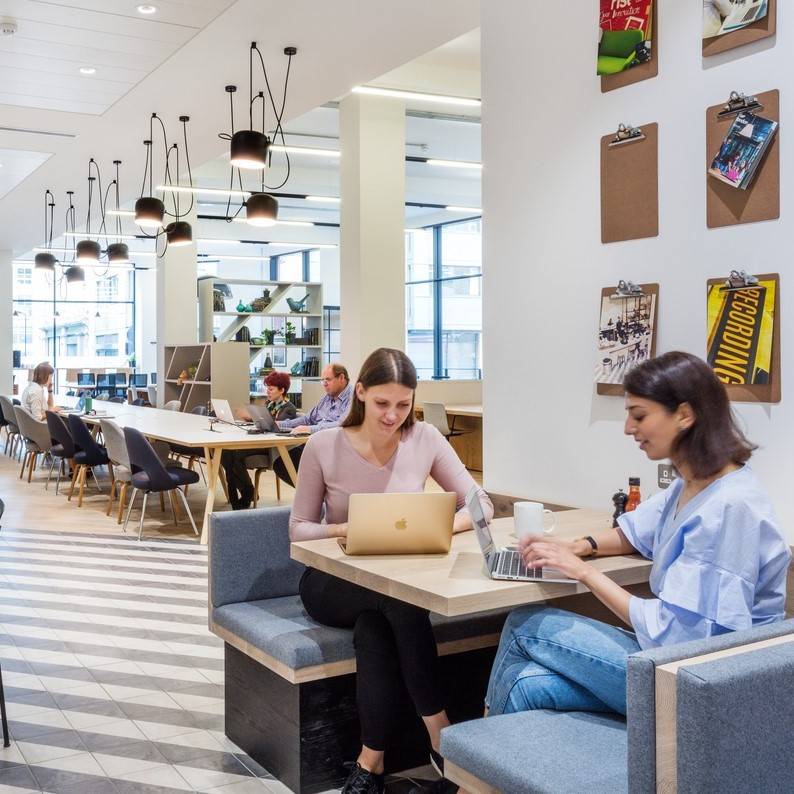
The open plan debate grinds on, and the latest grist to its mill is a study from researchers led by Esther Sternberg of the University of Arizona which suggests that it is those people who work in open plan spaces that are fitter and happier than their associate employee contemporaries in cubicles and private offices. The study, published in the journal Occupational & Environmental Medicine, used wearable sensors to study 231 US workers in four government office buildings. It’s worth noting that this is five times as many workers and twice as many offices as the much publicised recent study that we were told by various media outlets and commentators was the ‘final word’ on the subject.

(more…)

How do you make your company culture work for everyone?

How do you make your company culture work for everyone?

Company culture is the bedrock of any business. And it has been thrown into sharp focus in recent months with many high-profile scandals hitting the headlines such as the discrimination case at Uber. In light of this, many businesses are now investing in – even living and breathing – their company culture. This is of course, great news for employees. Shouting about how your company culture is like being part of a family and how everyone mucks in together may have swayed a new recruits’ decision during their interview. However, have you stopped to think how accessible your culture will be to new team members? Close-knit can often translate to the ‘in-crowd’ and office politics can get in the way of a pleasant working environment if the culture is too close.

(more…)

Majority of employees see digital data as way of being snooped on by their boss

Majority of employees see digital data as way of being snooped on by their boss

Majority of employees see digital data as way of being snooped on by their bossAs we recently reported, facilities management is more data driven than ever, with the use of data analytics being used to measure costs and performance. This is why the increasingly sophisticated ways in which workplaces can be monitored; from the footfall in the washrooms to the level of desk usage has been welcomed by employers, but a new survey suggests digital data gathering is making staff feel uneasy. A new report published today by the TUC looks at the phenomenon from the perspective of workers’ experiences and found that 6 in 10 workers fear that greater workplace surveillance through technology will fuel distrust. The study reveals that most UK workers (56 percent) believe they are currently monitored by their boss at work and worry that this ‘surveillance data’ will be used by bosses to set unfair targets, micromanage them and take away control and autonomy.

(more…)

UK labour and skills shortages set to increase as number of EU nationals fall

UK labour and skills shortages set to increase as number of EU nationals fall

Labour and skills shortages in UK set to increase as number of EU applicants fall

A noticeable fall in the flow of EU nationals into the UK has coincided with a drop in the quantity and suitability of job applicants being reported by employers, the latest quarterly Labour Market Outlook from the CIPD and the Adecco Group has revealed. The data suggests that while the short-term outlook for employment remains strong, labour and skills shortages are finally starting to bite, with evidence that the number of applicants per vacancy has dropped across all roles (low, medium and high-skill) since summer 2017. This strong demand for labour is finally increasing recruitment pressures for employers, exacerbated by a ‘supply shock’ of far fewer EU nationals coming into the UK. According to the latest official data, the number of EU-born workers in the UK increased by just 7,000 between Q1 2017 and Q1 2018, compared with an increase of 148,000 from Q1 2016 to Q1 2017. This represents a fall of 95 percent and has fed into a tightening of the labour market. The report also found that while wage growth for the wider workforce is set to remain at around 2 percent for the foreseeable future, new starters and key staff may be more likely to be getting a salary increase.

(more…)