Search Results for: work-life balance

BIFM workplace debate focuses on links between FM and design

Clerkenwell_Design_WeekClerkenwell Design Week was the appropriate setting for the inaugural event staged by the newly formed Workplace Special Interest Group (SIG) of the British Institute of Facilities Management. The event was staged at the showroom of office furniture giant Haworth on the 22 May, during Europe’s largest exhibition of workplace products and services. It saw a panel of industry experts debate in lively fashion the deliberately provocative proposition : Form or Function? Do you need office designers to create a great workplace environment? 

(more…)

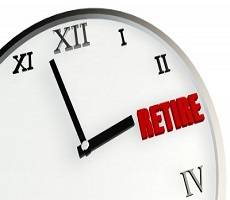
Groundbreaking study reveals work is better for you than retirement

Groundbreaking study reveals work is better for you than retirement

The scrapping of the UK’s Default Retirement Age (DRA) two years ago is seen by many employers as a negative step. But now a ground-breaking new study provides evidence that working past a set retirement age is much better for the nation’s health. Work Longer, Live Healthier: The relationship between economic activity, health and government policy, published by the Institute of Economic Affairs and the Age Endeavour Fellowship finds retirement has a detrimental impact on both mental and physical health over time. The stats make for uncomfortable reading for anyone considering taking that long cruise. You’re more likely to be clinically depressed, have at least one diagnosed physical condition and are less likely to enjoy good or excellent health. (more…)

Will an upturn spark a revival of interest in the idea of employer branding?

Employer brandingYou may recall that a few years ago there was a voguish interest in the idea of employer branding. This is the kind of thing that has always gone on but can always be defined and popularised,  in this case following the publication of a book on the subject in 2005. By 2008 Jackie Orme, the head of the Chartered Institute of Personnel and Development, was calling it ‘an integral part of business strategy’. Still, it appears to have dropped off the radar a bit over the last few years, a fact we might put down to the effect of the recession. Firms certainly seem to have their mind on other things. Research published last year by PriceWaterhouseCoopers showed that  in 2009, 54 per cent of businesses said they placed a special focus on retaining talent. By 2012 that had dropped to 36 per cent.

(more…)

UK employers failing to measure effectiveness of workplace wellness

MeasureFurther data from Buck Consultant’s Global Wellness Strategies Report reveals that UK employers know what they want from their workplace wellness strategy, but less than one in 10 (9 per cent) actively measures specific outcomes, and three quarters (74 per cent) of those that don’t say it is due to limited resources. According to the study, increasing employee morale and engagement (73 per cent), improving staff productivity and reducing presenteeism (69 per cent), and reducing absenteeism (66 per cent) are the three top goals for UK businesses; with the top four health risks identified as stress, workplace safety and work-life balance issues and depression.

(more…)

Employee burnout commonplace in third of UK companies

Burnout

Employee burnout is endemic within a third of UK organisations. According to new research from recruitment specialist Robert Half UK three out of ten (30 per cent) UK HR directors reported high levels of employee burnout, which rises to more than a third (35 per cent) for those in London and the South East and publicly listed companies. Two thirds (67 per cent) of UK HR directors cite “workload” as the primary reason for employee burnout, although this figure rises to three quarters (75 per cent) for large and 73 per cent for public sector companies. (more…)

Ban team building exercises for a feel good Friday

workplace relationships

Anyone who hates team building exercises will welcome a survey published by Samaritans and Simplyhealth today, which reveals that at 4%, the least popular option for making people feel good at work is team activities, including away days. When asked to select their top two factors, 42% of workers felt that positive relationships helped them to feel good at work, compared with a mere 14% for hitting their targets. The poll of more than 1,400 workers found having a good work-life balance was the second (40%) most common reason for feeling good at work followed by receiving praise (26%).

(more…)

Study confirms that digital tools blur boundaries between work and personal life

Study confirms that digital tools blur boundaries between work and personal life

A new academic study confirms something you probably already know: digital tools are eroding the boundary between work and personal life.A new academic study confirms something you probably already know: digital tools are eroding the boundary between work and personal life. According to the new research, things are getting worse and we experience constantly growing psychological strain as a result of an always on working culture. The study, published in the International Journal of Electronic Finance, finds that widespread use of information and communication technologies such as smartphones, laptops and cloud platforms has enabled greater flexibility but also extended work into nearly all aspects of daily life. (more…)

Why smarter scheduling is becoming workers’ favourite benefit

Why smarter scheduling is becoming workers’ favourite benefit

In late 2023, The Conference Board asked more than 1,500 US employees which non?salary benefits matter most. 65 percent put workplace flexibility at the top of the list, above bonuses, paid time off, retirement plans and even healthcare.  In 2025, Gallup found that among over 10,000 US workers, 59 percent rated “greater work–life balance and better personal wellbeing” as a very important reason for taking a new job, more than any other factor for the third year running. (more…)

The Kafka trap of return to office arguments

The Kafka trap of return to office arguments

This month I witnessed somebody misapplying the work of Kafka in an attempt to make a middlebrow point about the so-called return to officeRecently, I bemoaned how Orwell is often invoked in support of an argument by people who haven’t read him. They are usually drawing on some laundered misperception of his work, and especially Nineteen Eighty-Four. Well, just a few days ago, I witnessed somebody misapplying the work of Kafka in a similar attempt to make a middlebrow point about the so-called return to office. (more…)

Facilities Managers should be seen as stewards of corporate culture

Facilities Managers should be seen as stewards of corporate culture

hybrid working facilities managersThe pandemic has irrevocably changed the way we work. Once considered a place simply to do business, the office is fast becoming a ‘lifestyle choice’ among young people who value more than just a desk. Instead, they want an engaging, healthy, and resilient working environment where they can socialise, make friends, and build connections to help their career and wellbeing thrive. In fact, an EY study found that 90 percent of Generation-Z value the human connection in the workplace above salary when it comes to their at-work communication. A recent Gallup survey even found a tangible link between having a best friend at work and productivity: those who have a best friend in the office are twice as likely to be engaged in their role and company. (more…)

An office reset was what we all needed, and wanted

An office reset was what we all needed, and wanted

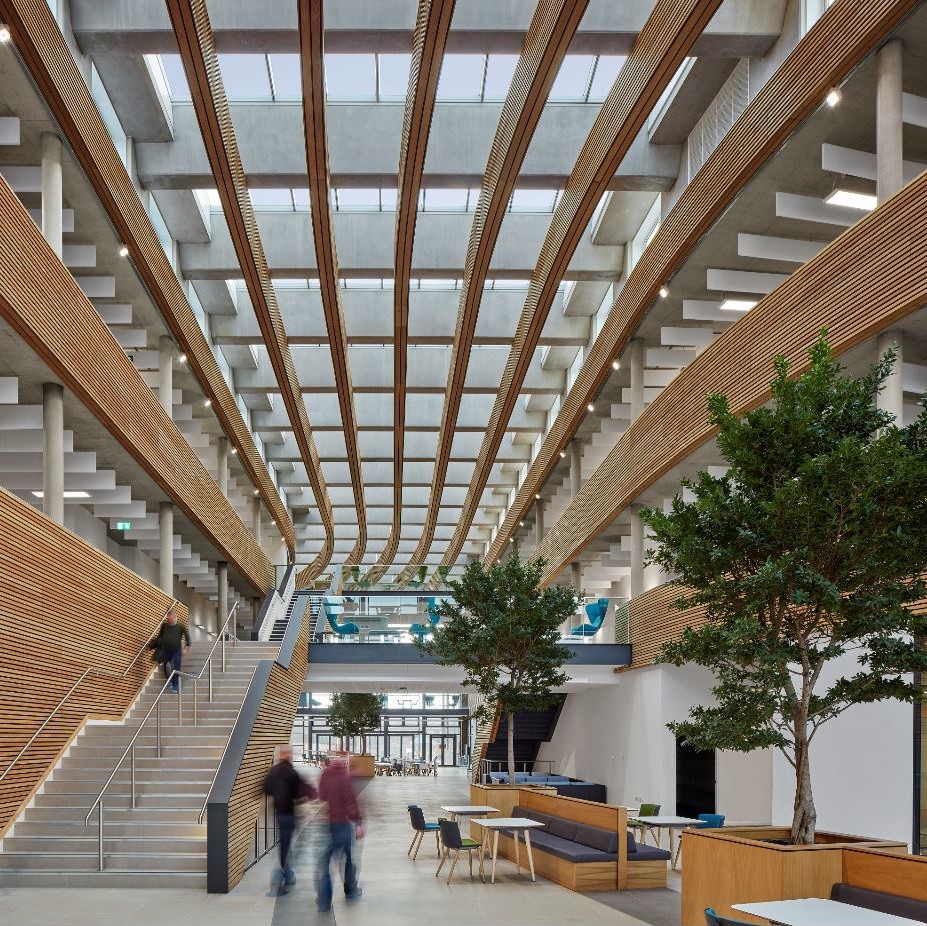
The UK's best officePressing the ‘reset’ button is never easy. But I’m a firm believer that, once we do, we become much less averse than we perhaps expected to the change it inevitably brings. This is particularly true of the past eighteen months. From all of the sadness and hardship endured, we are beginning to emerge into a new, changed way of living. One that is both familiar and altogether different. The dichotomy is particularly evident in our workplaces. For many sections of the economy, the office was the ecosystem of our daily working lives. Initial questions of whether the office would survive quickly fell by the wayside, and a more interesting, nuanced, debate of what we want the office to be began. (more…)

Why some people are more productive working from home than others

Why some people are more productive working from home than others

working from homeHas working at home during lockdown made people more productive or not? This has been the subject of some lively debate recently. Many companies do not routinely measure productivity. A large number will have traditionally assumed that they get the highest output when staff work longer hours or under close supervision, but remote working is clearly causing some to re-evaluate this. Major firms, for instance professional services group PwC, have been sufficiently impressed to make remote working a permanent option for their staff. (more…)