To provide the best experiences, we use technologies like cookies to store and/or access device information. Consenting to these technologies will allow us to process data such as browsing behaviour or unique IDs on this site. Not consenting or withdrawing consent, may adversely affect certain features and functions.
The technical storage or access is strictly necessary for the legitimate purpose of enabling the use of a specific service explicitly requested by the subscriber or user, or for the sole purpose of carrying out the transmission of a communication over an electronic communications network.
The technical storage or access is necessary for the legitimate purpose of storing preferences that are not requested by the subscriber or user.
The technical storage or access that is used exclusively for statistical purposes.
The technical storage or access that is used exclusively for anonymous statistical purposes. Without a subpoena, voluntary compliance on the part of your Internet Service Provider, or additional records from a third party, information stored or retrieved for this purpose alone cannot usually be used to identify you.
The technical storage or access is required to create user profiles to send advertising, or to track the user on a website or across several websites for similar marketing purposes.







 Eighteen months since nationwide shutdowns, the global surge in COVID-19 cases is exacerbating the onset of virtual fatigue for many employees according to JLL. The new “How Regenerative Workplaces Can Restore Employee Wellbeing” report explores opportunities for companies to redefine what employee wellbeing looks like and achieve organisational resilience through the physical workplace. (more…)
 As businesses in the UK prepare to open their office doors en masse in the first week of September, new research reveals that office workers have got that back-to-school excitement and are feeling largely positive about the transition. Recruitment firm Michael Page questioned over 2,000 UK office workers on their attitudes to returning to the office and found that after eighteen months at home, around half claim to be ‘excited’ or ‘happy’ to spend more time in the office with their colleagues. Reminiscent of the first day back at school, almost three in ten (28 percent) said that they had picked out their outfit and packed their bag ahead of their first day back in the office.
 A new study, commissioned by
 I’m a Luddite. This is not a hesitant confession, but a proud proclamation. I’m also a social scientist who studies how new technologies affect politics, economics and society. For me, Luddism is not a naïve feeling, but a considered position. And once you know what Luddism actually stands for, I’m willing to bet you will be one too — or at least much more sympathetic to the Luddite cause than you think.
 A new survey from the Economist Intelligence Unit backs up the most commonly cited form of ‘hybrid working’ by claiming that business executives on average think work should be split 70 percent / 30 percent between the office and home respectively. In
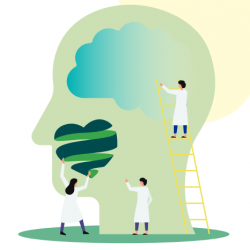 ‘Pleasanteeism’ – the pressure to put on a brave face – is undermining efforts to promote an open dialogue about mental health at work, according to new research by
 Research from
 In face of growing skills gaps in the UK – post pandemic and Brexit –
 Perhaps the most famous single act of personal creativity – with apologies to Archimedes – is Mary Godwin’s moment of inspiration for the story of Frankenstein in 1816. It was born from a wet summer in a villa on the shores of Lake Geneva, largely spent with her future husband Percy Shelley, John Polidori and Lord Byron. The poor weather and isolation meant the party had to entertain themselves the best they could.


 The global pandemic has blurred the lines between home and work for millions of people around the world. Where once there was a clear distinction between being on and off duty, the demands of remote working and ever-presence of smartphones has created an ‘always on’ culture in many organisations. The trend has led to a number organisations in the UK to now call for a ban on out-of-hours emails in order to alleviate pressures on employees mental health. But is this really necessary, or even logistically possible, for the new world of work? We asked four leading experts for their thoughts.








September 10, 2021
The Great Workplace Conversation gets quieter and more interesting
by Mark Eltringham • Comment, Flexible working, Wellbeing, Workplace design