







June 21, 2021
Search Results for: business

 New polling in a
June 21, 2021
Design Social North will reinvigorate the creative workplace sector in the North of England
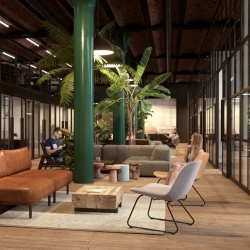 Design Social North is the new event bringing the design community and creative businesses back together in the North of England. The organisers have created DesignFestivalNorth, a 3-day showcase of leading design brands and companies, presented in a series of events taking place this July in showrooms across Manchester, and a dedicated ‘design hub’ located at Impossible in the City Centre. It takes place from Tuesday 13th-Thursday 15th July 2021. (more…)

June 18, 2021
Is it time to ban out-of-hours emails?
 The global pandemic has blurred the lines between home and work for millions of people around the world. Where once there was a clear distinction between being on and off duty, the demands of remote working and ever-presence of smartphones has created an ‘always on’ culture in many organisations. The trend has led to a number organisations in the UK to now call for a ban on out-of-hours emails in order to alleviate pressures on employees mental health. But is this really necessary, or even logistically possible, for the new world of work? We asked four leading experts for their thoughts. (more…)
June 18, 2021
Cities could be more important post-pandemic, not less, suggests report
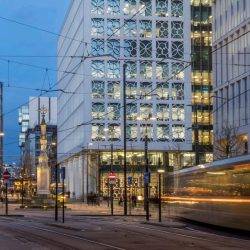 Paradoxically, more in-person work environments and the concentration of jobs in cities could be a medium- to long-term impact of the pandemic’s shift to remote working, suggests Citi GPS Technology at Work: The Coming of the Post-Production Society, a report produced by Citi and the Oxford Martin School at the University of Oxford. The report cites the automation of manufacturing and clerical tasks alongside the potential for professional services jobs that can be done remotely to be done cheaper overseas as the start of a foundational shift in developed economies. The future of work in these countries, it suggests, could be based largely on innovation, exploration and creative thinking which require face-to-face interaction and geographic proximity. (more…)

June 18, 2021
HR professionals believe the war for talent has become more competitive
 According to its latest whitepaper ‘Recruitment, retention, and culture: assessing the pandemic’s impact’, Cendex claims that 81 percent of HR professionals believe the war for talent has become more competitive over the last 12 months – this is likely to be a result of businesses looking to bounce back post-pandemic, upping their recruitment thus giving employees the pick of the market. (more…)

June 17, 2021
Suburban commercial property markets outperform City Centres for first time in a decade
 Research from The Instant Group claims that suburban commercial property markets are outperforming City Centres for the first time in over ten years. The increased demand is largely being driven by those who no longer want to work from home, but don’t want to be back in larger cities. (more…)

June 17, 2021
Women struggling with almost twice as much fatigue and anxiety as men
 As COVID-19 continues to limit our daily lives, forcing the Government to extend social restrictions into July, restrictions of a different kind are taking their toll on working women, and may be even longer-lasting, according to research from 87 percent. (more…)
June 16, 2021
We need to rethink the role of technology in corporate wellbeing
 Employers nationwide are taking steps to improve employee wellbeing, reduce stress and improve mental health. For many, they are well-meaning, for example, banning work emails during certain hours of the day, encouraging employees to ‘switch off’. However, the risk with blanket policies like these is that they don’t work for everyone. A recent study from the University of Sussex even found banning out-of-hours emails can have a detrimental impact on employee wellbeing – restricting opportunities for truly flexible working and taking away a sense of control and autonomy. (more…)

June 16, 2021
People have picked up bad cybersecurity habits while working from home
 A new report from Tessian claims that most IT leaders (56 percent) believe their employees have picked up bad cybersecurity behaviours since working from home. As organisations make plans for the post-pandemic hybrid workforce, Tessian’s Back to Work Security Behaviours report highlights how security behaviours have shifted during the past year. (more…)

June 15, 2021
Women’s working hours fall a third less than men’s
 Women’s average working hours have taken a far smaller hit during the pandemic than men’s, with women who do not have children now working longer hours than ever before – in marked contrast to predictions of a ‘shecession’ at the start of the pandemic, according to new research by the Resolution Foundation. (more…)

June 14, 2021
Hybrid working will impact younger people in very specific ways
 When considering a hybrid working method for your organisation, it’s far too easy to try think of what will work for all employees as a whole, rather than breaking this down and thinking about the different needs from certain groups of people. One example of this is age and experience. Employees from different age groups and at different levels of experience within in an organisation may have very different needs when it comes to hybrid working. Those who have been with the business, or in a similar work environment, for some time may be perfectly comfortable to work from home the majority of the week, with little help or supervision. However, this probably isn’t going to work as well for younger employees with less experience. (more…)









June 22, 2021
The office sector needs to face up to its landfill issue
by Joanna Knight • Comment, Environment, JK, Workplace design