





Search Results for: communication

Senior managers unaware of high levels of employee mistrust

Senior managers unaware of high levels of employee mistrust

High levels of employee mistrust towards senior UK management warns reportThe new corporate governance code that comes into play early next year includes directives on how companies engage with their staff, but it is a voluntary code which will allow businesses to opt out if they wish. Now a new report suggests there is currently is a high level of mistrust towards senior UK managers, with just 16 percent trusting this group, according to the study. This is despite the fact that according to the research, carried out by Virtual College the majority (95 percent) of senior managers in UK businesses believe that their employees trust them. Employees rated their trust in different roles in the following order; co-workers – 57 percent, managers – 45 percent, team members – 42 percent and senior management – 16 percent. Trust in senior management was found to be considerably lower than trust in other positions such as middle management. The sectors that trusted senior management the least included; utilities (3 percent), legal (8 percent) and government services (8.7 percent).

(more…)

People working in fully open plan spaces are generally fitter and less stressed

People working in fully open plan spaces are generally fitter and less stressed

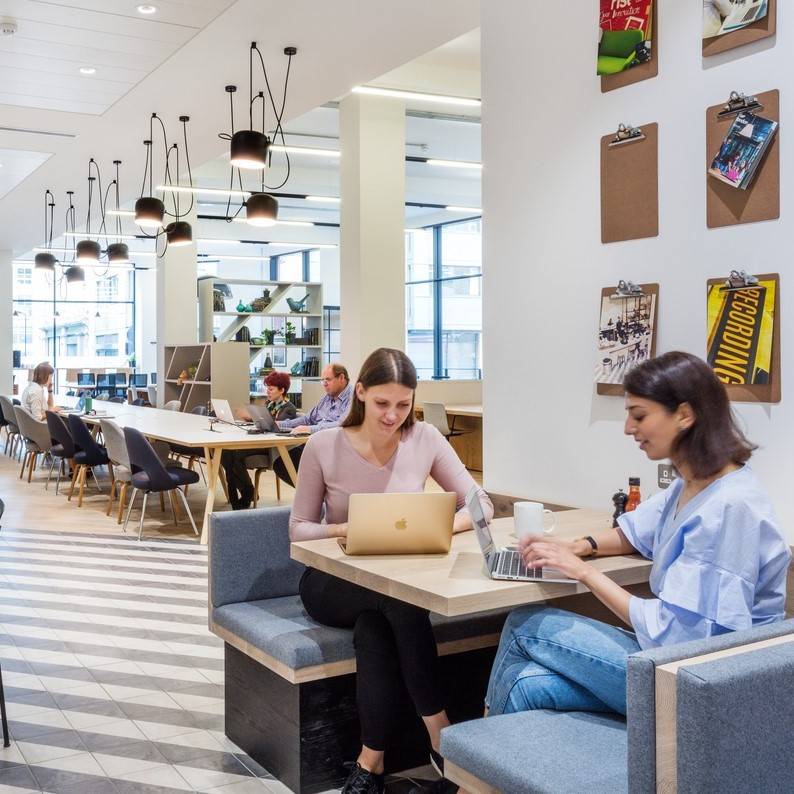
The open plan debate grinds on, and the latest grist to its mill is a study from researchers led by Esther Sternberg of the University of Arizona which suggests that it is those people who work in open plan spaces that are fitter and happier than their associate employee contemporaries in cubicles and private offices. The study, published in the journal Occupational & Environmental Medicine, used wearable sensors to study 231 US workers in four government office buildings. It’s worth noting that this is five times as many workers and twice as many offices as the much publicised recent study that we were told by various media outlets and commentators was the ‘final word’ on the subject.

(more…)

How do you make your company culture work for everyone?

How do you make your company culture work for everyone?

Company culture is the bedrock of any business. And it has been thrown into sharp focus in recent months with many high-profile scandals hitting the headlines such as the discrimination case at Uber. In light of this, many businesses are now investing in – even living and breathing – their company culture. This is of course, great news for employees. Shouting about how your company culture is like being part of a family and how everyone mucks in together may have swayed a new recruits’ decision during their interview. However, have you stopped to think how accessible your culture will be to new team members? Close-knit can often translate to the ‘in-crowd’ and office politics can get in the way of a pleasant working environment if the culture is too close.

(more…)

Workers are focused on shorter hours and more flexible working

Workers are focused on shorter hours and more flexible working

New research released today by McDonald’s UK, reveals more than half of UK adults want to move away from traditional working patterns, choosing jobs that enable them to enjoy more flexible working and prioritise commitments outside of work. This study was conducted in July and August, with YouGov as well as with McDonald’s employees. Its key finding is that Jobs that offer earlier starts and a shorter working week most appealing to job seekers; with only 6 percent of people working the traditional ‘9-5’

(more…)

Employees reveal truth about company culture

Employees reveal truth about company culture

Organisations must do more to engage with their people and meet their personal expectations if they want a positive work culture, highlights a new research white paper by leading HR and payroll supplier, MHR.  ‘Company Culture: Don’t Just Throw Money at The Issue’ explores the real experience of UK employees and their true thoughts about their employers. The paper, based on findings from a survey of 1174 UK employees by YouGov on behalf of MHR, reveals that 49% of employees believe the portrayed public image of the company they work for matches the actual experience of working there. The research shows that employees are generally happy with the culture at their workplace, with 70% of people agreeing their company’s ethos is well communicated to staff, and 61% saying they would feel comfortable speaking to their manager if they felt the company wasn’t delivering on its aims.

(more…)

The mere expectation that we check emails outside working hours harms our wellbeing

The mere expectation that we check emails outside working hours harms our wellbeing

Employer expectations of work email monitoring outside of normal working hours are detrimental to the health and wellbeing of not only employees but their family members as well. A new study suggests that employees do not need to spend actual time on work in their off-hours to experience the harmful effects. The mere expectations of availability increase strain for employees and their families, even when employees do not engage in any actual work.

(more…)

Prague best city in the world for remote working, but Johannesburg has cheapest coffee

Prague best city in the world for remote working, but Johannesburg has cheapest coffee

New research has revealed the top 15 cities worldwide that are best for remote working and Prague is on top, with London ranked as the 5th best city in the world for remote workers. Inspired by the top 15 cities listed in InterNation’s Expat City Ranking Report, Powwownow analysed the cost of living, average monthly salary, internet speed, price of coffee, and cost of public transport in different places across the world. Cities were individually scored on each factor and ranked by the total number of points, to calculate the top 15 cities around the world. Calculating an overall ranking for each city, Prague was revealed to be the best city worldwide for remote workers. (more…)

Levels of digital dependency hit new heights

Levels of digital dependency hit new heights

Most people in the UK are dependent on their digital devices, and need a constant connection to the internet, following a decade of digital dependency and transformation claims a report from regulatory body Ofcom. The findings are from Ofcom’s Communications Market Report, which it claims is the most comprehensive study of how communications services in the UK are changing. Around 17 percent of people owned a smartphone a decade ago. That has now reached 78 percent and 95 percent among 16-24 year-olds. The smartphone is now the device people say they would miss the most, dominating many people’s lives in both positive and negative ways.

(more…)

New analysis sets out to define fastest growing sectors in London in 2018

New analysis sets out to define fastest growing sectors in London in 2018

A new analysis from Instant Offices sets out to identify the largest business sectors driving London’s economy. It claims that the three most prominent are information and communication, financial and insurance, and professional, scientific and technical services. The UK Business Register and Employment Survey (BRES) showed distinct trends in growth for specific sectors, in London and in the UK as a whole.

(more…)

Cities should make the most of their digital connectivity

Cities should make the most of their digital connectivity

Cities need more powers and resources from Government to address digital divides – but also need to make better use of existing technology to transform public services. This is according to a report published by the think tank Centre for Cities in partnership with Telefónica UK. It examines how digital technology – in terms of both fixed and mobile connections – is transforming urban Britain, and the steps national and local leaders can take to ensure people and places across the country benefit. However, the report also warns that many UK cities are not taking full advantage of existing digital connections, and the benefits it could offer to residents and businesses – as well as the potential it has to improve public services.

(more…)

When it comes to change management, culture sometimes eats strategy for breakfast

When it comes to change management, culture sometimes eats strategy for breakfast

21st Century organisations are under constant pressure to evolve. They are beset by a number of forces that demand they change constantly. These include the need to restructure the organisation, adapt to new technologies, respond to competitors and changes in the economy and legislative environment. Inevitably, this constant need to change affects both people and the built environment in very profound ways. However, according to a study of Culture and Change Management published by the Katzenbach Center, only around half of all transformation initiatives meet their objects over time. Among the biggest obstacles to successful change management cited by the study is change fatigue, which is characterised by a lack of empathy and a widespread failure to engage with the change process.

(more…)

A quarter of London start-ups have considered relocating to deal with Brexit uncertainty

A quarter of London start-ups have considered relocating to deal with Brexit uncertainty

It has now been more than two years since the UK voted in favour of leaving the European Union, and new research Studio Graphene in partnership with City Road Communications claims to reveal new information about how Brexit has impacted on London’s early stage businesses. Based on a survey of more than 100 founders of London startups, the study shows that since the EU referendum the vast majority of entrepreneurs have remained loyal to the capital, showing no sign that they want to move to help improve the growth prospects of their business. It also uncovered the way young companies are responding to the challenges posed by Brexit.

(more…)