To provide the best experiences, we use technologies like cookies to store and/or access device information. Consenting to these technologies will allow us to process data such as browsing behaviour or unique IDs on this site. Not consenting or withdrawing consent, may adversely affect certain features and functions.
The technical storage or access is strictly necessary for the legitimate purpose of enabling the use of a specific service explicitly requested by the subscriber or user, or for the sole purpose of carrying out the transmission of a communication over an electronic communications network.
The technical storage or access is necessary for the legitimate purpose of storing preferences that are not requested by the subscriber or user.
The technical storage or access that is used exclusively for statistical purposes.
The technical storage or access that is used exclusively for anonymous statistical purposes. Without a subpoena, voluntary compliance on the part of your Internet Service Provider, or additional records from a third party, information stored or retrieved for this purpose alone cannot usually be used to identify you.
The technical storage or access is required to create user profiles to send advertising, or to track the user on a website or across several websites for similar marketing purposes.







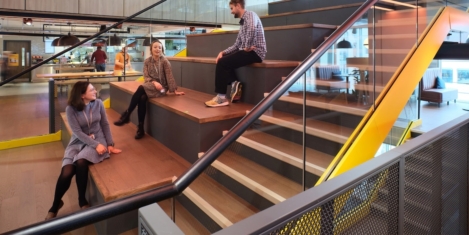
 Six workplaces across the North of England and Northern Ireland have been recognised at the annual British Council for Offices (BCO) Regional Awards today. The Northern BCO Awards dinner returned in-person to the Kimpton Clocktower in Manchester, recognising the North’s highest quality developments and setting the standard for excellence in the office sector across the UK. (more…)




 There’s a scene in the 1986 horror movie The Fly in which Seth Brundle (Jeff Goldblum) persuades the reporter Veronica Quaife (Geena Davis) to try two steaks, one of which Brundle has just sent between two teleportation pods in an effort to work out why the pods can’t process organic matter, including the organic matter that had recently belonged to a very unfortunate baboon.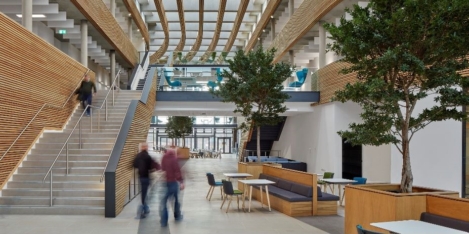
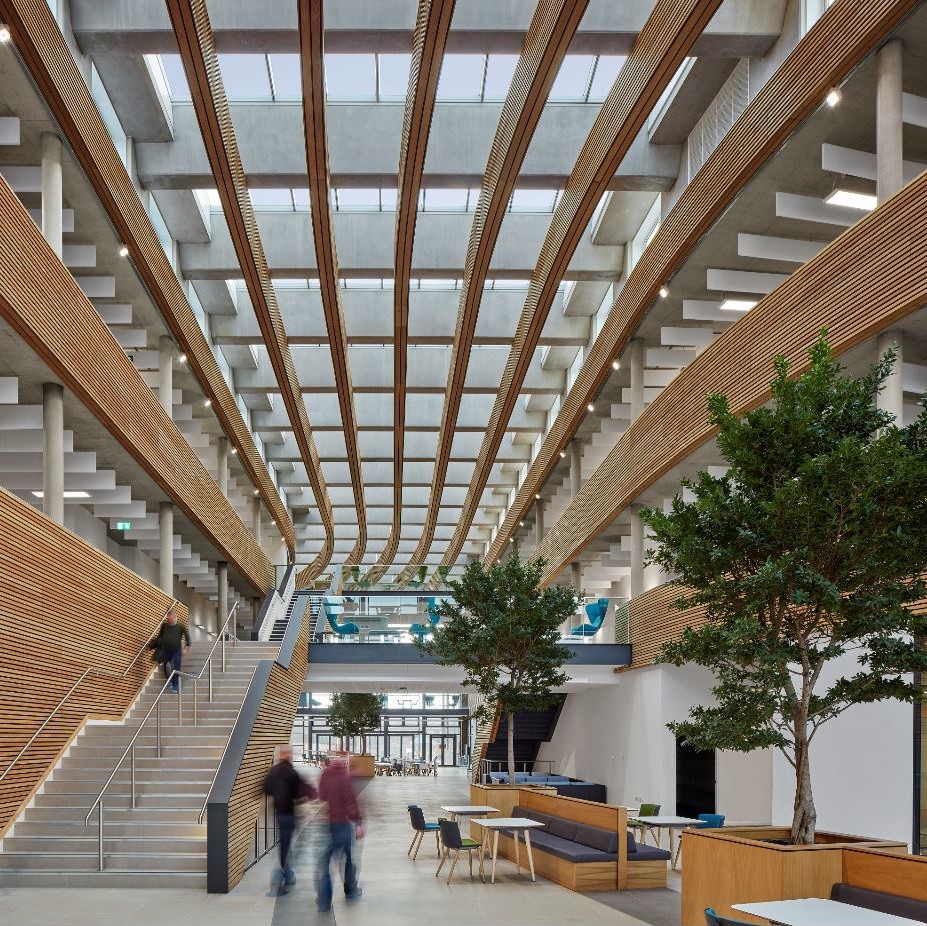









 While the debate about working from home versus working in the office continues, should the real conversation focus on the implications for a typical knowledge worker? ‘Knowledge work’ is a term that dates back over sixty years. It’s said to be first coined by Peter Drucker in his 1958 book The Landmarks of Tomorrow. The business guru went on to talk about knowledge workers in a later book, The Effective Executive, in 1966. He defined them as ‘high-level workers who apply theoretical and analytical knowledge acquired through formal training, to develop products and services’.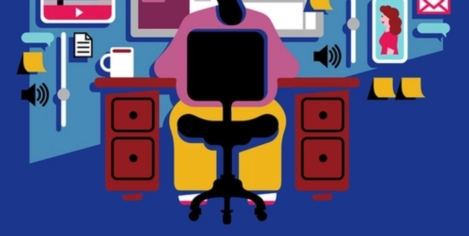
 After nearly two turbulent years, which for many knowledge workers have been dominated by a ground-hog day like existence, people are looking for change. This is only natural as workers around the world are re-evaluating their priorities, reigniting their passions, or simply looking for something new. This has led to a mini-exodus from businesses, which is now being dubbed the ‘







April 25, 2022
The studied carelessness of agile workplaces
by Mark Eltringham • Comment, Workplace design