To provide the best experiences, we use technologies like cookies to store and/or access device information. Consenting to these technologies will allow us to process data such as browsing behaviour or unique IDs on this site. Not consenting or withdrawing consent, may adversely affect certain features and functions.
The technical storage or access is strictly necessary for the legitimate purpose of enabling the use of a specific service explicitly requested by the subscriber or user, or for the sole purpose of carrying out the transmission of a communication over an electronic communications network.
The technical storage or access is necessary for the legitimate purpose of storing preferences that are not requested by the subscriber or user.
The technical storage or access that is used exclusively for statistical purposes.
The technical storage or access that is used exclusively for anonymous statistical purposes. Without a subpoena, voluntary compliance on the part of your Internet Service Provider, or additional records from a third party, information stored or retrieved for this purpose alone cannot usually be used to identify you.
The technical storage or access is required to create user profiles to send advertising, or to track the user on a website or across several websites for similar marketing purposes.









 Despite political and economic uncertainly and the aftermath of the global monetary crisis in 2008, London remains a leading global financial centre, with nearly a quarter (24 percent) of the capital’s office take-up attributed to banking and finance occupiers over the last ten years. London is by far the most active banking centre in Europe, according to the latest research from global real estate advisor CBRE. According to the report, 1.1 million people were employed in the UK financial services sector in 2017, of which 34 percent were in London. (more…)
 The new northern home of the BBC is giving London a run for its money when it comes to siting offices for the UK’s top tech talent, with Manchester leading the way, according to
















October 16, 2018
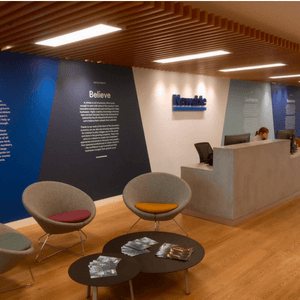
Law firms are finally embracing the agile workplace
by Simon Pole • Comment, Workplace design
(more…)