Search Results for: wellbeing

Sedentary working has led to weight gain for over a third of workers

Sedentary working has led to weight gain for over a third of workers

sedentary workingMore than two in five workers (41 percent) admit they have gained weight at their current jobs, with 18 percent confessing they have gained more than 10 pounds a survey from CareerBuilder.co.uk claims. Only 13 percent of workers claim they’ve lost weight in their current job with sedentary working, exhaustion and time constraints all being identified as obstacles to staying fit. The majority of workers (68 percent) say their employers do not provide gym passes, access to workout facilities or wellbeing benefits. Of these, 41 percent claim they would take advantage of such opportunities, yet only a quarter (24 percent) say their company provides such incentives. Over half of workers (58 percent) also spend most of their time sitting at their desk during the day and skipping proper meals due to time constraints.

(more…)

Expert advice issued on managing mental health in the workplace

Expert advice issued on managing mental health in the workplace

Mental health awareness weekMental health can affect people’s personal lives, wellbeing and morale. But it can also impact on their performance at work and be costly for businesses. That’s the message from Acas, which, to mark Mental Health Awareness Week, has issued a guide to managing mental health in the workplace. It advocates creating an environment where people feel confident they can disclose conditions to employers; that employers be aware of any changes in behaviour that might suggest they’re having problems; and suggests that if a problem is being caused by work, look into ways of facilitating changes, such as offering flexible working opportunities.  It is also suggested that wellness initiatives which encourage healthy eating, exercise and mindfulness can also help to reduce the severity of mental ill health.

(more…)

The world’s enduring addiction to the joy and misery of commuting

CommutingCommuting is one of the most complained about yet least explored facets of our working lives. This is in spite of the fact that it consumes so much of people’s time, energy and money, is presented as one of the main arguments for more flexible working practices and is so closely linked to our wellbeing. Yet the half a billion – and growing – commuters worldwide could be forgiven for assuming nobody is really that much interested in the effects of their daily grind into work, especially when you consider the attention given to other workplace issues. Douglas Langmead in his feature on page 32 of the new issue of Work&Place does his bit to redress this imbalance with a fascinating look at commuting in the rapidly developing and endlessly fascinating economies of the United Arab Emirates.

(more…)

Understanding and overcoming the objections to sit stand workstations

Understanding and overcoming the objections to sit stand workstations

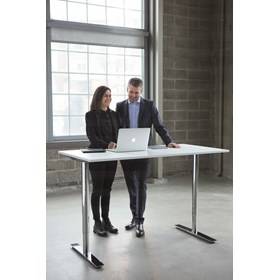
OberonWork10In Sweden, sit-stand working is so commonplace that our Nordic colleagues are perplexed by how slow the UK has been to catch up. The expectation of varying working positions throughout the day is so widespread across Scandinavia that over 80 percent of Swedish, Danish, Finnish and Norwegian office workers already use sit stand workstations, and offering employees a height adjustable work station is now mandatory in Denmark. Despite sit-stand working still being in its infancy in the UK, with only 2 percent of knowledge workers having access to height adjustable workstations, there is plenty of compelling evidence, and a groundswell of expert opinion, to suggest that the UK office is going to have to get off its backside pretty soon.

(more…)

Why it’s time for more companies to roll the dice for gamification

Why it’s time for more companies to roll the dice for gamification 0

gamificationAs was reported recently, gamification remains practically unknown to many managers yet companies like Nike, Microsoft, Samsung and eBay are beginning to see it as a useful tool. Generally adopted by marketing and sales professionals, gamification can also influence behaviour, increase productivity and improve wellbeing. Gamification is all around us, even if we don’t always notice it. It’s used in sales competitions, frequent flyer programmes and marketing initiatives. So what is gamification? In short it’s the concept of applying game mechanics and game design techniques in order to engage and motivate people to achieve their goals. It’s about turning something potentially mundane into a game – similar to many ingenious mothers who might turn cleaning a room or washing dishes into a game for their children.

(more…)

The latest issue of Insight Weekly is available to view online

The latest issue of Insight Weekly is available to view online 0

Insight_twitter_logo_2In this week’s issue; the ten most sustainable buildings in North America; Mark Eltringham examines the ways different countries approach ergonomics. Steve Taylor looks at the evidence for doing less sitting and more standing at work, while a new report from the Work Foundation sets out the challenges facing the next UK government to improve the health of the country’s workforce. In news; Facebook almost doubles the size of its London HQ, the adoption of flexible working by UK organisations increases by over a third and new data shows that the UK office market is growing as employers strive to create environments designed to enhance staff wellbeing. Sign up to the newsletter via the subscription form in the right hand sidebar and follow us on Twitter and join our LinkedIn Group to discuss these and other stories.

New long term standing desks study announced at Virgin Media

New long term standing desks study announced at Virgin Media 0

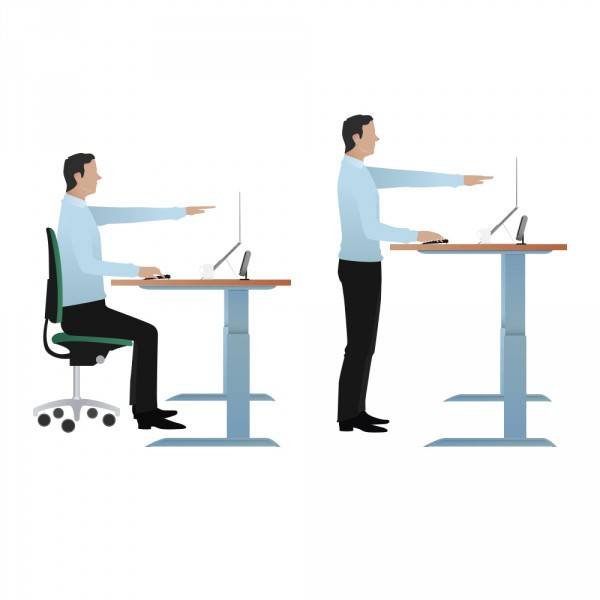
sit-stand-desking_illustrationA new 12 month study into the application and effects of working with standing desks has been announced by the University of Chester in conjunction with Virgin Media. However it’s a pretty small scale model – at just one site and presumably with a limited cross section of the general population. It will involve the participation of two groups of 12 agents at Virgin Media’s contact centre in Sheffield. The research will be led by John Buckley, Professor of Applied Exercise Science at the University of Chester, with the aim ‘to uncover the impact of a less sedentary working environment on health, wellbeing and productivity.’ The two groups of agents involved will take it in turns to spend six months each using adjustable sit-stand desks and staying on their feet for a minimum of two hours daily.

(more…)

Is it now time to take a stand on sitting in the workplace?

Is it now time to take a stand on sitting in the workplace? 0

standing in the workplaceThe search for wellbeing is taking over the workplace as companies look to attract and retain the very best talent. Bosting health, happiness and productivity in the office environment is now paramount to counter potential negative health effects and growing discontent from office workers. A key factor in this topic is the ill-effects caused by workers spending the vast majority of their day sitting inactive at their desks. Workers are now taking a stand in the office and companies are being forced to act. Recent research carried out by the American College of Cardiology reported that an office design that makes people sit at their desk or meeting room for hours every day is equally as bad as putting a cigarette in their hand; leaving them at raised risk of cancer, heart disease and diabetes.

(more…)

UK office market grows as employers enhance quality of workspace

UK office market grows as employers enhance quality of workspace 0

wellnessThe level of activity in the UK office market has grown as employers strive to create environments designed to enhance staff wellbeing. According to the 2015 edition of the annual Office Report from property consultancy Lambert Smith Hampton, occupiers have expanded headcount and upgraded their accommodation, helping to propel take-up in markets up and down the country. Edinburgh reported record activity; Oxford, Cardiff, Bristol and Cardiff all posted take-up well ahead of their 10-year averages and Manchester enjoyed its best year since 2001. However, over 11 m sq ft of office space has been earmarked for alternative use since the relaxation of planning rules. This equates to an area the size of all the office floor space in Reading being converted into new uses such as apartments and hotels, since the introduction of Permitted Development Rights in May 2013.

(more…)

The latest issue of Insight Weekly is available to view online

The latest issue of Insight Weekly is available to view online 0

Insight_twitter_logo_2In this week’s issue; we preview next month’s Clerkenwell Design Week; RBS sets out to save £18 million a year with a major office consolidation strategy in Edinburgh; Sara Bean reports on the importance of office location for employee engagement; Jim Ware offers a CEO’s perspective on a successful real life workplace strategy; Mark Eltringham extols the joys of procrastination and daydreaming; we look at the wellbeing benefits of a groundbreaking new acoustic office design element made from recycled plastic; and we ponder why exactly the electorate gets itself so riled up about office furniture. Sign up to the newsletter via the subscription form in the right hand sidebar and follow us on Twitter and join our LinkedIn Group to discuss these and other stories.

Employers neglecting to check ergonomic safety of office workers 0

ergonomicThe widespread adoption of mobile devices, not to mention the development of the Internet and uptake of flexible working, may render the Health and Safety (Display Screen Equipment) Regulations 1992 hopelessly out of date, but they continue to oblige employers to ensure that employees’ workstations are assessed for ergonomic comfort and safety. A survey by Fellowes claims over half of companies (62%) acknowledge they have a duty to foster the physical and mental health of their staff, but found that 31 percent of workers were left in charge of conducting their own self-assessments. In over a quarter of organisations (27%), staff raised concerns that their monitor or display screens were not appropriate and more than one fifth (21%) weren’t aware of any legal requirements when assessing a display screen.

(more…)

WELL building standard launched in China 0

macquries (1)The Green Building Certification Institute (GBCI) and the International WELL Building Institute (IWBI) have launched their WELL Building Standard in China. The standard sets out to improve the health and wellbeing of people and claims to complement international green building rating programs such as LEED, BREEAM International and Three Star. The Standard is a performance-based system for measuring, certifying and monitoring features that may impact human health and wellbeing, through air, water, nutrition, light, physical health, comfort and mental and psychological wellbeing. The standard claims to be based on medical research that links buildings with the health and wellness of the people working and living in them and helps building owners and occupiers to understand those links and create a healthier working environment.

(more…)