Search Results for: budget

UK productivity crisis deepens…but technology probably isn’t the solution

UK productivity crisis deepens…but technology probably isn’t the solution 0

Following last week’s report from the ONS on the UK’s intransigent productivity  challenge, and the Bank of England’s Chief Economist Andy Haldane’s intervention on the issue, a new report from accountants and business advisers BDO claims that the UK’s productivity crisis is deepening, rather than improving. The latest report claims that while firms are continuing to hire more staff, business output is struggling to pick up. The amount of output produced for each hour worked is therefore likely to slow further, undermining the UK’s already low productivity levels. This is despite the steady increase in employment levels which have been relatively unaffected by the uncertainty surrounding Brexit.


(more…)

Third of HR professionals say Brexit will impact the profits of their business

Third of HR professionals say Brexit will impact the profits of their business 0

Today (29 March) the Prime Minister triggers Article 50 to begin the UK’s exit from the European Union, and a new piece of research claims that almost two thirds (62 percent) of HR professionals expect this to impact their HR strategy and more worryingly, over a third (35 percent) say that the leave vote will impact the profits of their business. According to the research from employee benefits specialist Secondsight, 37 percent have opted not to hire over the coming year, and 39 percent agreed that recruiting the right people into their business will now be more difficult than before the decision to leave was made. However, on a more encouraging note, 95 percent of the HR professionals surveyed will see their budget rise in 2017, and 18 percent plan to introduce new benefits in the year ahead.


(more…)

Employers blame gender pay gap on career breaks and part-time work

Employers blame gender pay gap on career breaks and part-time work 0

Employers blame gender pay gap on career breaks and part-time work

Over a quarter (29 percent) of senior managers within UK enterprises do not see the gender pay gap as an issue for businesses and many believe the gap is partly due to  women’s personal career decisions, a new survey claims. Research by NGA Human Resources (NGA HR) found that despite the UK gender pay gap sitting at 13.9 percent, only 17 percent of decision makers surveyed believe that regulations on gender splits will reduce the divide. Nearly half (49 percent) of senior leaders in businesses blame the disparity on the fact that women are more likely to take career breaks or work part-time (42 percent) as the main factors for pay disparities. Other reasons given for the gender pay gap are the lack of representation of women in the overall workforce (20 percent) and fewer women in senior management positions (27 percent).

(more…)

RSA report sets out nationwide strategy for inclusive growth

RSA report sets out nationwide strategy for inclusive growth 0

The Royal Society for the encouragement of Arts, Manufactures and Commerce (RSA) has published the final report from its Inclusive Growth Commission. The report sets out a series of recommendations which it claims will address the lack of an inclusive approach to the economy. In the context of Brexit, this is one of the underlying drivers of dissatisfaction with the way the UK is run by central and local government, the report claims, and hence a factor in the Brexit vote. Its forward looking proposals include a greater commitment to lifelong learning, a greater focus on place to ensure the UK’s cities and regions get a greater stake in the national economy. As well as the main report, its conclusions and proposals are discussed in a podcast.

(more…)

Increasing adoption of wellbeing strategies to improve engagement and culture

Increasing adoption of wellbeing strategies to improve engagement and culture 0

Workplace wellbeing strategies are being implemented by employers at an unprecedented rate, with 45 percent of UK companies now having a clearly-defined wellbeing strategy in place, compared to less than a third (30 percent) in 2016, claims a new report. According to ‘Employee Wellbeing Research 2017: The evolution of workplace wellbeing in the UK’ from Reward & Employee Benefits Association (REBA), in association with Punter Southall Health & Protection, of those that don’t, virtually all plan or wish to implement one – with 46 percent planning on implementing one this year, 24 percent in the next few years and a quarter (25 percent) having it on their ‘wish list’. Over a third (37 percent) launched their wellbeing strategy to improve employee engagement, and just over a quarter (26 percent) to improve organisational culture.  Other drivers included improving productivity levels (11 percent), reducing long and short-term sickness absence (6 percent & 5 percent) and retaining talent (5 percent).

(more…)

Digital transformation and flexible workforce will help drive growth, say senior managers

Digital transformation and flexible workforce will help drive growth, say senior managers 0

Implementing new technologies over the next 12 months is of primary importance for  senior managers, with nearly two-fifths of finance directors saying digital transformation is one of their greatest priorities. Against a backdrop of economic uncertainty, chief financial officers (CFOs) are focusing on increasing profitability (41 percent) and driving overall company growth (39 percent) in the year ahead, according to research from, Robert Half Management Resources which claims that CFOs and finance directors (FDs) will assume more responsibility for balancing traditional financial responsibilities with developing business strategy. The use of temporary and interim professionals also looks set to continue with a third of CFOs and FDs planning to use temporary staff for business transformation projects to either fill vacated positions or support active expansion. In the long-term, 31 percent of finance executives plan to actively add new permanent positions to implement the company’s digitisation and automation efforts over the next 12 months.

(more…)

A unity of opposites at Sky Central

A unity of opposites at Sky Central 0

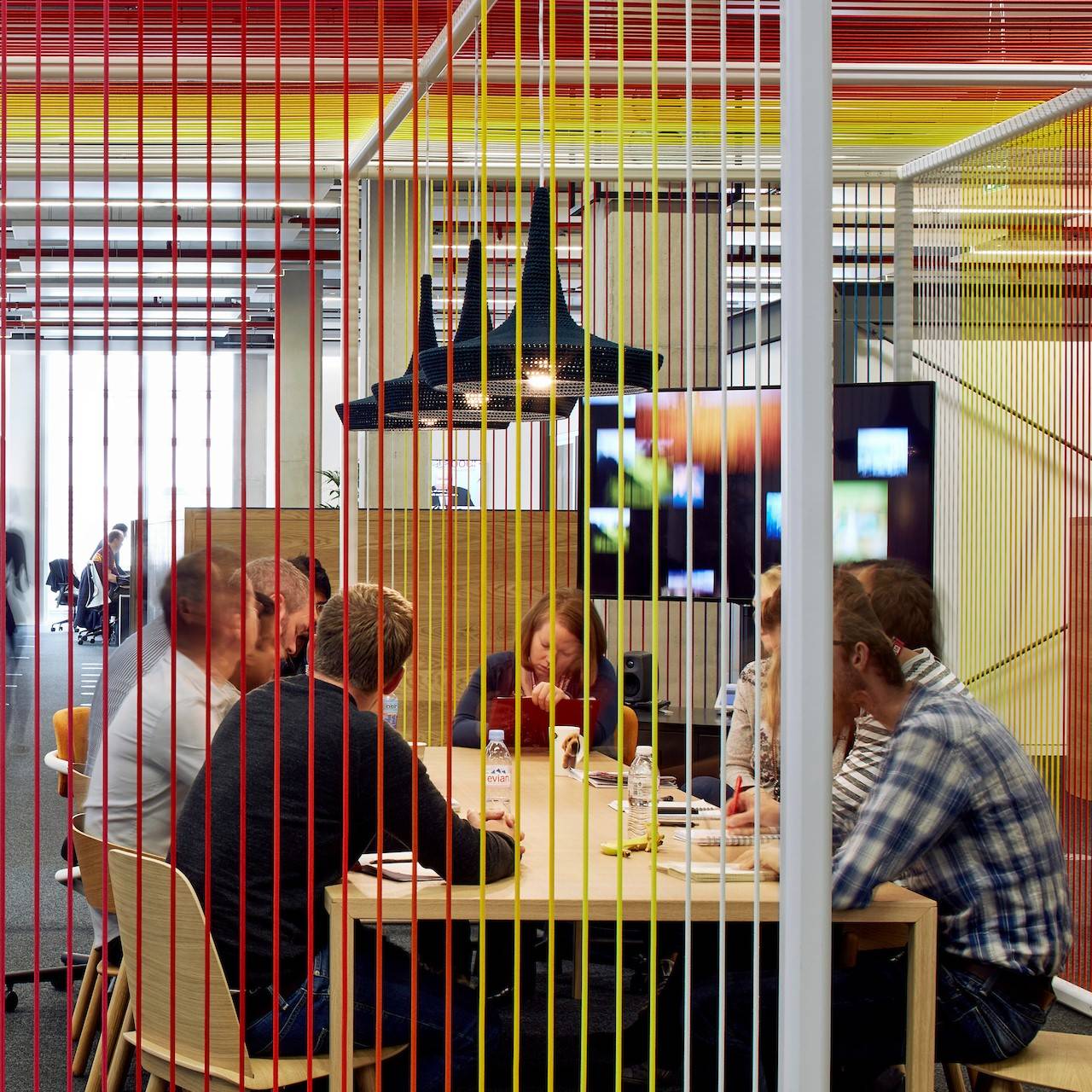
It’s drummed into us from an early age that we can’t have it all, as a result we consider choices as being a binary either/or situation. The workplace design brief (where it’s actually undertaken, an entirely separate discussion) positions choices similarly – open or closed, focussed or collaborative, modern or traditional – the decision point existing along a sliding scale from one natural extreme to the other. Yet there is a way to consider workplace design as an attempt to achieve the “unity of opposites”, an idea proposed by the pre-Socratic aphoristic philosopher, Heraclitus, the original thinker on change. This holds that the existence of an idea is entirely dependent on the existence of its opposite, that one cannot exist without the other. The framework is considered here in its application to the recently completed Sky Central in Osterley (West London), a newly constructed 38,000m2 NIA activity-based workplace over three floors that is home to 3,500 of the total 7,500 people on the Campus. It may be considered as tool for aiding workplace brief development, or for understanding how a workplace has been conceived and functions.

(more…)

Britain must future proof itself ahead of a decade of disruption, claims report 0

Brexit negotiations will ‘fire the starting gun’ on a decade of change for the UK, claims a new report from think tank the Institute for Public Policy Research (IPPR). The study, Future Proof: Britain in the 2020s, sets out the key challenges it claims will shape the UK in the period up to 2030 and the ‘choices that must be made now if these changes are to lead to a fairer and more equal society’. Among the issues covered in the report are the challenges directly related to Brexit, alongside factors such as an ageing population, other demographic changes, the risk to jobs posed by automation, the shift of the globalised economy towards Asia and the enduring problems associated with wage inequalities and the environment.

(more…)

HR directors struggle to devise long term digital workplace strategies

HR directors struggle to devise long term digital workplace strategies 0

Digital AmericaOne of the effects of the UK’s falling unemployment levels is that HR Directors risk becoming so consumed with issues of talent retention and hiring that they are unable to plan effectively and build a long term strategy for their business, especially when it comes to key emerging issues such as the digital workplace. While the latest ONS statistics show that UK unemployment fell by 37,000 to 1.6 million in the three months to September, hitting an 11-year low, in an anonymous survey carried out by The Curve Group, 92 percent of HR Directors say re-designing their organisation in response to the emergence of the digital workplace, new entrants and a flat economy should be their main priority, but only 44 percent feel able to do so.

(more…)

Flexible working more important to employees than a company car, claims new BT research

Flexible working more important to employees than a company car, claims new BT research 0

flexibility-and-mobile-working-are-more-important-to-employees-than-a-company-car-finds-new-bt-research-136411192006703901-161110155354Flexible working and great mobile devices top employees’ list of perks but businesses are struggling to make it a reality, according to a new study from BT. Two thirds (67 percent) of UK office workers say mobile working is more important than a company car, and half now carry most of what they need to do their job in their bag, according to our latest research. However, despite their employees’ appetite for new flexible ways of working, organisations are still struggling with technology and budget limitations to make it a reality. ‘The mobile multiplier’ research, which independently surveyed 1,500 office workers in large organisations in France, Germany, Spain and the UK, claims we are already in a new era in which mobile and flexible working is no longer a perk but a staple requirement. Results show workers are keen to break away from the static office: Today’s office workers put flexible working top of a benefits package from the ideal employer, with 76 percent including it in their top three priorities.

(more…)

The Room of Requirements: is a flexible workspace even possible?

The Room of Requirements: is a flexible workspace even possible? 0

google-flexible-workspaceMany of us have ways of framing our ideas about the workplace with reference to the things we love. Because I am a Harry Potter fan that means developing notions of Hogwarts and what it says about how the school building influences teaching and learning practices. J K Rowling’s universe offers rich pickings for this sort of thing and in the case of this feature provides us with an example of how we might consider the current state of thinking about the flexible workspace. One of Rowling’s brilliant ideas is the Room of Requirements. (more…)

How and why employee fitness became part of the corporate agenda

How and why employee fitness became part of the corporate agenda 0

employee-fitness-muffin-topsAs the national obesity crisis worsens and a regular flow of statistics inform us that we’re a nation in trouble, with no demographic escaping the threat, we seem to have become obsessed with how fit or unfit we are. This is reflected in our growing interest in how many calories we consume and how much exercise we manage – right down to how many steps we take a day. No surprise then that this interest has started to manifest itself in the workplace where employee fitness appears to be an issue addressed in the boardroom. Last year, research carried out by The Workforce Institute at Kronos revealed that almost 75 per cent of workers (a total of 9,000 were questioned) believe that wearable technology, designed to capture vast amounts of biometric data and manage health risks, could lead to increased efficiency and productivity in the workplace. Measuring levels of physical activity is but a small part of the obsession with health and well-being which has infiltrated the workplace overall. There is also physical evidence, from the desks that we sit at to issues of bicycle storage and showering facilities, that we are mindful of our health.

(more…)