



April 19, 2021
Pressure and weak leadership form the recipe for workplace bullying
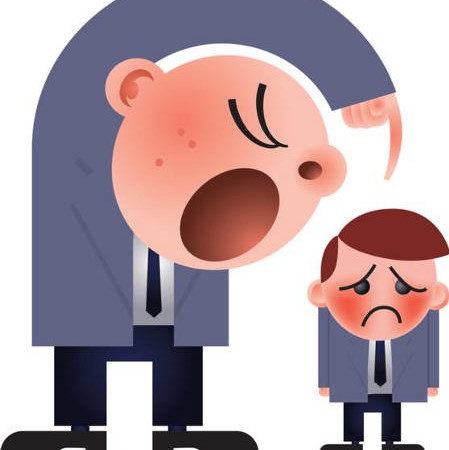
 Employees experience more bullying on days with higher work pressure and passive avoidant leadership, finds new research from BI Norwegian Business School and the University of Bergen and published in The European Management Journal. Professor Olav Kjellevold Olsen and colleagues studied how work pressure is related to daily experiences of workplace bullying related acts, as well as the relationship with transformational or laissez-faire leadership. Transformational leadership involves paying more attention to employees’ needs for achievement and providing social support. Laissez-faire leadership involves a more passive and destructive approach leaving followers on their own in situations in need of leadership. (more…)
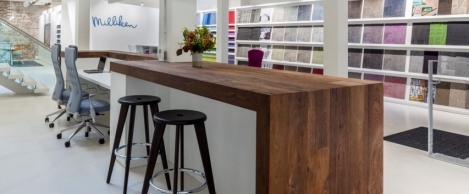
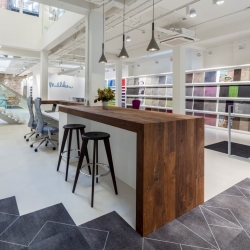 Flooring designer and manufacturer Milliken announced that it has been awarded WELL Certification at the Platinum level for its Clerkenwell Showroom by the International WELL Building Institute (IWBI). The prestigious distinction was awarded through IWBI’s WELL v2 pilot, the next version of the WELL Building Standard. WELL is the premier building standard to focus on enhancing people’s health and wellness through the buildings where we live, work and play.

 More than a year after the coronavirus was first reported the UK, the impact on business is undeniable. Research conducted by
 Glint’s latest insights report shows that there is a worrying increase in employees experiencing challenges with their mental health, with burnout risk trending upwards year-over-year. That spiked in late March 2020 and climbed by nearly 4 percent between August and December 2020. That’s not a big surprise, given the first challenging months of the global pandemic. Paradoxically, employees say that despite feeling burnt-out, they also feel happier at work at the end of a year of lockdown than they did at the start. Is this some sort of contradiction—or evidence of something very encouraging about the state of HR?

 Many of us are looking forward to a summer of relative freedom, with road-mapped milestones that will grant us more opportunities to see our friends and family. But we’ll be carrying the effects of months of isolation into those meetings, including a sense that our social skills will need dusting off, and our wits will need sharpening. The mental effects of lockdown have been profound. Social isolation has been shown to cause people’s

 Lockdown has meant the majority of UK office-based employees have taken up working from home arrangements over the last year, and it seems that many employers lack trust in their employees when they can’t physically see them. Last year

 A year of unnecessarily binary conversation about work leads inevitably to this. A stupid question.

 It is now a truism that society expects more of business than merely maximising shareholder value.
 New research by

 Workers across the UK could return to offices faster than anticipated, according to a new RICS survey of facilities managers. According to the poll, a growing number of respondents say that up to 80 percent of employees will head back once the pandemic is resolved. This is up from less than 60 percent expected in the same poll from the previous quarter ending November 2020. As evidence suggests the UK vaccination programme is taking hold across the country, results to the

 Remote workers are still struggling with distracting working environments, stress and an ‘always-on’ culture after a year of working from home. Egress’








April 16, 2021
Hybrid working risks becoming a meaningless term
by Ben Gillam • Comment, Flexible working, Workplace design