Search Results for: motivation

What holiday? Why it is vital for productivity to take a digital detox

What holiday? Why it is vital for productivity to take a digital detox 0

Difficulty with digital detachmentThe explosion of digital devices means that we’re always connected to the office, wherever we might be. In a survey conducted by the Chartered Management Institute, only half of UK managers booked a summer holiday. While 35 percent put their annual holiday plans on hold, 69 percent of those not taking a holiday cited their workload as a reason why. Even for those taking some time off, 12 percent planned to check their email daily, 19 percent said they would check their mail most days, and 26 percent planned to check at least once or twice a week. In the US, the situation is the same; 61 percent of employees said that they planned to work during their break. 38 percent planned to spend time reading emails, 32 percent said they would access work-related documents while on holiday, 30 percent planned to take work phone calls, and 20 percent would complete work tasks if asked by a colleague, boss or client.

(more…)

Employers urged to use sporting events to help engage employees

Employers urged to use sporting events to help engage employees 0

Football watching at workWith the European Championships about to begin, employers are preparing themselves for the consequences. A new report from Robert Half reveals that three quarters (73 percent) of UK Human Resources (HR) directors believe their employees will call in sick or make an excuse for skipping work, the day after a major sporting event such as the UEFA EURO 2016, and more than a fifth (21 percent) considering it ‘very likely’. With England’s and Wales’ first midweek European Championship fixture on the 16th June, companies are likely to be anticipating a significant increase in the number of employees missing work on Friday 17th June as a result of ‘sporting sickies’. A large majority (88 percent) of HR executives believe there are benefits of using sporting events to engage employees. Many companies are seeing the cohesive benefits of coming together to enjoy a sporting spectacle and emotionally invest in the event.

(more…)

Pressure at work ties majority of UK workers to their desks for lunch

Pressure at work ties majority of UK workers to their desks for lunch 0

Lunchtime habitsMany UK workers are under so much pressure they can’t escape their workplace for lunch, with almost three in five employees regularly eating at their desk. This could be having a detrimental long-term effect on the health of millions of workers across the UK. The results of a survey, commissioned by the National Charity Partnership, a collaboration between Diabetes UK, the British Heart Foundation (BHF) and Tesco, found that office workers say heavy workloads (32 per cent), workplace culture (14 per cent) and stress (13 per cent) are to blame for not getting away from their desks for a walk at lunchtime. Despite more than nine in ten employees reporting that being outside makes them feel healthier or more positive, more than half of workers who were questioned (52 per cent) never leave their office for lunch. Almost one in four (24 per cent) say they regularly work through their break.

(more…)

European Championships 2016: advice and guidance issued for employers

European Championships 2016: advice and guidance issued for employers 0

p1467074470-3Not that I care*, but the UEFA European Championships will apparently take place in France from Friday 10th June 2016 until Sunday 10th July 2016, with the kick off times varying between 2pm and 8pm. The main issues which will affect both employee and employers will be around; requests for annual leave; sickness absence and internet and social media use during working hours. Aside from the irritation felt by those of us who don’t follow the beautiful game, it’s probably best to adhere to advice from workplace experts such as Acas and Sodexo, that flexibility from both employers and employees throughout the championships will ensure a productive business and engaged workforce. Acas counsels that before the start of the tournament or any major sporting event it would be best to have agreements in place regarding such issues as time off, sickness absence or even watching TV during these events.

(more…)

Employers ignore ways that flexible working has eclipsed traditional office life

Employers ignore ways that flexible working has eclipsed traditional office life 0

Flexible attitudes to flexible working practicesA significant proportion of businesses are still not giving their employees the support they need to work remotely and flexibly, despite the fact that 72 percent of UK office workers now believe the traditional fixed workplace is no longer relevant. For the vast majority the traditional nine-to-five is already a thing of the past, with nearly two thirds (62 percent) of people already using some form of flexible working at least one day per week. On average UK workers spend 2.5 days each week working remotely. The findings claimed by ‘The End of Nine-to-Five’ report commissioned by TeamViewer suggest that, despite the increased demands and expectations of employees, nearly 2 in 5 (37 percent) UK office workers said that their company’s IT department do not encourage remote working and do not make it easy. This figure went up as the size of the organisation increased, rising to 44 percent for companies with over 500 employees.

(more…)

Making sense of the relentless babble about flexible working

Making sense of the relentless babble about flexible working

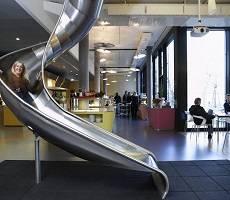
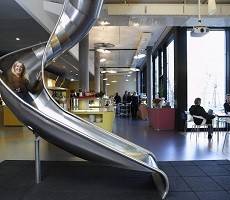
Zurich slideNot a day goes by when some organisation or other isn’t found extolling the virtues of flexible working or urging everybody to adopt the practice. While it’s easy to be cynical about the results of surveys from technology companies which are a staple part of this media onslaught, they are actually on to something. And that is why governments, employers and their associations and employees are all attracted to the idea of flexible working as a way of achieving whatever it is they want. The result is the stew of motivations, ideas and terminology that can lead commentators to make grand and daft pronouncements about flexible working; pronouncing it dead, most famously in the case of Yahoo but more subtly in the case of the grand new Xanadus being created in Silicon Valley by the area’s Charles Foster Kanes, or as the harbinger of death for the office based on the notion that somehow we’ll all be working in exactly the same way at some point in the future.

(more…)

Recognition as well as reward is key to employee engagement

Recognition as well as reward is key to employee engagement 0

Employee motivationRecognition and appreciation may play a major part in driving employee engagement, but money continues to be a driving force in people feeling appreciated at work; according to a new survey of more than 1,000 US-based employees conducted by BambooHR. However, money isn’t everything as 1 in 5 employees would prefer to receive a promotion to a higher title without a 3 percent raise in salary, instead of a 3 percent raise in salary without a promotion to a higher title. The research also found that employees who consistently contribute to successful teams and have the most responsibility are looked at as being more successful (in the eyes of their peers) than those who make the most money. Yet many employees never get that recognition, as just 40 percent only getting positive recognition a few times a year (or less). Unsurprisingly, one out of four of those employees are unsatisfied with their job.

(more…)

HR Best Practices linked to improvements in business performance

HR Best Practices linked to improvements in business performance 0

Performance management benefitsAs we outlined last week, when the positive role played by Human Resources is applied throughout an organisation – levels of motivation, retention and engagement do indeed rise. Now a new report from Top Employers Institute and HR Certification Institute® (HRCI®) reveals that better business performance – measured by higher stock prices, faster revenue growth and more favourable perception of an employer brand – is the direct result of best practice performance by HR professionals. The paper also shows that this effect has the biggest impact on business performance when it is embraced company-wide, starting at the top, and adapted smartly and sensitively by expert professionals. The paper, “Emerging Evidence: Business Performance and the Validation of HR Best Practices”, shows recent research that suggests there is evidence for HR practices driving financial results, including increased revenue growth and a rise in the value of stock prices.

(more…)

Career satisfaction and work-life balance are top employee draws

Career satisfaction and work-life balance are top employee draws 0

CaptureAlthough a competitive salary, company perks and an exceptional office culture may seem enticing to the American workforce, a new study shows there are more important motivational factors. A survey conducted by Kelton Global for Cornerstone OnDemand reveals that career satisfaction and work-life balance are the top reasons American stay at their current jobs (38 percent combined), while nearly three in ten (29 percent) resign due to work overload and lack of healthy work-life balance. Employees said they’d make life-altering decisions and considerable sacrifices in order to find a sense of satisfaction, fulfillment and purpose in their careers. In fact, 89 percent of employees would consider making a lateral career move with no financial incentive for multiple reasons, including to start an entirely new career (41 percent) or take on a professional challenge (40 percent). Additionally, relocating to a different city, state or country is a desirable career move for 77 percent of employees. (more…)

Workers spend large parts of each day doing nothing or wasting their time

Workers spend large parts of each day doing nothing or wasting their time 0

Clocking inIf it ever seems that you spend a large chunk of your average working day either doing nothing or wasting it on pointless nonsense, then don’t worry about it because that is all perfectly normal. You may already know that just by looking around you, but two new surveys highlight just how much time people consider unproductive each day. The Global Attitudes to Work survey from Qualtrics polled 6,250 employees in 14 countries and found that UK workers believe that 36 percent of the time they spend at work is unproductive. This puts the UK towards the bottom of the international pile when it comes to perceptions of their productivity, a fact perhaps explained by another survey from Workfront which suggest that many Brits are unnecessarily disorganised and spend inordinate amounts of time dealing with non work related emails, looking for lost files and then simply replicating them after fruitless searches.

(more…)

A growing need to create an office that attracts rather than repels staff

A growing need to create an office that attracts rather than repels staff 0

Old compass on white background with soft shadow

So where do you start when identifying the attributes that make an office an ‘attractor’ for staff? There are numerous articles extolling the virtues of everything from pool tables, to hammocks, creative “playgrounds” and all manner of enticing and unique workplace design considerations. However, I believe that there are more intangible and subjective issues at stake such as building aesthetics, prestige and values alignment. Very few businesses benefit from working in low-key, nondescript locations. The only likely motivation for occupying such a space would be cost-driven. Likewise, nobody wants to work in a building that is run-down, outdated and clearly past its best-by date. It is preferable for most office workers to work in a building that is new, interesting, prestigious or an acknowledged landmark. It becomes something they can be proud of and would be happy to share with family, friends and colleagues.

(more…)

Effect of robots at work on people’s future wellbeing still very uncertain

Effect of robots at work on people’s future wellbeing still very uncertain 0

Robots at workThe effects of robotics on workers’ and managers’ motivation and wellbeing are not widely known, meaning psychosocial factors related to robotics will require more attention in the field of safety and health. This is just one of the conclusions of a new discussion paper – drawn up by EU-OSHA (European Agency for Safety and Health at Work) on the influence of robotics on the future of work. While the use of robots in a complementary role would be the least challenging for society, economic and productivity pressures are likely to result instead in a substitution approach, whereby individuals and groups are replaced in their jobs by robotics and automation. Fewer workers will be needed for jobs that are routine or have clearly definable tasks, as they will be done instead by industrial and service robots. A result of this technical change will be a relative increase in the demand for highly educated workers and a reduced demand for less educated workers traditionally carrying out jobs consisting of routine cognitive and manual tasks.

(more…)