







June 13, 2017
Workers spend less time on social media and non-work technology in a bid to restore work life balance 0
 According to a new survey by job site CV-Library, over two thirds of workers (67.4 percent) don’t use social media whilst at work, and of those that do, the majority (45 percent) will only do so for up to 15 minutes. The study surveyed 1,200 workers on their opinions around technology in the workplace, and whether it is a distraction or an enabler to professionals. Interestingly, the survey claims that despite 56.1 percent admitting that they use smart phones while they’re at work, the majority (79.8 percent) do not use technology to do personal tasks during work hours. Many 0f the respondents cite the desire for a better work life balance as the main reason for their behaviour.





 Fostering behavioural change among employees to encourage them to make healthier lifestyle choices could deliver both productivity gains and economic growth, a new report claims. According to Human-Centric Health: Behaviour Change and the Prevention of Non-Communicable Diseases, by the World Economic Forum in collaboration with Willis Towers Watson, behavioural economics will be critical to encourage healthier lifestyles and reduce the burden of non-communicable diseases (cardiovascular disease, mental illness, cancer, chronic respiratory disease and diabetes) that account for approximately 16 million premature deaths annually and will cost an estimated cumulative loss of $47 trillion in economic activity worldwide over the next two decades. According to the analysis, technology such as mobile phones with accelerometers that make activity challenges easier and engage individuals in a community of supportive peers will improve people’s understanding of health-related knowledge and encourage them to reshape their behaviour. Linking individuals to ‘commitment contracts’ to exercise, quit smoking, or adhere to medicine prescription schedules will also be easier to monitor using sensors and mobile technology.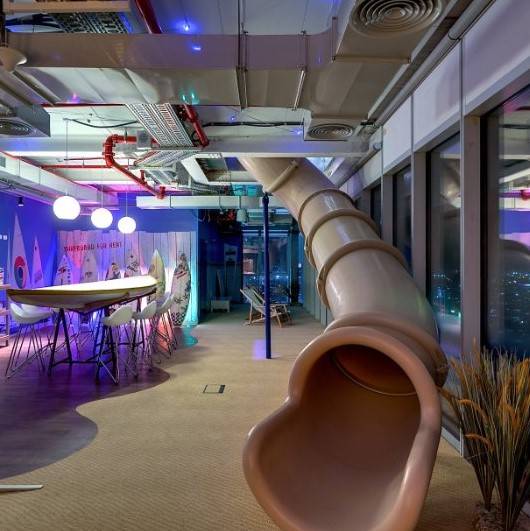
 The majority (79 percent) of workers say reliable and modern technology is more important to them than office aesthetics, while accessories such as ping pong tables, slides, hammocks and wacky office designs may look good in pictures, but they don’t necessarily make employees any happier or productive. The is according to a survey, conducted by storage firm Kiwi Movers, which found that 86 percent of UK adults who work in an office said fun features were of no specific value to their working life, 11 percent said they were nice-to-have and of some value and 3 percent said they were very valuable. The most popular office perks are those offer an immediate tangible benefit to the employee, but even so, as many as 23 percent don’t take advantage every day; while 71 percent overall said they’d like more space in their office and of those, 58 percent believe that could be achieved by removing non-essential items. The research also found that younger workers were more likely on average to take advantage of ‘environmental’ perks like chill out areas and recreational equipment.

 Amos Tversky and Daniel Kahneman introduced the concept of Loss Aversion in 1984, highlighting people’s tendency to strongly prefer avoiding losses to acquiring gains. Most studies suggest that losses are twice as powerful, psychologically, as gains. Lose £100 and we will feel a remorse that easily outweighs winning £100. In a similar fashion we find it very hard to see future positives when confronted with short term loses. We understand easily what we have lost but cannot imagine what there is to be gained. Furthermore, as Frederic Bastiat wrote in an 1850 paper, “That Which is Seen, and That Which is Not Seen”, man has a tendency to “pursue a small present good, which will be followed by a great evil to come, rather than a great good to come, at the risk of a small present evil”. Put these together and it is no wonder that, by and large, the future of work, corporate real estate and the workplace is so widely misunderstood.











March 30, 2017
Social technology has the power to make the workplace more humane
by Amanda Sterling • Comment, Technology, Workplace
(more…)