Search Results for: technology

CoreNet report sets out how technology will reshape corporate real estate

CoreNet report sets out how technology will reshape corporate real estate 0

Workplace technologyThe speed of today’s technological advances is dramatically reshaping the way that corporations manage and use their real estate. It’s a dynamic that has significant consequences for the workplace, urban development and the overall lifestyle of the average worker. Those are the unsurprising conclusions of a new report from trade association CoreNet Global, which was discussed this week at the organisation’s 2016 Summit – EMEA, held in Amsterdam. As ever, the devil is in the detail so the report is worth exploring to get a sense of just how imminent many of the changes will be, especially because they will converge to create a perfect storm of change for the workplace. This marks the new era out from the past when technology developed in more predictable ways. Several CoreNet Global Gold Strategic Partners contributed to the report including CBRE, Deloitte, ISS, JLL, Newmark Grubb Knight Frank, Sodexo and Steelcase.

(more…)

Small firms remain sceptical about next generation technology

Small firms remain sceptical about next generation technology 0

Robots at workNew research from AXA suggests that small firms are sceptical about the prospects of technologies such as 3D printing, robotics and driverless cars affecting their workplace in the near future. While more than 40 per cent of small businesses still don’t have a website, the study of 898 firms claims that most of these plan to move online in the next twelve months. If these plans are fulfilled, only seven per cent of UK businesses will remain offline by this time next year. However, just one in five plan to migrate to the Cloud and only six per cent say they expect to adopt smart technologies. Driverless cars, which are set to hit UK roads as early as 2020, have an equally low resonance, as just eight per cent of business owners expect they will travel in one. Businesses were also highly sceptical when it comes to 3D printing. Just two per cent of UK businesses who might use the process expect to see it used here ‘during their lifetimes’.


(more…)

British workers’ patience with slow technology lasts just sixty seconds

British workers’ patience with slow technology lasts just sixty seconds 0

PatienceThe patience of British workers to put up with slow and malfunctioning technology lasts just sixty seconds on average before they lose their temper, according to new research from tech firm Crucial. The survey of 2,000 Brits claims that one in five (21 percent) lose their patience once a week, a fifth (19 percent) every couple of days, and 7 percent kicking off over slow technology every few hours. And when slow technology does strike, it takes 60 seconds on average before people lose patience. However, some Brits lose it even quicker, with 32 percent saying they lose patience with slow technology after just 30 seconds. While there is no one single reason cited for a PC freezing, almost half (46 percent) of respondents said that opening web pages caused their PC to freeze. Other causes include opening programmes and apps (27 percent), opening files (21 percent), loading videos (17 percent) and when saving down an important file (12 percent).

(more…)

Government should stop using technology to put lipstick on a pig, says report

Government should stop using technology to put lipstick on a pig, says report 0

A new report from Brunel University London claims there needs to be a complete turnaround in the way governments and researchers think about how digital technologies can change the public sector. The report was published to coincide with the 11th National Digital Conference in London. The working paper, which invites feedback from practitioners in the field, explains how the only coherent way to achieve any real impact is to embed the potential of technology in the instruments that make governments’ policies real. Policy instruments are the tools that governments use to drive change in the economy and society and include licences, information campaigns and more tangible things like public services and infrastructure. The paper, entitled; Digital Government: Overcoming the Systemic Failure of Transformation, claims that even the most recent approaches still come from the perspective of technology, not the core policy-making functions of government.

(more…)

Increase in workplace technology spend will help make offices ‘more human’

Increase in workplace technology spend will help make offices ‘more human’ 0

Agile workingSpending on workplace technology has doubled in the past five years as artificial intelligence is used to redefine how we connect in the workplace. That is the central claim of a new report from design firm Unispace based on interviews with CEOs and Heads of Real Estate at some 100 blue chip firms worldwide including KPMG, Cisco, Adidas, GE, Accenture, Boston Consulting Group, Regus, Deloitte, UBS, Chevron, CitiGroup, and Ashurst, Respondents were asked to assess how they expect to use office space in 2020. According to the report, respondents indicated that they will continue increasing technology spend, irrevocably changing the traditional office space as we know it. Over the last five years, the average company spent 10 percent of its workplace budgets on technology with 30 percent going on services, partitioning and furniture. The trend has now reversed with technology spend outstripping other spend as companies strive to improve efficiency, collaboration, creativity, engagement and recruitment.

(more…)

New workplace technology will automatically adapt offices to needs of staff

New workplace technology will automatically adapt offices to needs of staff 0

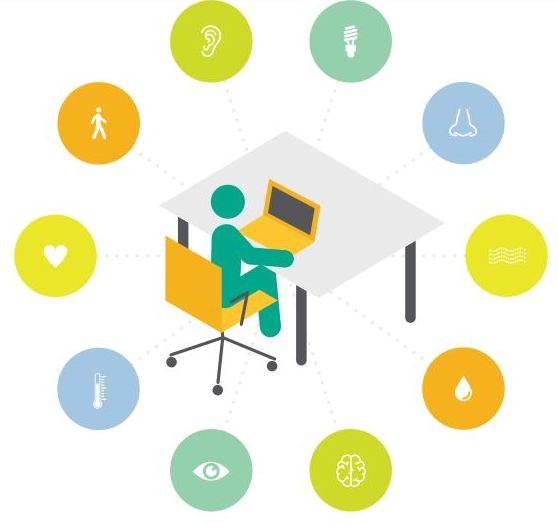
workplace technologyA new generation of workplace technology that allows the working environment to adapt to the needs of individuals will attract people to work in offices and contribute to their productivity, wellbeing and happiness. That is the key finding of a new report from US office furniture giant Haworth. According to the white paper Enabling the Organic Workspace: Emerging Technologies that Focus on People, Not Just Space a new generation of sensors will measure how offices are used and allow them to adapt on a day to day basis by changing temperature and lighting levels and responding to employees’ needs and influencing their behaviour in other ways. The white paper suggests this will be a development of existing technologies in the way it adapts the immediate working environment to the specific needs of  an individual or group. This might even entail using biometrics to assess their psychological and emotional needs, according to the report.

(more…)

Pointless admin and inadequate technology cost UK £60 billion a year

Pointless admin and inadequate technology cost UK £60 billion a year 0

CaptureInadequate and poorly performing technology coupled with the burden of pointless administrative tasks are having a major negative effect on the UK’s productivity, costing businesses around £60 billion a year. That is the conclusion of a new report from workforce management consultants Kronos.  According to the report, The £60Bn Question: Is Employee Engagement the Driver of Business Success?, employees spend around 7 percent of their time on unnecessary admin and 82 percent struggle to complete their daily tasks. According to the line managers that took part in the survey, 77 percent claim that outdated technology is the biggest challenge they face and 72 percent believe that they are hampered by the need to carry out tasks that could be automated. Many respondents also cited a lack of engagement as an issue with 34 percent claiming rating their organisation enjoying high levels of engagement and  59 percent claiming their chief exec was more interested in the bottom line than employees.

9 in 10 UK office workers stressed by meeting room technology

9 in 10 UK office workers stressed by meeting room technology 0

Video conferenceMeeting room technology which does not work seamlessly is a hindrance for productivity, with 86 percent experiencing serious “meeting stress” when grappling with it during meetings, according to research from Vanson Bourne and Barco. Among the biggest challenges for UK employees were sharing content and screens, and finding the right cables to connect to devices. In trying to deal with problems, staff are wasting significant amounts of their valuable time: 60 percent try to fix problems themselves, 49 percent call support, 30 percent end up giving up. 15 percent even postpone meetings until technology problems can be fixed. The vast majority (90 percent) actually pre-prepare for failures: preparing handouts as alternatives to tech, coordinating with IT in advance, and 44 percent even do a tech rehearsal. As a result of struggling with technology in meeting rooms, a quarter of UK office workers have missed important deadlines, and some have even missed out on personal opportunities like promotions (7 percent).

(more…)

Technology firms will determine the future of real estate, claims report

Technology firms will determine the future of real estate, claims report 0

future of real estateThe future of real estate will be shaped by the confluence of technological and physical infrastructure, the growth of flexible working, shrinking lease lengths, a shift in focus away from location and the changing expectations of occupiers. These are the key and perhaps unsurprising conclusions of a new report from KPMG. One of the most intriguing findings of the New Foundations report is that the widespread application of data analytics and the growing number of occupiers who will use office space as a service will lead to a greater degree of collaboration between property and technology firms to offer space to clients. Although property firms may still take the lead, the report suggests that ‘serviced office models are just the beginning of this trend and specialist companies will emerge to scale up and manage these income streams. These might be joint ventures between existing property owners and technology providers.’

Government talks a good game on technology, then fails to deliver

Government talks a good game on technology, then fails to deliver 0

Darts missLast week, the UK Cabinet Office Minister Matt Hancock delivered a speech to the Institute of Directors, outlining details of the government’s Cyber First programme which aims to develop the skills needed to address the security threats posed by the digital revoluution. The speech was full of the usual stuff about the ‘interconnected world’. It even suggested at one point that the UK has ‘one of the most digitally advanced governments in the world’. Recent developments would suggest that this is slightly wide of the mark, to put it mildly. According to a February report from the regulator Ofcom, the UK’s broadband infrastructure continues to lag behind other countries, held back by BT’s characteristically inept and self-serving monopoly of cable infrastructure. Now the government has confirmed it scrapped its flagship mobile infrastructure project which set out to reduce the number of ‘not spots’ in the country.

(more…)

Technology in the office failing to keep pace with the digital revolution

Technology in the office failing to keep pace with the digital revolution 0

Twice as many employees will use BYOD by 2018 predict analystsDespite, or possibly because of the development of sophisticated digital handheld devices, a majority (85 percent) of UK office workers believe they would be able to perform their duties more efficiently if their workplace was equipped with better technology. In fact, 16 percent said that the technology they use at home is far superior to that provided by their employer. The research, conducted by webexpenses, found that over a quarter (28 percent) of respondents felt client relationships and sales could also benefit from a boost in technology at their organisation. When asked about what aspects of their job could be improved by better technology, 41 percent said that the management of teams and internal communications could be greatly enhanced. The workers also said that poor temperature controls (21 percent) a lack of space available in the office (20 percent), and their company’s reliance on arduous paper based processes (14 percent) were other sources of frustration.

(more…)

Technology can help you manage workplace wellbeing on a global scale

Technology can help you manage workplace wellbeing on a global scale 0

Global wellbeingThere are global patterns to health and wealth risks; but while technological developments are enabling employers to connect to employees on a global basis, too many are still confining their benefits strategy by region. This is according to research by Aon Employee Benefits which shows that three quarters (75 percent) of employers believe they are responsible for improving the health and wellbeing of their workforce – yet one third do not fully utilise data analytics to drive their corporate wellbeing strategies. The report argues that technology should be better utilised to manage employees’ health and wealth on a global scale. Says head of broking, health and risk proposition, Matthew Lawrence: “Employers want to take responsibility for health and wellness. They are recognising that the multi-generational workforce presents challenges as well as opportunities. But the health needs of different ages and demographics mean employers and businesses really need to get to grips on effective strategy implementation, especially on an international – rather than national – scale”.

(more…)