Search Results for: interaction

Company reputations can live or die by the behaviour of employees on social media

Company reputations can live or die by the behaviour of employees on social media

A recent survey from law firm Herbert Smith Freehills suggests that 95 percent of large organisations polled expected a rise in the number of employees using social media, such as Twitter, to raise complaints and concerns about their company over the next five years. It is an extremely worrying development for business. While social media can in general be a great platform for everyone to have their voice heard, in this context, it takes an internal issue to a public space and it could do a great deal of harm to the business concerned. An aggrieved employee tweeting criticisms of their company has the potential to go viral, garnering vast numbers of likes and reaping untold damage to the reputation and brand of the organisation concerned. (more…)

Agility may be the key to surviving uncertainty, but what does it mean?

Agility may be the key to surviving uncertainty, but what does it mean?

Business agilityAmid continued economic and political uncertainty, following the UK’s withdrawal from the European Union (EU), the adoption of agile practices will be more important than ever for businesses to survive and adapt to market change. But when we talk about agility in a business context, what do we really mean?

(more…)

New smart building suite for a people centric  workplace experience

New smart building suite for a people centric  workplace experience

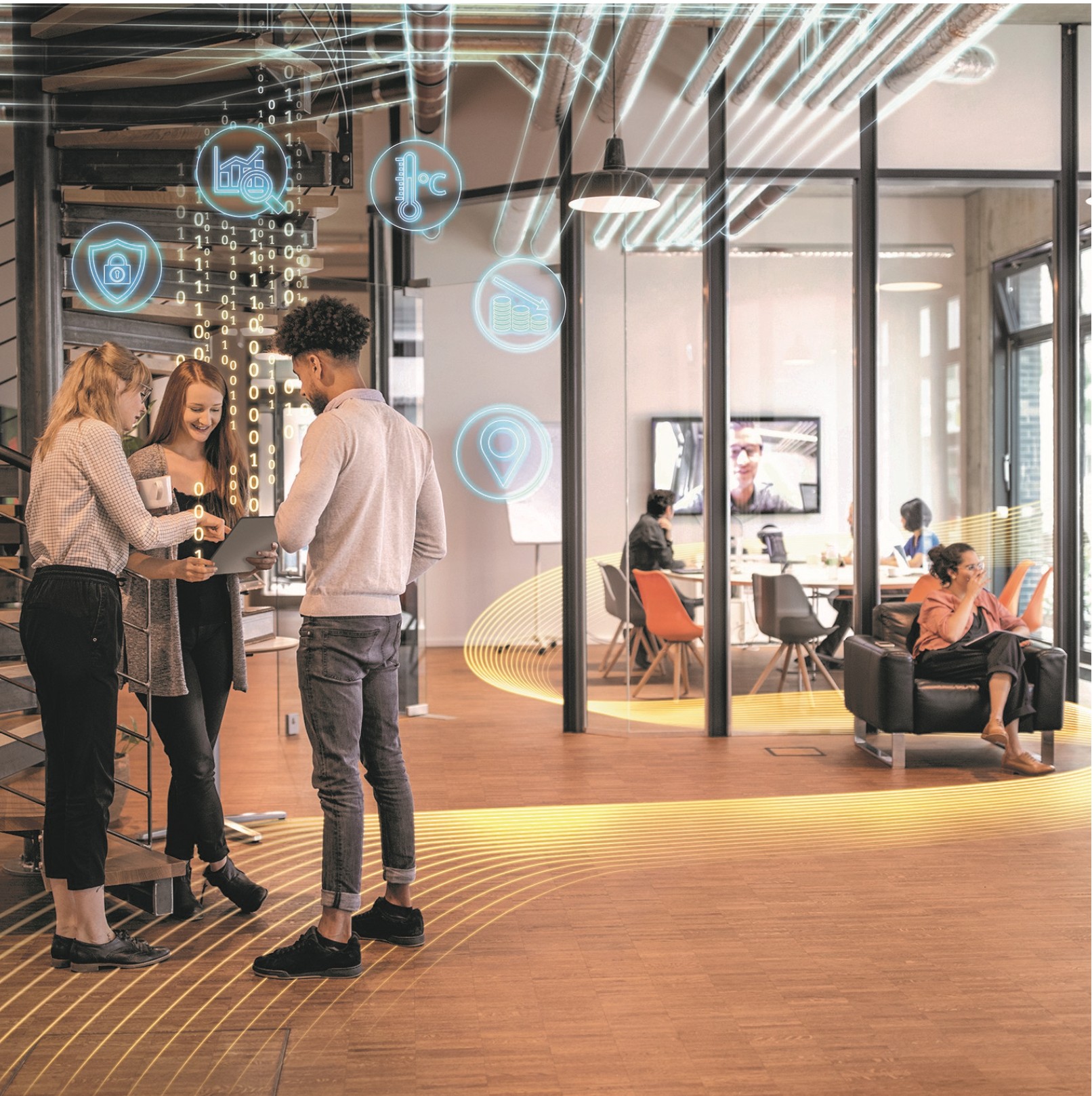
Siemens Smart Infrastructure has launched a smart building suite designed to create more efficient and flexible workplaces where people are at the core. The suite of IoT (Internet of Things) enabled devices, applications and services turn offices into a competitive advantage for companies. (more…)

Exploring life at the new Siemens Campus in Zug

Exploring life at the new Siemens Campus in Zug

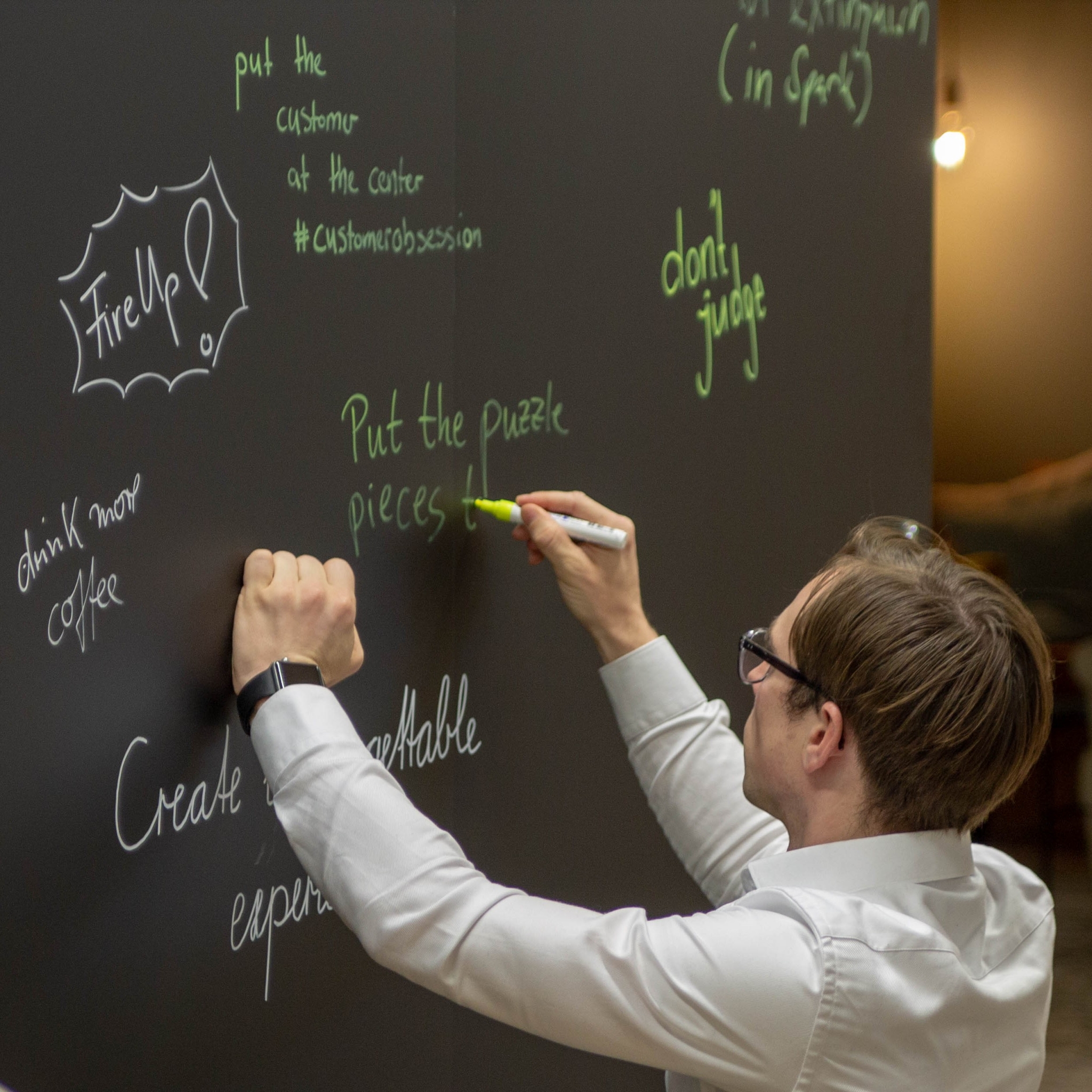
Siemens SparkWhen it comes to creating an office to call home, all of the usual challenges are magnified by several degrees for a company like Siemens. It can’t afford to skimp on the building’s services, green credentials, integrated technology and all-round smartness then hold meaningful conversations on the same subjects with its clients. So, the new Siemens Campus in the Swiss town of Zug has to showcase the best the firm has to offer as well as delivering for the people who work there. (more…)

The vaguery of workplace serendipity

The vaguery of workplace serendipity

It has become vogue to refer to the workplace as being ‘all about people’. It points in all directions at once. Organisations need fit, healthy, happy, skilled, motivated, engaged and purposeful people being (and feeling) productive and doing their best work every day. They want their people working closely together – they’ve spent a lot of time and money drawing in those they feel can contribute to a whole that is other than the sum of the parts. (more…)

Digital culture is key to attracting contingent workforce

Digital culture is key to attracting contingent workforce

digital cultureOver the past decade, we’ve witnessed a radical change in the makeup of workforces in the UK and globally. The rise of flexible workforces continues unabated, to the point where contingent workers are a significant and vital part of the employment fabric. Demonstrating this point, recent research by the City & Guilds Group found that 84 percent of UK employers use contingent workers, and 35 percent anticipate they will rely on them more in the next 3-5 years. (more…)

The changing expectations of call and contact centres

The changing expectations of call and contact centres

Ever since call centres were introduced as a business function in the mid-20th century, they have been subject to plenty of change and transformation. Customer expectations have been on a gradual rise, and CX strategists and leaders have had to adapt to meet these increased demands.  Previously, call and contact centres were viewed as a cost centre – whereby the primary goal was to run them as efficiently and cost-effectively as possible, whilst still being able to respond to customers competently. Nowadays, customer experience is being ramped up on the priorities list, with call and contact centre success shown to be a key driver for customer retention, enrichment and advocacy. 

Most importantly, customer expectations have evolved which has put a great strain on how call and contact centres adapt. Customers now expect customer service to quick, convenient and available 24/7.

What do customers want from contact centres?

  • Quicker responses

Living in a social media world has not only brought plenty of benefits for businesses, but also presented its fair share of challenges. With consumers now having the ability to communicate and get instant information online, contact centres have had the same expectations placed on them to provide quick response times whilst still maintaining high service levels.

A study conducted by Lithium Technologies found that when asking about a product or service, 66 percent of consumers expect a response to their query on the same day, and over 40 percent expect a reply within the hour. This has put a large strain on contact centres to improve efficiency and be able to respond so quickly to customer queries.

  • Convenience

In addition to wanting a quicker service, customers today also want convenience. ‘Gen Z’, having grown up with social media and digital technologies are used to shopping, browsing and completing tasks online through research and self-informing. What does that mean for contact centres?

Customers don’t want to call contact centres and wait to be put through to the right advisor – It isn’t the most convenient option anymore. What customers want instead is the ability to solve the issue themselves using self-serve/ FAQ sheets, or at least to see if they can solve the problem before having to get in touch with an advisor.

A study carried out by Zendesk found that 67 percent of consumers preferred using a self-serve portal when looking to help themselves online, with 40 percent of customers calling a contact centre only after they have at least attempted to find their solution on the internet first.

  • More availability

On top of wanting a quicker service and convenience, customers are also expecting help to be readily available whenever and wherever they need it.

Today’s customers want to be able to get in touch with a company across multiple channels and be able to hop in between channels to continue their interaction. For example, a customer wants to be able to message a chatbot online, then follow up with a phone call, and expect the company know their name, information and query. These conversations should be able to take place across a whole host of channels including social media, websites, mobile, text, chatbots, telephone, email, self-serve and more.

By having interactions across multiple channels, customers also expect help in one form or another to be available 24/7. Banks, for example, outsource call centre functions to countries abroad to ensure customers calling in the later hours have a representative that they can speak to.


This piece has been published in partnership with Call & Contact Centre Expo

Image by Stefan Kuhn 

From the archives: Is this the missing piece of the facilities management puzzle?

From the archives: Is this the missing piece of the facilities management puzzle? 0

facilities managementThe IFMA Foundation Workplace Summit of summer 2014 felt like an optimistic time for facilities management and the workspace industry. Heavyweights from the sector were asking searching questions about our organisational contribution, with thankfully less of the internally focused, debate-free hubris typical of much of the industry narrative. The newly announced (and now evidently historical) collaboration between BIFM and CIPD was in full swing, endorsed by social media savvy Twitterati under The Workplace Conversation banner. (more…)

Workplace gossip can be good for people – sometimes

Workplace gossip can be good for people – sometimes

workplace gossipNew research from The University of Salford’s Professor Kirk Chang, Professor of Human Resource Management, claims that workplace gossip can sometimes have a positive impact on employees. Published in the January 2020 issue of The Chinese Journal of Psychology, the study involved 307 employees in 24 companies operating in a range of industries in Taiwan. The research suggests that 61 percent of gossip in the workplace is positive, and while the impact is not hugely significant, it could be considered beneficial. Professor Chang concludes that by encouraging a more open attitude towards positive workplace gossip, water cooler chat should not be viewed as wasting time, but as an important mechanism for facilitating interactions and developing relationships. (more…)

Anthropology might hold answers to the most difficult workplace challenges

Anthropology might hold answers to the most difficult workplace challenges

anthropology and the workplaceMany recent discussions have centered on the drawbacks of the open-plan office, a major format in the UK, and possible pathways to the communal workplace of the future. As part of this, it has been acknowledged that the factors responsible for determining the open-plan office’s performance are complex, and a number of the present-day workplace’s characteristics are messy and hard to quantify. In this brief article, I present anthropological methods as means for practitioners to further unpack the symbolic aspects of communication in open-plan offices and spark workplace solidarity.

(more…)

Firms turning to “corporate wellness” programmes as a solution for stress

Firms turning to “corporate wellness” programmes as a solution for stress

corporate wellness and stressA new report by workforce performance firm CR Worldwide (CR), drawing on data from 287,000 employees at over 120 large enterprises, claims that as the incidence and awareness of the issue of stress grows, firms have responded with a 22 percent year-on-year increase in UK spending on perceived solutions such as corporate getaways with companies now spending an average of £3,100 per person per trip. The proportion of activity or nature-based business trips involved in such wellness programmes has more than doubled to 56 percent in 2019 compared to the previous year. With human-animal interactions believed to have therapeutic effects on mental health, UK firms are also increasingly offering ‘nature tourism’, from orangutan treks in Borneo to working with endangered rhinos in Rwanda and shark diving. Husky sledging is now among the top 5 Christmas corporate travel activities for UK firms. (more…)

Human centric office design leads list of “trends” for next year

Human centric office design leads list of “trends” for next year

office design and natureAmbius has published its latest annual report (registration) which claims to highlight the top trends in office design for 2020 and beyond. It suggests that the new year will see a continued evolution in the understanding of the human-centric workplace with designs that improve employee performance and wellbeing, integrate innovative technologies, offer multi-functional capabilities, and facilitate an inspiring and engaging environment for top talent. (more…)