








June 11, 2017
Bisley’s classic MultiDrawer recognised with a Design Guild Mark 0
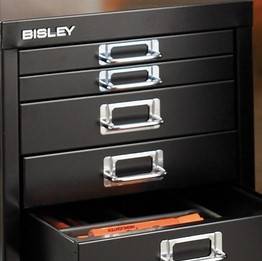 Bisley’s iconic MultiDrawer, one of the office’s most recognisable products for 60 years, has been awarded a Design Guild Mark, recognising its timeless qualities in design, functionality and quality. Now approaching six decades from its launch, the MultiDrawer has never lost its appeal, becoming an icon in storage. Almost 2 million of the diminutive cabinets have been sold, helping the brand name Bisley become part of the lexicon in the German language to describe storage cabinets, such is the reach of this British born icon. Created by Freddy Brown, founder of Bisley and an experienced metal worker, the MultiDrawer was first made in 1958. The Bisley factory was expert in metalwork having evolved from car body repairs, then making metal waste paper bins and, during the war, designing and making the large metal containers that were dropped by parachute into war zones to deliver supplies. The Design Guild Mark is awarded by The Furniture Makers’ Company, the furnishing industry’s charity, in order to drive excellence and raise the profile of British design and innovation. The award recognises the highest standards in the design of furniture in volume production, by the best designers working in Britain or British designers working abroad.
 Most FMs would tell you that the state of the workplace toilets is often one of the main determinants by occupants on how well the facilities department is doing its job. So it’s disturbing to learn that according to a new survey a significant number of employees have cause to complain about the state of their workplace toilet facilities. The research, carried out by the Association of Plumbing & Heating Contractors claims that 16.5 percent of people are unhappy at work due to the condition of their employer’s toilets which is having a negative impact on their levels of engagement. Their research found 43.8 percent of the people surveyed felt their workplace toilets needed to be better maintained. And when asked if their workplace toilets require updating or refurbishing, 44.4 percent said they did. London seemingly has the worst workplace toilets with 50.9 percent of workers surveyed believing they need to be better maintained and require refurbishing.
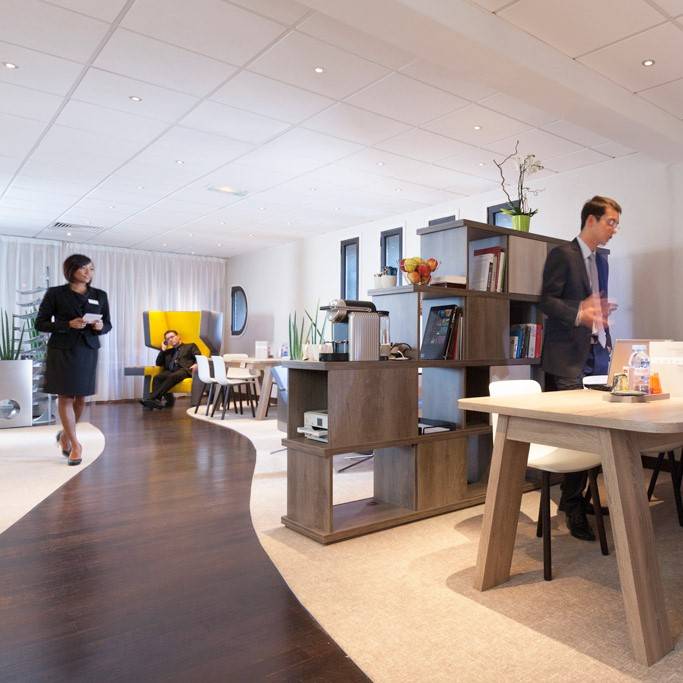



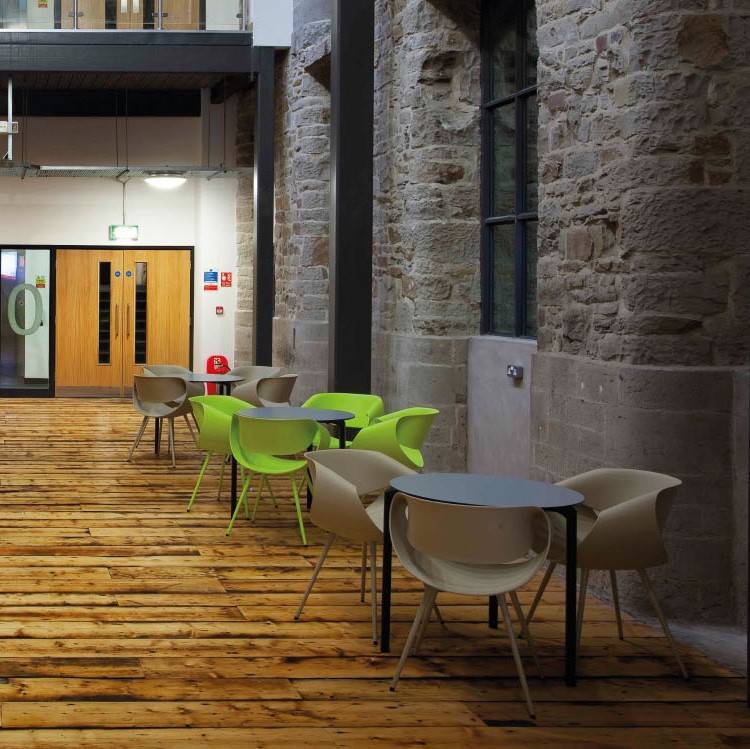



 The British Institute of Facilities Management (BIFM) has issued updated guidance to help in-house FM teams understand what is involved in managing and changing space. The revised Space Planning and Management Good Practice Guide aims to provide practical advice on the tools and techniques that can be deployed when planning and managing space, clearly illustrating the processes involved and enabling facilities managers to set overarching space management strategies for their organisation. Key areas covered in the guide include space demands, strategy and standards, programming and managing projects and the technologies available to help with the process. The guide has been updated by its original author Joanna Eley, director of Alexi Marmot Associates.















 Issues with the quality of their workplace lighting frustrate the majority (83 percent) of UK office workers; while 80 percent experience negative symptoms due to poor lighting a new study suggests. The survey by Lutron Electronics focused on key areas including the impact of lighting on mood and wellbeing and whether workers had personal control of their lights or were subject to standard lighting control settings across the office. Understandably, 88 percent of UK respondents said that their office lighting is important or very important and one third (32 percent) stated that their existing workplace lighting aids them in the accuracy and visibility of their work. In addition, 27 percent believe it allows them to focus more while 25 percent said it increases their general wellbeing. However, 35 percent of overall respondents said their existing office lighting does not have any positive impact on them at work. This figure is even higher (44 percent) among those in large companies with more than 5,000 employees and amongst the most senior generation (55+), where it reached more than half (51 percent).









June 8, 2017
Whether you choose order or chaos depends on what you want to achieve
by Mark Eltringham • Comment, Furniture, Workplace design
Chaos gets a bit of a bad rap when it comes to running a business. Yet as Greg Lindsay highlighted in his interview with Insight a while back, chaos is something that many organisations should actively try to harness as a way of fostering the creativity they claim to desire. Certain structures, be they cultural silos, traditions, professional demarcations or the physical walls and storeys of a building inhibit chaos and so restrict interactions and creative processes. So, if you want to achieve what many businesses say they want to achieve, they need to introduce a little anarchy. We’ve known about or suspected the links between harnessed chaos and creativity for a long time. In his 1883 novel Thus Spoke Zarathustra: A Book for All and None, the philosopher Friedrich Nietzsche, writes, “I tell you: one must still have chaos in oneself to give birth to a dancing star.” The same idea has been expressed in many ways, but few of them quite so poetic.
(more…)