







April 4, 2018
Government announces details of new real estate agency
 The UK government has announced the creation of the Government Property Agency (GPA) which will aim to ‘improve the efficiency and effectiveness of the Government Estate and generate benefits of between £1.4 billion and £2.4 billion over the next ten years’. GPA’s initial portfolio of 80 properties will grow to over 1,000 as it takes on increasing responsibility for managing the general purpose central government real estate portfolio. This is intended to manage the government’s property portfolio strategically in order to realise the benefits that departments cannot achieve on their own. The GPA will partner with government departments to find innovative property solutions, and provide expertise to enable them to deliver wider business change more efficiently. More broadly, the GPA will also be an enabler for the delivery of Civil Service transformation, regional growth and the government’s vision to strengthen the Union.


 Almost one in two working age adults currently lack numeracy skills and this skills gap is estimated to cost businesses £3.2bn annually, with a cost to the UK economy of up to £20.2billion a year. This is why charity National Numeracy has joined together with founder supporter, KPMG, to establish the first ever UK National Numeracy Day – created to drive a change in recognition of the importance of numbers, as well as improve employee careers. The day, which takes place on the 16th May will be designed to celebrate numbers, and aims to help individuals to check their numeracy levels, and provide free tools to support improvement amongst those who could benefit. Businesses are being called on to get involved in a variety of ways; from becoming an official supporter, to encouraging employees, suppliers and the local community to check their numeracy levels using the
 Over a fifth (21 percent) of 18-24 year olds admit that they have rejected a potential employer because of the poor design of the office or lack of amenities available, while 34 percent in the same age group would be willing to commute for a maximum of one hour each way to an office that is considered perfect – compared to 22 percent of 45-54 year olds. The research, commissioned by Mindspace, found that 16 percent of 18-24 year olds have actually left a job because of how poorly designed the office was in one of their previous roles. Overall, nearly a third (31 percent), of workers are bored with their current office environment and feel uninspired at work, with 28 percent of workers describing their place of work outdated and dull. The research also found that while most workers had access to amenities such as a kitchen (72 percent), meeting rooms (66 percent) and free tea & coffee (53 percent), what UK office workers desire the most to improve morale is more natural light, air conditioning and improved interior lighting.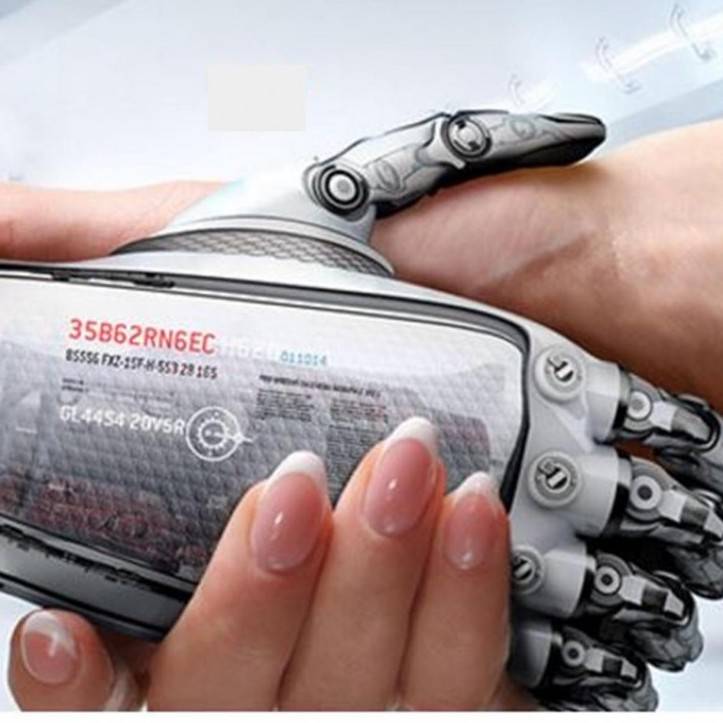
 Over half (52 percent) of workers in a new poll have admitted looking for a new job because of frustrations over what they see as outdated ways of thinking around work practices and automation at their current company. The

 The mental health of employees, especially those working within high pressured working environments are the number one concerns for UK CEOs. Nearly three quarters (73 percent) of respondents to the annual wellbeing report ‘

 Artificial intelligence systems need to be accountable for human bias at AI becomes more prevalent in recruitment and selection, attendees at the Employers Network for Equality & Inclusion’s annual conference have been warned. Hosted by NatWest, the conference, Diversity & Inclusion: The Changing Landscape heard from experts in ethics, psychology and computing. They explained that AIs learnt from existing data, and highlighted how information such as performance review scores and employee grading was being fed in to machines after being subjected to human unconscious bias. Dr David Snelling, the programme director for artificial intelligence at technology giant Fujitsu, illustrated how artificial intelligence is taught through human feedback. Describing how huge data sets were fed into the program, David explained that humans corrected the AI when it used that data to come to an incorrect conclusion, using this feedback to teach the AI to work correctly. However, as this feedback is subject to human error and bias, this can become embedded in the machine.









March 13, 2018
Many office furniture firms remain confused about social media and online communication
by Colin Watson • Comment, Furniture, Workplace design
(more…)